Singapore family loses over S$150,000 in online egg purchase scam
In late 2023, the Singh Family in Singapore faced financial ruin, losing over S$150,000 to an e-commerce scam while purchasing eggs online. The scam jeopardized crucial expenses, leaving the family grappling with uncertainty, emotional distress, and financial crisis..
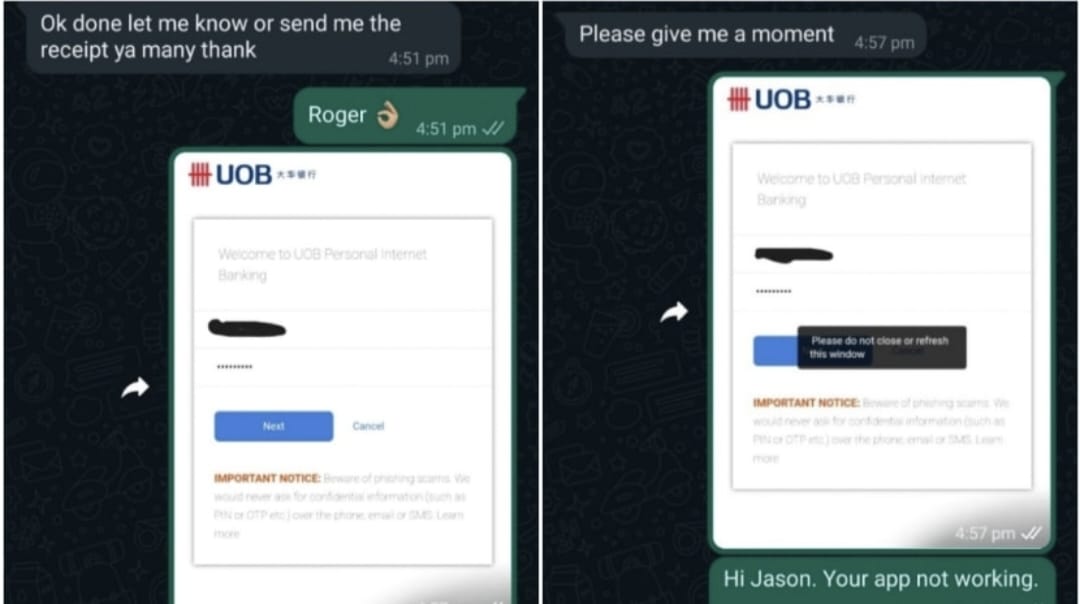

SINGAPORE: In late 2023, tragedy struck the Singh Family, a household of five, when they fell victim to an e-commerce scam while attempting to purchase eggs online.
This deceitful scheme resulted in the loss of more than S$150,000 (US$113,470) from their life savings, distributed across four bank accounts and a credit card.
The funds that were swindled were earmarked for critical financial commitments, including university fees for their teenage children, medical expenses for their 81-year-old grandmother, their housing loan, and the future retirement of Mr and Mrs Singh.
Fearing further scams, the family opted not to disclose their full name.
Regrettably, their plight is not isolated as Singapore grapples with a rising trend of malware scams.
These scams involve victims unwittingly downloading apps that infect their mobile phones with malware, leading to dire consequences for individuals like Mr Singh, the 57-year-old patriarch of the family.
Expressing disbelief, Mr Singh, a communications supervisor, recounted the incident just two days before Christmas, emphasizing his meticulousness in cautioning against scams.
Online egg purchase leads to devastating scam, draining family's life savings
The ordeal commenced on 26 November when Mrs Singh encountered a Facebook advertisement promoting organic eggs.
Intrigued, she and her husband decided to make a purchase, initiating a chain of events that would prove financially catastrophic.
They engaged in a WhatsApp conversation with a "seller" named Jason, who assured them of the eggs' quality and requested a deposit via a specific app.
Mr Singh, acting on Jason's instructions, installed the app and attempted to make a payment for 60 eggs.
Unbeknownst to him, the payment page bore a striking resemblance to UOB's interface.
After entering his UOB account login details, the transaction failed.
Despite Mr Singh's attempts to cancel the order, Jason insisted on proceeding with the delivery.
On 27 November, instead of receiving the promised eggs, Mr Singh received an unexpected call from a UOB customer service officer inquiring about a substantial credit card transaction, of which he was unaware.
A subsequent examination of his UOB and DBS bank accounts revealed the shocking reality – all his funds had been drained.
In a state of shock, Mr Singh recounted the moment he discovered the zero balances, describing it as a surreal experience akin to becoming a zombie.
Promptly alerting his wife, the couple reported the scam to the police, initiating an ongoing investigation by the Singapore Police Force.
Singhs navigate bank communication amidst fraud concerns and unauthorized transactions
The Singhs have taken steps to communicate with the banks implicated in the fraudulent transactions.
Mr Singh discovered a series of outgoing transactions totalling S$15,000 (US$11,347) from his UOB account, along with an additional unauthorized withdrawal of nearly S$30,000 (US$22,694) from his DBS account.
Despite the significant amounts involved, Mr Singh noted that he did not receive any notifications, alerts, or one-time passwords – security measures typically triggered for transactions of lesser sums.
Expressing bewilderment, Mr Singh raised valid questions about how the scammers gained access to his credit card details, which he had not disclosed, and to his other bank accounts.
Asserting that the banks should shoulder at least partial responsibility, he emphasized that he was unaware of the ongoing fraudulent activity and had entrusted the banks to safeguard his funds.
Singh’s family grapples with uncertain financial future and emotional toll
The future remains uncertain for the Singhs, and the prospect of recovering their life savings is shrouded in doubt.
The impact of the scam has taken a severe toll on Mrs Singh, a phlebotomist at a hospital, who has since succumbed to depression and sought help from a psychiatrist.
In an interview with CNA, she struggled to contain her emotions, painting a vivid picture of the emotional devastation the family is enduring.
Expressing profound concern for their future, Mr Singh posed poignant questions about their financial stability during the interview.
"What's going to happen to us? I'm not young anymore to start all over again from scratch. I won't reach the amount I was able to... How much longer am I going to remain employed?"
To navigate their current financial crisis, the Singhs have resorted to borrowing money from relatives, including Mrs Singh's cousin.
Describing the Singhs as a frugal family that diligently saves every penny, the cousin emphasized their responsible financial habits.
Reflecting on the unfortunate turn of events, the relative stated that the scam "could not have happened to a nicer family," highlighting the injustice faced by a family that had conscientiously avoided unnecessary expenses, such as lavish vacations or extravagant indulgences.
Banks say customers play a pivotal role in their own defence against scams; WP MP call for banks to bear full responsibility
In response to inquiries from CNA, both UOB and DBS acknowledged Mr Singh's case and confirmed ongoing communication with him.
A UOB spokesperson underscored the bank's commitment to customer protection, highlighting the introduction of various security controls to combat the rising trend of scams in Singapore.
While urging customers to exercise vigilance, the spokesperson emphasized that customers play a pivotal role in their own defence against scams.
DBS, in addressing the situation, mentioned that the bank evaluates individual cases and provides goodwill payouts on a case-by-case basis.
Beyond financial assistance, the bank collaborates with counselling centres to offer emotional support to victims.
The spokesperson outlined precautionary measures for DBS customers, citing DigiVault – a recently launched service enabling customers to secure their funds by digitally locking them in an account with restrictions on digital transfers.
To access funds, customers must visit a branch for identity verification, enhancing the security of their financial assets.
In September, Workers’ Party (WP) chairman, Sylvia Lim emphasized that banks should bear full responsibility for reimbursing victims of scams and malware fraud.
Ms Lim’s argument was rooted in her belief that the onus should be on banks to restore the financial stability of the victims, rather than burdening individuals to navigate the intricacies of the financial system to reclaim their lost assets.
However, Ms Lim’s proposal was shot down by Mr Alvin Tan, Minister of State for Trade and Industry, emphasizing the need for a delicate equilibrium, stating, “The Government must strike a balance between fairness and accountability.”
Global scam losses soar to US$1.02 trillion; Singapore tops average victim losses, highlighting escalating scam Threats
A joint study conducted by the Global Anti-Scam Alliance (Gasa) and ScamAdviser has revealed a staggering global loss of approximately US$1.02 trillion due to scams between August 2022 and August 2023.
Notably, Singapore emerged as the country with the highest average losses among victims.
This astronomical figure far surpasses the losses of US$55.3 billion in 2021 and US$47.8 billion in 2020.
Jorij Abraham, the managing director of Gasa, unveiled these findings during the opening speech at the fourth annual Global Anti-Scam Summit in Lisbon, Portugal.
The study, spanning 43 countries and surveying 49,459 individuals, extrapolated data based on each country's population.
It was emphasized that the average scam victim in Singapore incurred the highest loss globally, standing at US$4,031.
Switzerland and Austria followed with average losses of US$3,767 and US$3,484, respectively, underscoring the attractiveness of these affluent nations as prime targets for scammers.
During the summit, it was disclosed that Singapore Police Force's data from February indicated a rise in losses, with victims in Singapore losing S$660.7 million (US$499.7 million) in 2022 compared to S$632 million (US$478 million) in 2021.
These trends were corroborated by Singapore's experience, where phishing scams dominated in 2022, accounting for 7,097 cases and resulting in a total loss of S$16.5 million (US$12.4 million), according to SPF records.