Alarming increase in child marriages in Indonesia sparks concerns
Child marriages in Indonesia have reportedly surged by 200%, raising concerns about socio-economic challenges, cultural norms, and inadequate legal safeguards for children. \n \nAdvocates call for urgent measures to protect vulnerable youth where youngest individuals granted dispensation from marriages were as young as 12.

INDONESIA: Child marriages in Indonesia have witnessed a staggering 200% increase, prompting heightened concerns from child advocacy groups.
The surge in dispensation requests to Religious Courts, allowing marriages for individuals under 19, reveals a pressing issue that demands immediate attention.
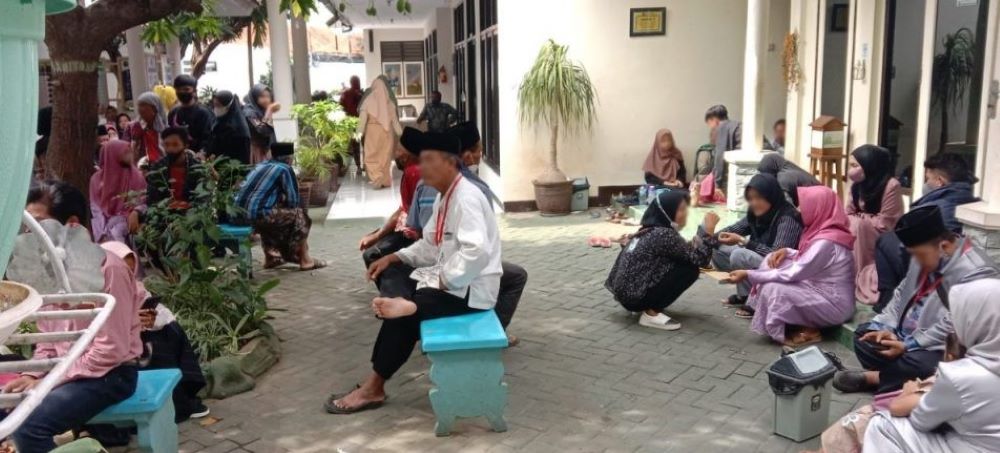
In Bojonegoro, East Java, dispensation requests reached a troubling 435 cases by November 2023.
Solikin Jamik, Chief Clerk of the Bojonegoro Religious Court, disclosed that most applicants were children who had completed elementary or middle school, emphasizing the socio-economic challenges driving families to seek early marriages.
Despite a decrease in requests compared to the last three years, with 435 cases reported in the first eleven months of 2023, the figures remain disturbingly high.
Solikin Jamik noted that out of 50 couples granted dispensation, 50 ended in divorce within a few months, underscoring the fragility of such unions.
A family member, identified as Beni, acknowledged his sister's unreadiness for marriage but claimed their family felt compelled due to limited options.
Beni stated, "Marriage is not a choice; it must be done. If not, the consequences will be more worrying..."
Alimatul Qibtiyah, a Commissioner of the National Commission on Violence Against Women, outlined reasons behind dispensation requests, including cultural traditions, hiding premarital pregnancies, narrow views on girls' education, and religious teachings.
Isa Anshori, Head of Data, Information, and Research at the Indonesian Child Protection Agency, supported Qibtiyah's observations.
He highlighted concerns of parents fearing sinful behavior if their children interacted with the opposite sex, influenced by religious beliefs.
The data from the Central Statistics Agency (BPS) for 2023 indicated that the highest incidence of child marriages occurred in ten provinces, including Wes Nusa Tenggara, Gorontalo, West Kalimantan, Central Sulawesi, North Maluku, North Sulawesi, West Sulawesi, West Sumatra, and South Kalimantan.
Referring to records from the Religious Judiciary, the number of dispensation requests surged from 24,856 in 2019 to 64,222 in 2020.
Although the numbers slightly decreased in subsequent years, with 62,119 requests in 2021 and 52,095 in 2022, the overall trend remains alarming.
Pribudiarta Nur Sitepu, Secretary of the Ministry of Women's Empowerment and Child Protection, noted that almost 95% of dispensation requests are approved by judges.
Parents can apply for dispensation at the Religious Court with a marriage request letter, identity proof, rejection letter from the Religious Affairs Office, family card, and the underage spouse's school certificate.
Isa Anshori disclosed that the youngest individuals granted dispensation were as young as 12.
In dispensation hearings, both parents or guardians and the underage individuals seeking approval are present, alongside witnesses. Anshori likened the proceedings to regular marriages, with an exchange of vows.
During court sessions, judges offer advice to parents and underage individuals to understand the risks of early marriage. If the Religious Court grants dispensation, living arrangements vary based on the socio-economic backgrounds of the families involved.
Alimatul Qibtiyah argued that child marriages equate to systematic poverty for women, leading to discontinued education, early pregnancies, and restricted social development.
She emphasized that young brides lose their adolescent years with friends and are forced into parenting without adequate preparation.
Moreover, early pregnancies pose health risks for underage individuals, with potential complications and maternal mortality during childbirth.
Babies born to underage mothers are at risk of low birth weight, further compounding the health challenges faced by these families.
Child advocates expressed concerns about the heightened vulnerability of underage individuals to domestic violence due to their lack of psychological and mental preparedness for marriage.
The limited number of judges well-versed in women's and children's issues further compounds the problem.
Isa Anshori highlighted the need for more judges with a progressive outlook who can consider children's statements without parental presence.