Rejected suspension of MP appointment; Netizens question Iswaran’s S$192,500 allowance amidst unfulfilled MP duties
On Tuesday, Singapore's Parliament rejected NCMP Hazel Poa's motion, which sought to suspend Transport Minister S. Iswaran from his parliamentary role for the remainder of the 14th Parliament session. \n \nHowever, the debate's conclusion hasn't halted discussions on social media, with some supporting Progress Singapore Party (PSP)'s motion, while others echo the position by the Leader of the Opposition, emphasizing the importance of due process.
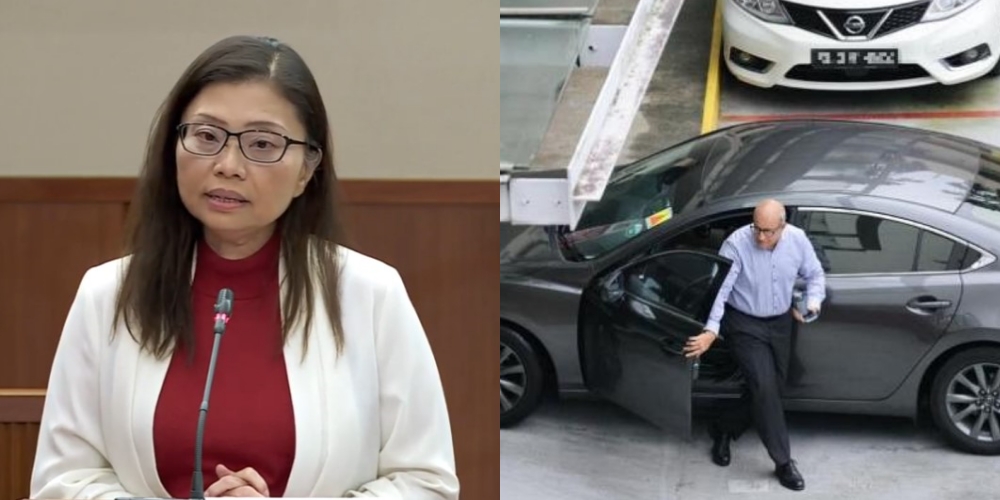

SINGAPORE: On Tuesday (19 Sep), the Singapore Parliament rejected a motion proposed by Non-Constituency Member of Parliament (NCMP) Hazel Poa.
In her motion, Ms Poa, who also serves as the deputy chairman of the Progress Singapore Party (PSP), called for the suspension of Transport Minister S. Iswaran from his parliamentary duties as a Member of Parliament for the remainder of the current session of the 14th Parliament.
Endorsed by fellow PSP NCMP and Secretary General Leong Mun Wai, this motion aimed to halt Mr Iswaran’s MP allowance, amounting to S$192,500 annually.
It was proposed in light of the ongoing investigation by the Corrupt Practices Investigation Bureau (CPIB), during which period Mr Iswaran has abstained from his official MP duties.
In response, Indranee Rajah, the Leader of the House, presented a counter-motion, advocating that the House should only address concerns about Minister S. Iswaran after the ongoing investigations conclude.
Indranee's motion was approved by the People’s Action Party-dominated Parliament and received support from the Workers’ Party as well.
Heated discourse persists on social media
Despite the conclusion of the parliamentary debate, the discourse continues to thrive on social media.
Upon observing netizens' sentiments on platforms such as YouTube and Reddit, it is evident that many express agreement with the PSP's motion, arguing that a Minister should not receive payment while not performing their MP duties, a principle commonly upheld in corporate industries.
Conversely, others align with the stance articulated by the Leader of the Opposition, Mr Pritam Singh, who emphasizes the necessity for the wheels of justice to turn fully before Parliament makes any decisions.
While Mr Singh dismissed the PSP's motion, he suggested that, instead of parliamentary suspension, a pause in MP allowance payments could be considered.
Support for Opposition Leader's perspective on pay for MPs under indictment
Some comments agree with the Leader of the Opposition, commending Mr Singh for making a reasonable point and presenting a strong argument.
They believe that Members of Parliament who are indicted should not receive pay but should not be suspended either.
According to this perspective, the decision to suspend an MP should only be made after a thorough investigation has taken place and if they have been found guilty in a court of law.

However, that suggestion is not possible as Prime Minister Lee Hsien Loong had earlier admitted he couldn't suspend Mr Iswaran's salary, while Mr Chan Chun Sing clarified that an MP's salary only stops if they're excluded from Parliament via a relevant motion under the Privileges, Immunities and Powers Act 1962 which is what PSP tried to do on Tuesday.
A Reddit user has proposed an alternative solution that upholds the principle of "innocent until proven guilty" while ensuring diligent use of taxpayer money.
The suggestion is to initially suspend the Minister without pay and, if found not guilty, reinstate and pay the withheld salary.
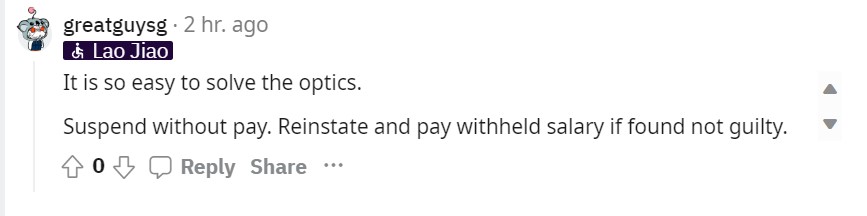
This, however, is exactly what PSP has wanted to achieve with their private member bill to introduce an amendment to the act.
Several netizens rally behind the "no work, no pay" principle
Many netizens expressed their support for the "no work, no pay" concept, particularly endorsing PSP's stance that Minister Iswaran should not receive payment while he is not fulfilling his MP duties.

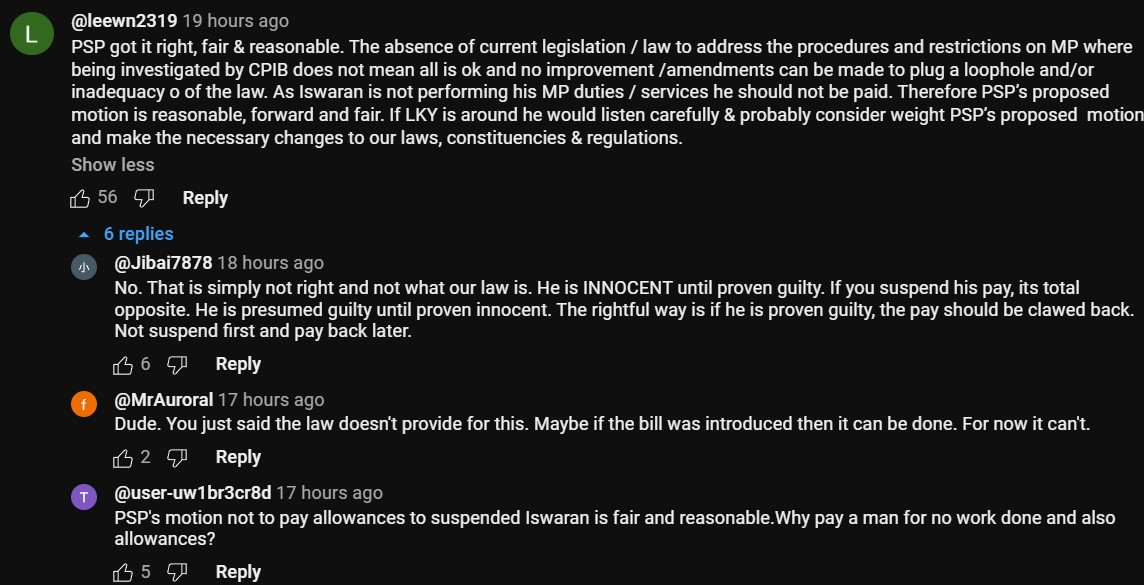
Commenting on YouTube, one netizen commended the PSP's motion as "fair and reasonable."
The netizen pointed out that the absence of current legislation to address procedures and restrictions on MPs being investigated by the CPIB does not imply that everything is acceptable; instead, it highlights the need for improvements and amendments to address any existing loopholes or deficiencies in the law.
On the other hand, another YouTube user argued that Minister Iswaran should be presumed innocent until proven guilty, and suspending his pay contradicts this fundamental legal principle.
The netizen suggested that the proper course of action would be to claw back his pay if he is found guilty, rather than suspending it upfront and repaying it later.
In response, another comment raised a valid question: Why should a man be paid for work not performed, along with allowances?
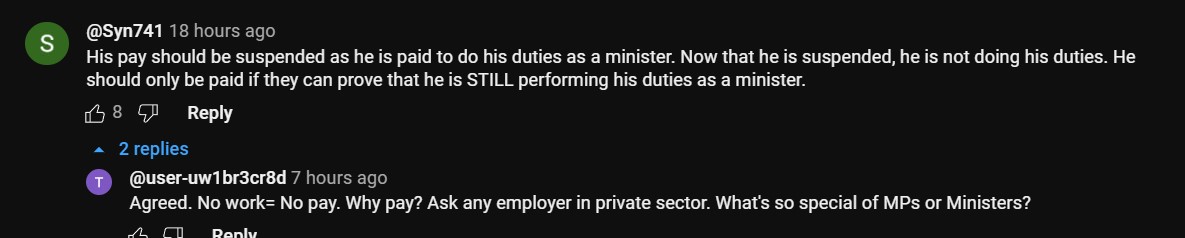
One netizen further contended that Minister Iswaran should only receive the reduced S$8,500 ministerial salary if the ruling government can provide evidence that he is actively fulfilling his duties as a minister.
Continuing to pay the Minister until the next General Election if the investigation/trial persists for years?
A pertinent question has been raised by certain netizens: Will the government and the Parliament continue to remunerate Minister Iswaran until the next election if the investigation or trial against him extends for an extended period?
Such a situation, they argue, would be unacceptable in the corporate world, where if you cease working, your compensation ceases as well.

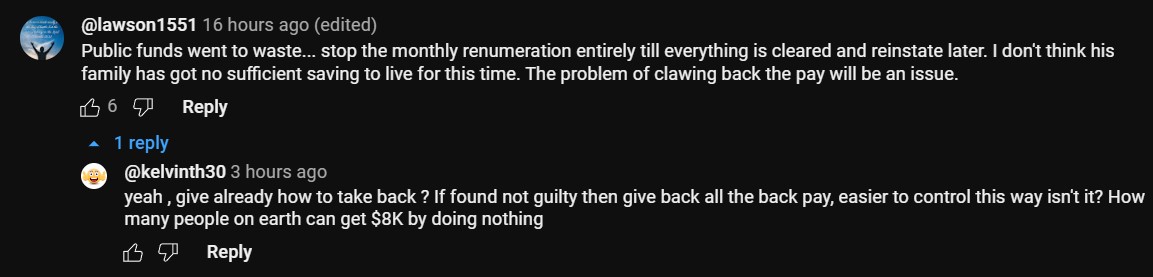
Several comments also criticize the ongoing payment of Minister Iswaran while he is still under investigation as a "waste of taxpayer money."


Argument on "innocent until proven guilty"
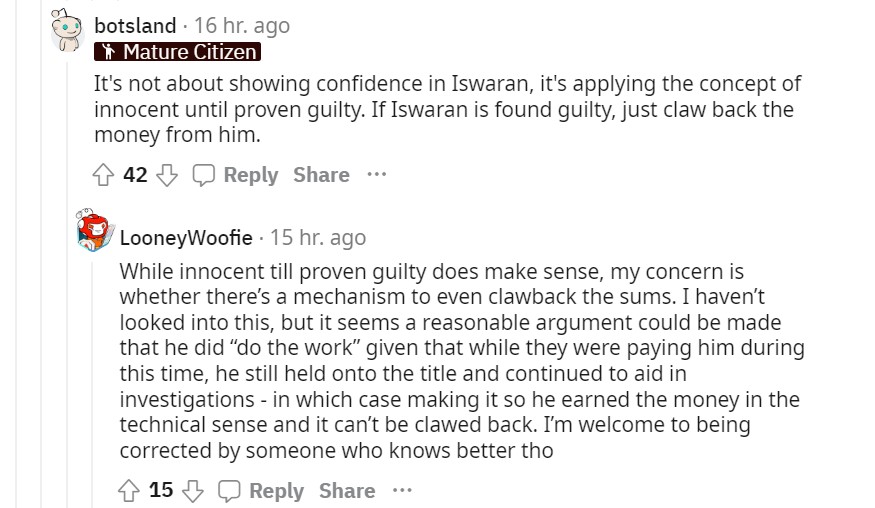
One comment defends the decision not to suspend Iswaran at the moment, clarifying that it's not about showing confidence in Iswaran but rather applying the fundamental principle of "innocent until proven guilty."
The suggestion here is that if Iswaran is ultimately found guilty, the money can be recovered from him.
However, a Redditor raises a valid concern regarding whether there's a mechanism in place to facilitate the clawback of funds.
He argues that while the "innocent until proven guilty" concept makes sense, there's a possibility that a reasonable argument could be made that Iswaran did indeed perform work during the period when he was receiving payment, as he still held his title and contributed to ongoing investigations.
This situation raises the question of whether he technically earned the money, making it difficult to claw back.