Public faces unfair status quo as PSP's motion to suspend Iswaran's salary is rejected, despite him not fulfilling MP duties
Has the Progress Singapore Party (PSP) highlighted a significant oversight in tabling a motion to suspend Transport Minister S. Iswaran's MP allowance, especially in light of his abstention from duties and the ongoing investigations by the Corrupt Practices Investigation Bureau (CPIB)? \n \nDuring the parliamentary debate on Tuesday, Ms Poa raised a compelling point: Is it justifiable for taxpayers’ funds to support an MP's salary when he voluntarily refrains from his duties? \n \nWith the motion's rejection, a pressing question remains: How can an MP continue to draw a salary, with no legislative provision allowing for its recovery, should he be later found guilty?


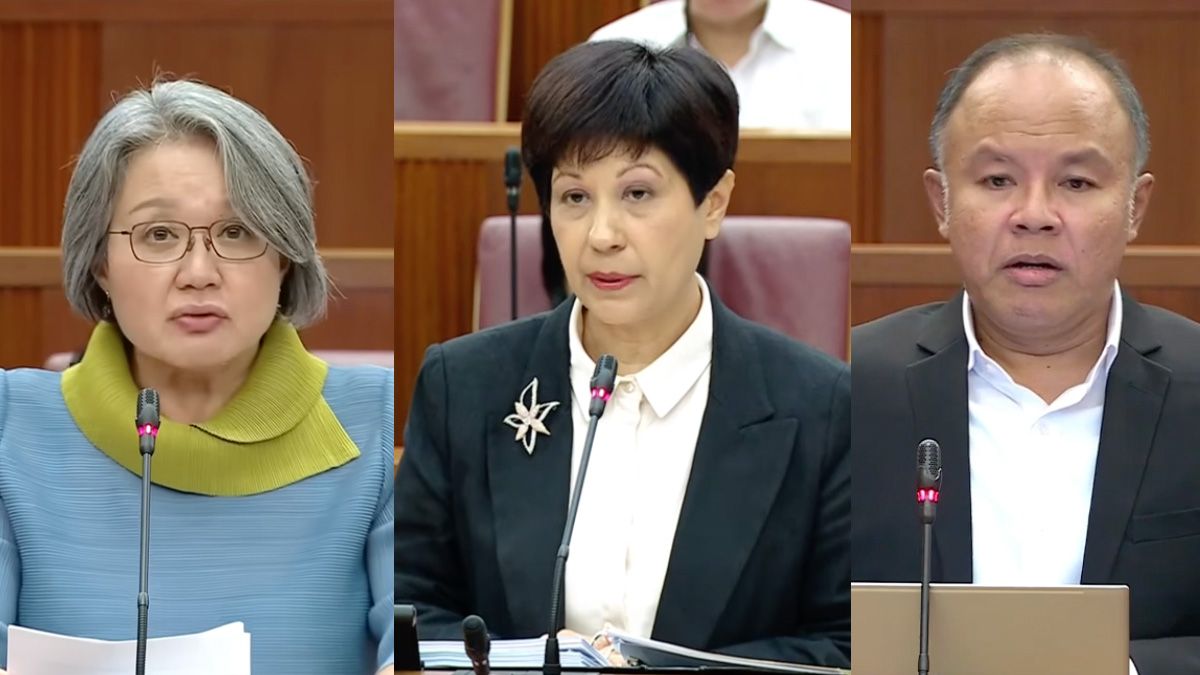
On Tuesday (19 Sep), the Singapore Parliament rejected a motion proposed by Non-Constituency Member of Parliament (NCMP) Hazel Poa.
In her motion, Ms Poa, who also serves as the deputy chairman of the Progress Singapore Party (PSP), called for the suspension of Transport Minister S. Iswaran from his parliamentary duties as a Member of Parliament for the remainder of the current session of the 14th Parliament.
Endorsed by fellow PSP NCMP and Secretary General Leong Mun Wai, this motion aimed to halt Mr Iswaran's MP allowance, amounting to S$192,500 annually. It was proposed in light of the ongoing investigation by the Corrupt Practices Investigation Bureau (CPIB), during which period Mr Iswaran has abstained from his official MP duties.
In response, Indranee Rajah, the Leader of the House, presented a counter-motion, advocating that the House should only address concerns about Minister S. Iswaran after the ongoing investigations conclude. The motion was approved by the People's Action Party-dominated Parliament and garnered support from the Workers' Party as well.
During the parliamentary debate, Ms Poa contended that the suspension was vital to ensure judicious use of taxpayers’ funds. She spotlighted the potential fiscal repercussions of letting a suspended MP continue receiving a full allowance, especially if subsequently proven guilty.
Ms Poa articulated the PSP’s stance: the proposed suspension, combined with a provision for retroactive payment if Mr Iswaran is acquitted, would be both balanced and fair.
Only a few MPs engaged in the debate over these motions. The primary objection from the People's Action Party MPs to Ms. Poa’s motion was the notion that suspending Mr Iswaran would prematurely assume his guilt prior to the conclusion of due process.
Parallels were also drawn with ongoing investigations into Workers' Party MPs, Mr Pritam Singh and Mr Faisal Manap, concerning alleged perjury.
Ms Poa, however, accentuated that her motion's intent centred on judicious use of taxpayer funds rather than presuming guilt. She stressed the unique circumstances of this case as justification for suspending the PAP MP.
Notwithstanding the ongoing investigations, Transport Minister S. Iswaran, albeit suspended from ministerial tasks, still receives a monthly salary of S$8,500 for his ministerial role and S$16,000 as an MP.
Replying to Mr Singh's inquiries, Ms Indranee clarified that while Mr Iswaran had been relieved from his ministerial roles by the Prime Minister's directive, his duties as an MP were still intact. However, out of party discipline, he has opted not to attend Parliament or serve his constituents.
The predicament is further nuanced by the possibility of protracted investigations, as exemplified by the nearly five-year-long CPIB investigation into former senior managers of Keppel Offshore & Marine Limited (KOM) before stern warnings were issued.
With only two years remaining before the mandatory dissolution of Parliament in 2025, it remains uncertain whether the present investigation will conclude before Mr Iswaran's MP tenure ends.
If Parliament were to dissolve in the forthcoming months, it would prompt the question: Would PM Lee seek reimbursement of Mr Iswaran's MP salary if he is indicted and found guilty post the dissolution of the 14th Parliament?
There's palpable public unrest regarding Mr Iswaran's ongoing MP salary receipt, especially as he withholds from his duties.
This contrasts starkly with MPs like Mr Singh or Mr Faisal, who continue in their roles amidst investigations. The concern here revolves around an MP who voluntarily abstains from duties yet draws both a ministerial and MP salary.
While Mr Singh dismissed the PSP's motion, he posited that instead of parliamentary suspension, a halt in MP allowance payment could be contemplated.
However, as Ms Poa emphasized, there is currently no legislative provision that mandates the repayment of salary, even if Mr Iswaran is found guilty.
Earlier on 2 August, Prime Minister Lee Hsien Loong admitted he couldn't suspend Mr Iswaran's salary, while Mr Chan Chun Sing clarified that an MP's salary only stops if they're excluded from Parliament via a relevant motion under the Privileges, Immunities and Powers Act 1962.
But, as PSP files a motion a month later in light of the matters highlighted, the PAP government seems to be circumventing the core issue, highlighting the importance of due process.
As per Ms Indranee's response to Mr Leong regarding the potential introduction of a bill to permit MPs' salary clawback, the PAP government appears to lean more on the minister's goodwill than legislative action.
Additionally, the vagueness in Ms Indranee's remarks on seeking salary reimbursement indicates that such a request might never emerge due to the case's intricate and drawn-out nature.
Furthermore, the ambiguous nature of Ms Indranee's comments about requesting the repayment of the salary suggests that such a query might never arise, given the complex and protracted nature of the matter.
We must contemplate what the status quo signifies for both Singaporeans and Singapore itself. The current situation suggests that MPs can potentially abandon their duties while still receiving compensation for their position.
According to the rules, an MP will lose their membership if they are absent for two consecutive months from sittings of Parliament (or any of its committees they've been appointed to) without prior permission from the Speaker of Parliament.
This implies that if the Speaker doesn't grant Mr. Iswaran permission for his absence, he could be suspended.
It raises the question: on what grounds is the Speaker allowing Mr Iswaran's absence, especially when MPs like Mr Singh and Mr Faisal continue to fulfil their roles despite their ongoing investigations?
If Mr Iswaran's ministerial duties prevent his attendance in Parliament, why hasn't the Prime Minister considered relieving him of his ministerial position? Would he remain a minister under such circumstances? Or is the PAP perhaps stalling the issue with the intent of calling the General Election in the upcoming months?
To conclude, the ongoing matter of Mr Iswaran's suspension and continued remuneration draws attention to broader concerns of accountability, transparency, and the ethical appropriation of taxpayer money in Singapore's political landscape.
While the principle of 'innocent until proven guilty' is fundamental, so too is the prudent use of taxpayer funds to meet public expectations.
The exchange between PSP's motion and the PAP government's response underscores a prevailing status quo that is not in taxpayers' interest, highlighting the urgency for clear legislative guidance of what to do when an MP is not doing his or her job.