Public skepticism on China's role in Singapore's S$1.8 billion arrests: Beyond Shanmugam's denials
While Minister K Shanmugam denies external influence in the S$1.8 billion money laundering arrests, the public remains skeptical. The intertwined timelines, significant Chinese connections, and coincidental events provide ample grounds for suspicion over China's potential involvement, despite official reassurances

Singapore’s role as a major financial hub often places it under scrutiny regarding the movement of vast sums of money, both legitimate and questionable.
The startling island-wide arrests of ten foreign nationals, connected to a staggering S$1.8 billion money laundering case on 15 August, have indisputably jolted the city-state.
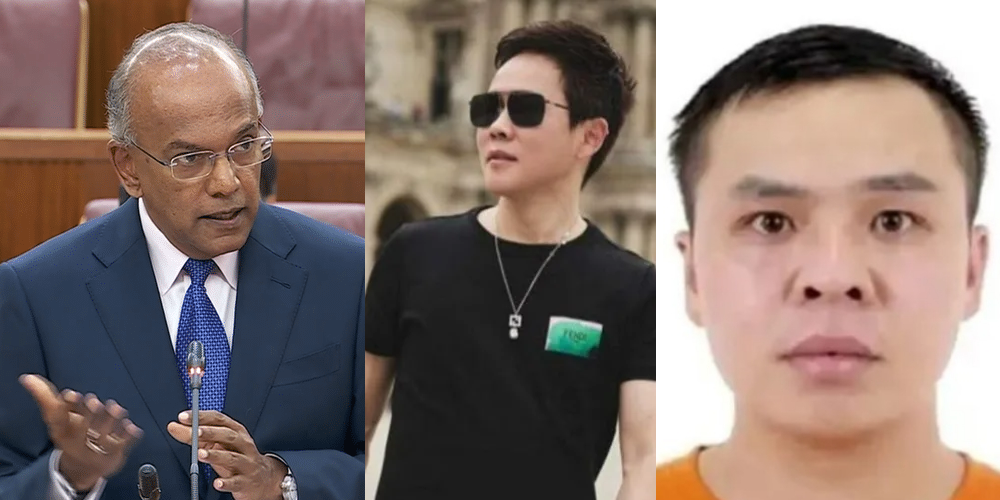
At the crux of the debate is timing. The Minister of Home Affairs and Law, K Shanmugam, clarified in an interview with the Chinese newspaper, Lianhe Zaobao, that the investigation and subsequent arrests weren't influenced by external events, particularly China's Foreign Minister Wang Yi’s visit on 10 August.
Mr Shanmugam noted that the investigation had spanned several months. The police had diligently traced illicit activities within Singapore and abroad, identified the culprits, and scrutinized the fund flows.
Earlier, the Monetary Authority of Singapore (MAS) emphasized that prior intelligence and data from suspicious transaction reports (STRs) submitted by Singaporean financial institutions (FIs) had alerted the CAD to potential irregularities in the financial sector.
Conversely, the Singapore Police Force (SPF) indicated its investigation began based on tips about alleged illegal activities, particularly those centred on the use of counterfeit documents to trace the origins of funds in Singaporean bank accounts.
Subsequent thorough investigations, strengthened by intelligence and review of STRs, pinpointed a group of foreign nationals under suspicion of money laundering.
These funds are believed to have originated from their international organized crime ventures, ranging from scams to online gambling.
Mr Shanmugam highlighted the complexity of concluding such intricate investigations swiftly, pointing out that those familiar with such endeavours would understand the effort and time required.
Yet, the events appear somewhat coincidental, leading the public to speculate.
For example, all the accused originate from Fujian, China. This shared origin, combined with other specifics, paints a compelling picture.
Consider Vang Shui Ming, a 42-year-old Turkish national from Fujian. Singaporean authorities seized assets from him, including an astonishing S$962,000 in cash from his home.
There's also the notable acquisition of luxurious properties, such as the purchase of 20 units at CanningHill Piers for S$85 million just a year prior to the arrests.
The Business Times, in August 2021, detailed Su Haijin’s acquisition of two adjoining bungalows at Sentosa Cove, totalling a reported S$36.37 million.
As for Su Haijin's brother, Su Baolin, assets worth over S$130 million were seized from him and his spouse. Notably, Su Baolin paid S$39.33 million for a Sentosa Cove bungalow with a sea view in April 2021.
Chinese authorities had reportedly sought Vang and his brother, Wang Shuiting for his involvement in a group developing and maintaining profit-oriented gambling platforms.
Another individual, Su Yongcan, also arrested, is sought by Chinese authorities for his ties to a 2017 gambling syndicate.
Su Haijin, with S$4.06 million in a UOB account, is alleged by the prosecution to have funds stemming from illegal remote gambling offenses.
The pressing question remains: Did China share this information with Singapore? If so, when?
A Twitter post by Vanessa Gao on 16 August claimed that Singapore’s Commercial Affairs Department (CAD) had covertly established a task force about three months prior.
https://twitter.com/vc_btxcap/status/1691669914883670247
This team was said to have focused on the dealings of these Fujian-origin foreign nationals, tracing covert transactions via Citibank linked to gambling and narcotics.
It’s still a matter of debate as to whether Singapore's authorities had been surveilling these individuals even before this period, given how the ten arrested had managed to move over S$1.8 billion of assets more than a year before investigations were supposedly initiated.
Linking these elements with Gao's enigmatic tweet about an impending visit from a team of the Chinese Ministry of Public Security on 21 August, it crafts a story hard for the typical Singaporean to dismiss.
Although Mr Shanmugam refutes foreign meddling in the apprehensions, given the timeline of occurrences and the undeniable connections to China, it's evident why some Singaporeans sense a deeper narrative.
As the court proceedings progress and fresh facts come to light, the storyline might shift. However, for now, public doubt, anchored in the maze of events and timings, stands warranted.