Former banker questions narratives put forth by politicians on Singapore reserves in CNA documentary series
Chris Kuan, a former banker, critically analyzes the "Singapore Reserves Revealed" documentary. He challenges PAP's longstanding emphasis on reserves growth and calls for greater transparency in Singapore's economic strategies.
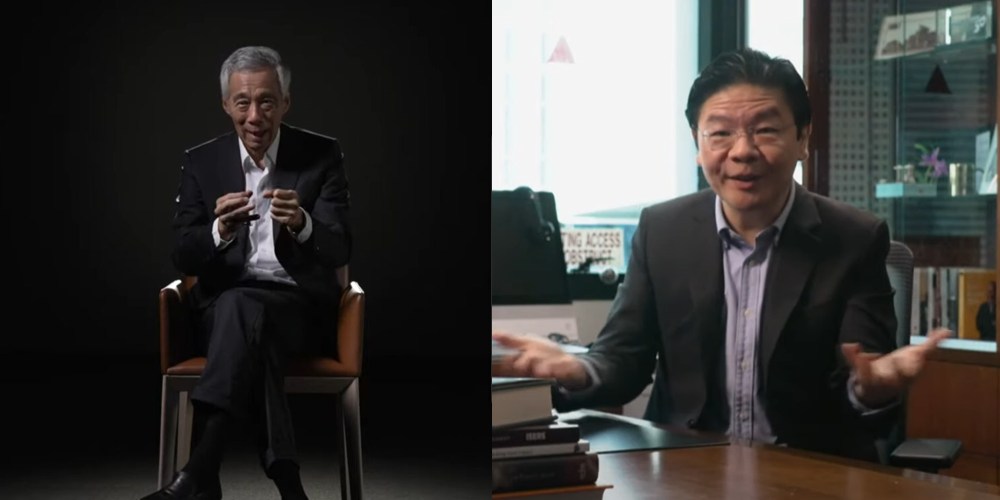

Produced over a meticulous span of six months, Channel News Asia's documentary series, "Singapore Reserves Revealed," offers an unprecedented look into one of Singapore's most tightly guarded secrets: its reserves.
This comprehensive exposé is timely, coming just before the upcoming presidential election on 1 September, which may result in a contest if multiple candidates come forward.
The series has attracted significant attention, not least because it features exclusive interviews with the nation's leading figures, including Prime Minister Lee Hsien Loong and Deputy Prime Minister and Finance Minister Lawrence Wong.
During his interview, PM Lee observed that while Singapore's current reserves are "sufficient for most circumstances," it would be a grave mistake to assume this status quo will persist indefinitely. He pointed out that the nation's expenditures are now outpacing its revenue.
However, when pressed for specific figures regarding Singapore's reserves, the Prime Minister remained reticent. He underscored that the reserves significantly bolster Singapore's annual budget, contributing to government revenues.
DPM Wong, who also stopped short of revealing exact figures, stressed that, abundant as the nation’s reserves might seem, increased withdrawals from the Net Investment Returns Contribution (NIRC) would not be prudent.
He emphasized that the reserves should not be perceived solely as an emergency buffer but also as an essential endowment addressing the nation's current needs.
Positioned to succeed PM Lee, DPM Wong echoed the government's long-standing stance, contending that reinvesting returns into the national reserves is vital for Singapore's financial longevity.
"If we don’t reinvest, the value of the reserves will diminish over time," he cautioned.
Despite the insights shared in the CNA series, Chris Kuan, a former Singaporean banker now based in Japan, feels it left many stones unturned.
In his pointed critique, Kuan contended that the documentary primarily echoed the People’s Action Party's (PAP) – the ruling party since Singapore's independence – emphasis on consistently augmenting the reserves.
Kuan posed several critical questions, shedding light on potential gaps in the documentary's narrative:
- Why should Singapore's reserves grow in tandem with GDP when the wage component of GDP stands at a mere 40%?
- With the anticipated decline in Singapore's citizenry*, would the nation witness reduced fiscal commitments, nullifying the need to amass reserves at the existing rate?
- And could an unrelenting focus on inflating reserves inadvertently drive up real estate prices, thereby escalating costs and depleting savings?
Kuan wrote, "Through the feedback loop of using CPF for housing, is this not akin to chasing our own tails - higher real estate prices = higher reserves = higher costs = less savings = higher state spending = higher real estate prices = higher reserves =.........?"
Concluding his analysis, Kuan argued that the documentary, rather than clarifying matters, perpetuated a narrative shrouded in secrecy. "You are told, but really you are not," he remarked, underscoring the imperative for greater transparency and a diversified perspective on Singapore's economic path.
On a related note, addressing DPM Wong's concerns about diminishing reserves, Workers' Party Member of Parliament Louis Chua, in his 2022 Budget speech and the debate over the GST amendment bill, pointed out that even after the drawdown of $43 billion from Singapore's reserves for COVID-19 relief packages, the reserves are still more substantial than they were five years prior.
Intriguingly, when presented with this observation in parliament, DPM Wong did not refute Mr Chua's point.
*According to data released by the Immigration and Checkpoints Authority (ICA), the number of live births dropped by 7.9%, from 38,672 in 2021 to 35,605 in 2022.
Simultaneously, the country registered a total of 26,891 deaths, marking a 10.7% increase from 2021 and the highest annual death count in over six decades.
At the same time, Singapore granted around 23,100 new citizenships last year, with 1,300 going to children born overseas to Singaporean parents. Additionally, approximately 34,500 new permanent residencies were granted.