Canada's counter-tariffs take effect as Carney warns pivot away from US will carry a cost
Canada's retaliatory duties on C$27.6 billion of US goods took effect on Tuesday, 8 September 2026. Prime Minister Mark Carney said the country would match Washington "dollar for dollar" while accelerating trade diversification, warning the pivot away from the United States would come at a cost.
- Canadian duties of 15 to 50 per cent now cover roughly C$27.6 billion in US goods.
- Carney says US negotiators sought dependency; he announced C$7.5 billion in new support.
- Trump has threatened to bar Bombardier sales unless the manufacturer relocates production.

Canada's retaliatory tariffs on United States goods came into force on Tuesday, 8 September 2026, marking a further escalation in a trade dispute that has fractured one of the world's closest bilateral relationships.
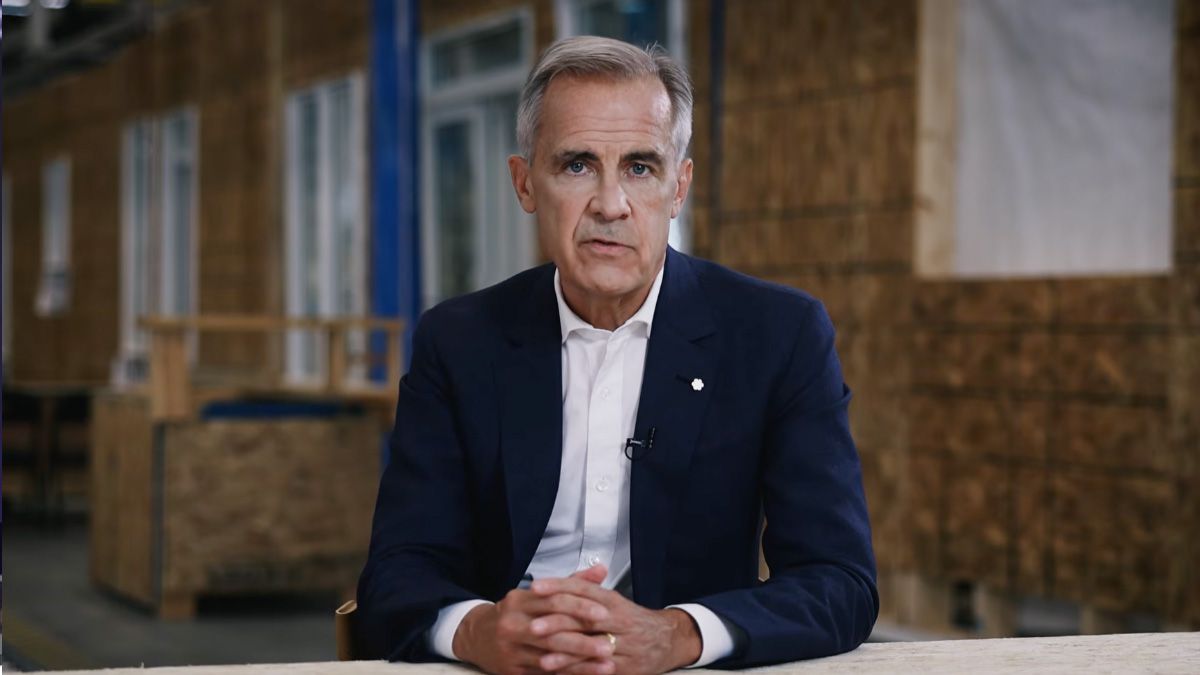
Hours later, Prime Minister Mark Carney released a 15-minute video address setting out the government's response. Filmed at Caivan, a factory-built housing company, it was the latest in a series he began last spring to explain government policy directly to Canadians.
In it, Carney said Canada would answer the United States with matching tariffs while accelerating efforts to trade elsewhere, and warned that the shift would not be painless.
The measures that took effect on Tuesday cover approximately C$27.6 billion (about US$20 billion) worth of American products. Carney put the figure at C$27.8 billion, matching the value of the goods targeted by Washington.
Scope and expected impact
According to the Associated Press, the counter-tariffs cover around 6 per cent of the goods the United States exported to Canada last year.
Canada has also retaliated outside the tariff system. The Associated Press reports that eight of the country's 10 provinces continue to restrict or prohibit sales of American alcohol.
The Distilled Spirits Council of the United States said American spirits exports to Canada had fallen by more than 70 per cent year on year since those restrictions were introduced.
RBC Economics assessed that Canada's measures were unlikely to have a noticeable effect on overall US growth, although it noted some American businesses could be hit considerably harder.
Analysts have similarly described American tariffs as a modestly negative risk to Canada's economy as a whole, while carrying a sharper impact on Central Canada's manufacturing sector.
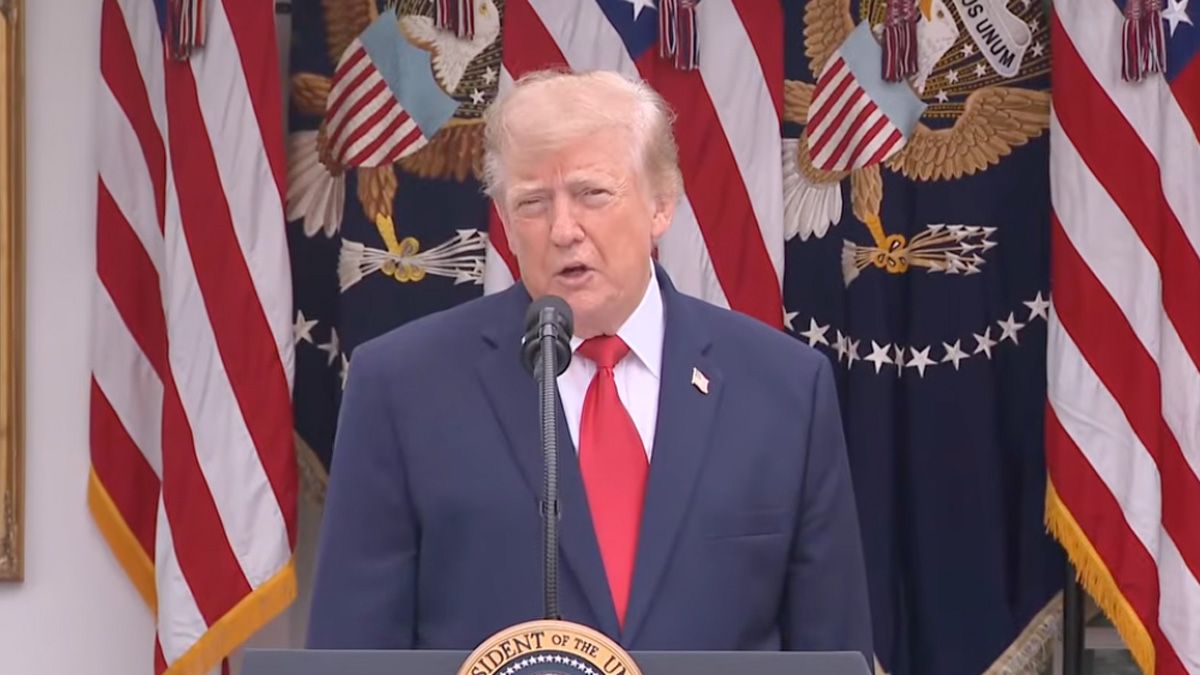
The Canadian action follows duties of 50 per cent imposed by US President Donald Trump on an equivalent value of Canadian products from 22 August. Washington cited what it described as "discriminatory treatment" of American alcohol, automotive and dairy industries.
The US measures affect wine, furniture, dairy goods, cement, clothing, fishing rods and hockey equipment, covering roughly 5.5 per cent of Canadian exports to the United States.
Trump threatens Bombardier
On Monday, Trump threatened to block sales by the Canadian aircraft manufacturer Bombardier in the United States unless it moved production there.
"No more selling Bombardier in the United States!" he wrote in capital letters on his Truth Social platform. He did not explain how such a prohibition would be introduced.
Thousands of Bombardier aircraft currently operate within the domestic fleets of US airlines.
The company said in a statement that it supports "tens of thousands of jobs across the United States", including direct employment in more than 20 states. It said it spends more than US$2.5 billion annually with approximately 2,800 American suppliers across 47 states.
"Bombardier values its great partnership with American companies and its US employees," the company said.
Talks suspended since August
Negotiations collapsed on 21 August after several days of meetings in Washington. Carney said he had suspended the talks because the terms proposed by the Trump administration were unacceptable.
He said US negotiators had introduced last-minute restrictions on Canada's ability to conclude trade agreements with other countries.
Carney said in the video that American negotiators were also pursuing restrictions on Canada's ability to protect and promote the French language and culture, and were offering terms that would over time undermine the automotive, steel and forest products industries.
"They were asking far too much and offering far too little," he said, adding that the government had chosen to walk away from a bad deal rather than accept one that was not fair.
"In too many areas, they wanted dependency, not a true economic partnership," he said.
A three-pronged response
Carney described the government's response as having three elements: matching tariffs, direct support for affected Canadians, and accelerated diversification of trade.
"I don't believe in escalating the conflict, that's not constructive," he said. "But our tariffs are necessary to protect our workers, protect our companies and our communities."
The government has announced a C$7.5 billion aid package. Carney said it would provide fast access to capital for small businesses, income support and retraining for workers, and targeted help for the automotive, forestry, steel and aluminium sectors.
He said this came on top of nearly C$25 billion already delivered since the dispute began.
Carney said American tariffs had been designed to harm some Canadians more than others, noting that measures aimed at steel, aluminium, automotive and lumber had chiefly affected workers in Ontario, Quebec and British Columbia.
He said Canada had signed 20 trade and defence agreements across four continents, and pointed to Montreal-based Marconi Technologies, which in July became the first Canadian company to secure a contract under SAFE, the European defence procurement programme.
"We have everything we need to pivot and prosper," Carney said. "That pivot will come at a cost. There's always a cost to action. But it doesn't come close to the cost of standing still."
A historical parallel
Carney drew a comparison with the Tariff Act of 1890, championed by the Ohio congressman William McKinley under the administration of Benjamin Harrison, which imposed 50 per cent duties on Canadian exports.
"McKinley's 50 per cent tariff was meant to pressure us into dependence and eventually annexation by the United States. In reality, it did just the opposite," he said, arguing that Canada had instead diversified and grown stronger.
Domestic political pressure
Federal Conservatives have continued to press the government to release the full details of the agreement Canada declined, and to recall Parliament ahead of its scheduled return on 21 September.
"We're asking for the prime minister to be straight-up," Conservative leader Pierre Poilievre said at a news conference in Regina on Monday. "The best way to keep everyone united and rowing in the same direction is to be up front about the costs, the decisions and the plan going forward."
He added that Canadians "deserve to see" the proposed deal so they could judge it for themselves.
Wider deterioration
The dispute has extended beyond trade policy. Trump signed an order in August directing the US government to refer to Lake Ontario, which lies on the border between the two countries, as "Lake America".
Google and Apple subsequently adopted the name for users in the United States, although Canada does not recognise the change.
Carney said talks could resume when the American side would "stop doing memes, stop throwing shade, stop trying to be tough" and start being serious.
Trump has spoken openly for close to two years about turning Canada into a US state and has repeatedly referred to the prime minister as "governor". In January 2025, before his second inauguration, he ruled out using military force to annex Canada but said he would consider "economic force".
The rupture is striking given the depth of the relationship. The two economies are heavily integrated, with close defence and security cooperation and extensive cultural ties. Before relations deteriorated, roughly 400,000 people crossed the border each day.
Despite strong public support for Carney, Canada remains heavily reliant on its neighbour. Nearly 60 per cent of Canadian imports come from the United States, while about 70 per cent of Canadian exports go to the American market.