At least 98 dead and hundreds missing after mudslide-triggered floods hit Nepal-China border
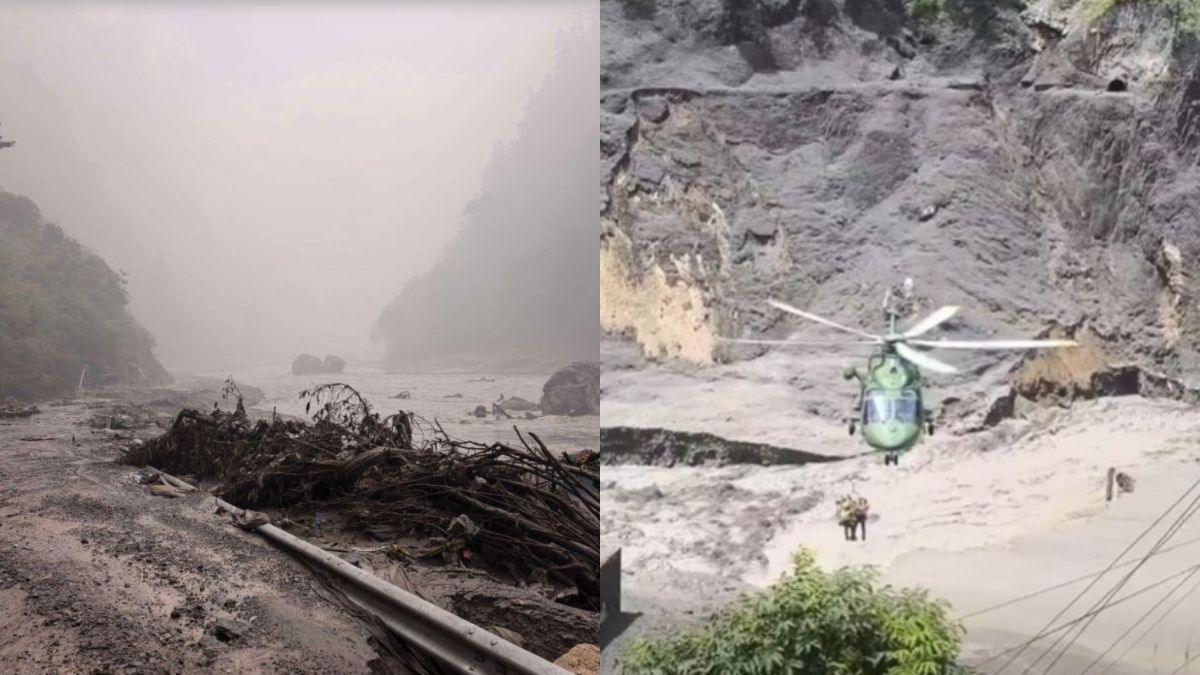
A mudslide on the Nepal-Tibet border triggered flash floods on 26 August 2026, killing at least 98 people in Nepal, three in China, with hundreds of tourists and workers still missing.
- Flash floods killed at least 98 in Nepal and three in Tibet after an earthquake-triggered ice-rock avalanche
- Hundreds of tourists, workers and security personnel remain missing on both sides of the border
- Authorities warn a second flood may occur due to a blockage still lodged upstream

At least 98 people have died and hundreds more remain missing after a mudslide triggered catastrophic flash flooding along the Nepal-China border on Wednesday, 26 August 2026, according to authorities in both countries.
Nepali police spokesman Abi Narayan Kafle told AFP that at least 95 people had been killed as of Wednesday evening, with the toll later rising to 98. Twenty-eight police personnel were reported missing.
In China's Tibet region, state broadcaster CCTV said at least three people had died and 265 remained missing in Gyirong county, though it cautioned the figures were still being verified.
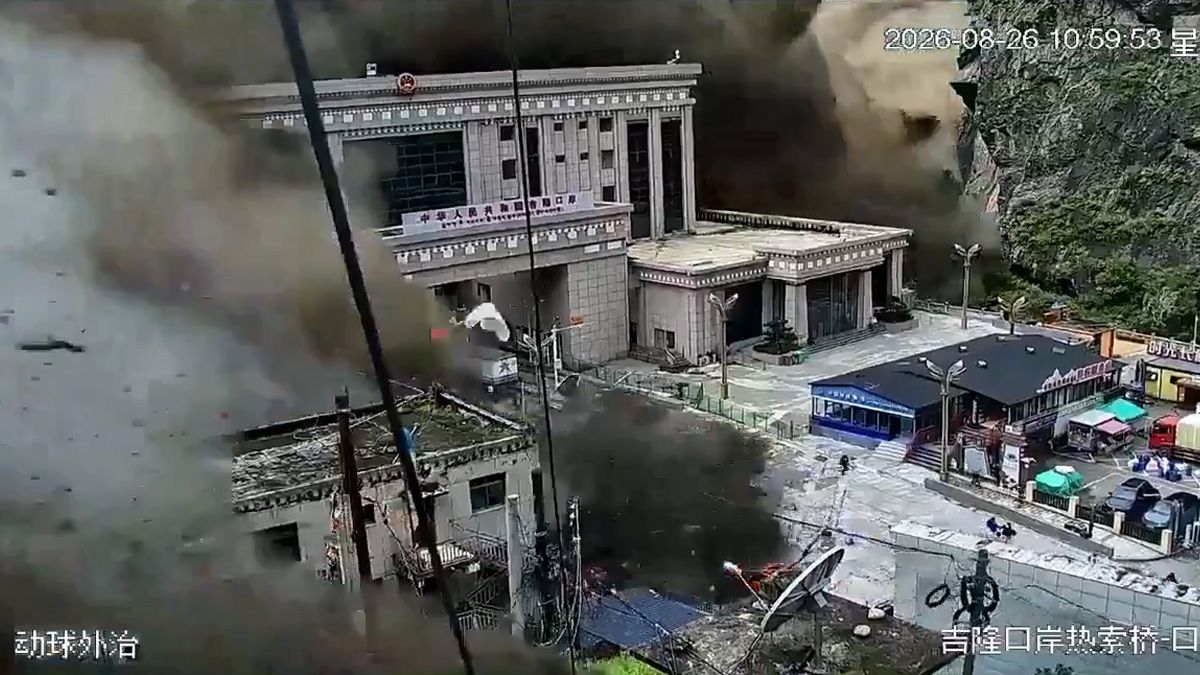
The disaster is believed to have begun with an earthquake. The German Research Centre for Geosciences (GFZ) recorded a magnitude 4.4 quake approximately seven minutes before the time shown on security footage of the border crossing, according to Reuters' live coverage of the disaster.
Nepal's foreign minister, Shishir Khanal, told parliament that initial reports suggested the earthquake triggered an avalanche of ice and rock into the Lhende Khola river, which originates in Gyirong county in Tibet and flows south into Nepal's Bhote Koshi river.
Qianggong Zhang, head of climate and environmental risks at the Kathmandu-based International Centre for Integrated Mountain Development, said the exact trigger remained unconfirmed but warned that a blockage still lodged upstream on the border river meant a second flood could occur.
The flood swept through the mountainous Rasuwa district, home to about 50,000 people, before continuing downstream into the Trishuli river in Nuwakot and Dhading districts. Rescue helicopters were initially unable to land in Rasuwa's worst-hit settlements of Syapru Besi and Timure because the river was flowing above its normal course, officials said.
District administrator Narendra Pariyar urged residents along the Bhote Koshi to move to higher ground, warning of the risk of heavy casualties. Tula Bahadur BK, a health worker in Rasuwa, described devastation "everywhere we look", telling Reuters that riverside settlements had been completely swept away and that five of his own relatives were missing.
Survivors described the flood as fundamentally different from ordinary flooding. Keshav Prasad Baral, aged 68, told reporters at Chakra Dev Hospital that mud, not water, surged towards his home, rising as it approached. He was unable to hold onto his wife as they fled to the terrace of their house, and she was swept away. She has not been found.
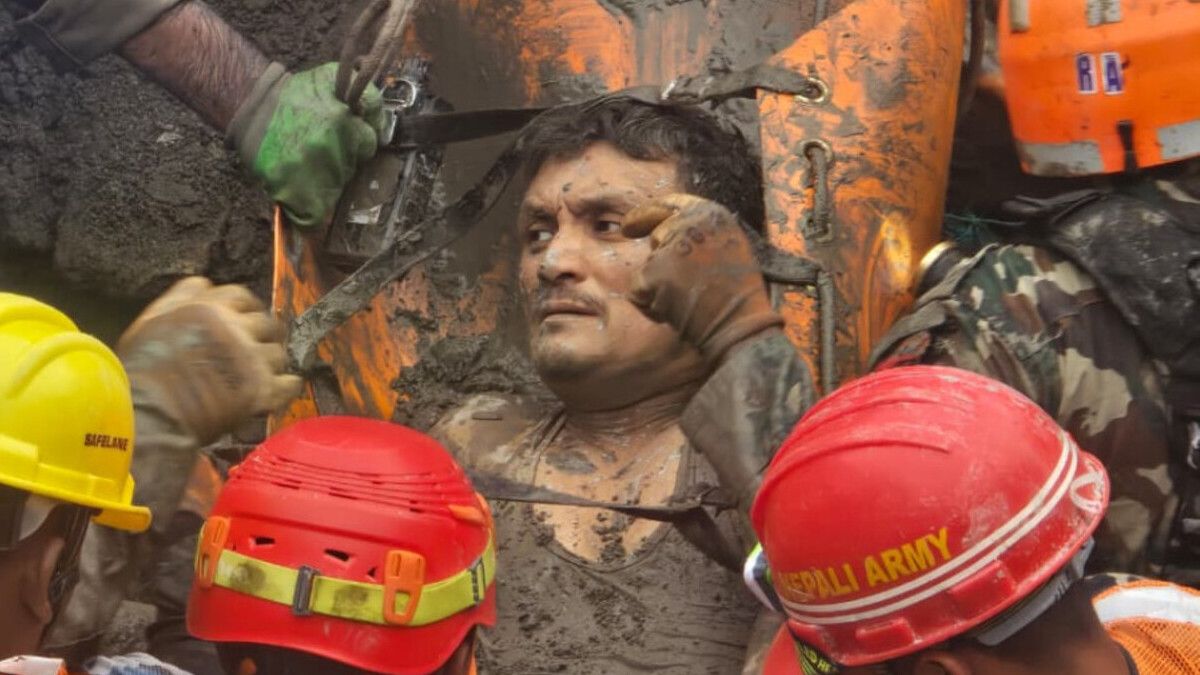
Labourer Bibek Kumal, who was working further downstream in Bidur when the flood hit, said he became lodged in a mango tree after being swept away with mud and debris, which he credited with saving his life.
According to Nepal's tourism authority, at least 384 travellers were reported missing, including 291 foreign nationals. Those unaccounted for included 105 Indians, 93 Nepalis, 17 Malaysians, 12 Britons, eight South Koreans working on a hydropower project, four South Africans, three Americans, and one national each from Australia and the Netherlands.
The prime minister's office later said the number of missing security personnel had risen to 85, comprising army and police, while the number of missing tourists had increased to 484.
Infrastructure damage has been extensive. Nepal's energy ministry said 430 megawatts of electricity supply had been affected, more than 12 percent of the country's total hydropower capacity of 3.2 gigawatts, according to a Reuters calculation. Nineteen bridges and 40 kilometres of roads were reported damaged.
On the Chinese side, Xinhua reported that the mudslide had cut roads, communications and power links to Gyirong port, a major crossing point between the two countries. CCTV said at least 574 rescuers had been deployed, though one rescuer told the broadcaster it would take at least four hours to reach the site owing to sediment up to 1.5 metres deep blocking access routes.
Chinese President Xi Jinping ordered an "all-out" search effort and called for stronger monitoring and early warning systems to prevent secondary disasters, according to Chinese state media.
Nepal's Prime Minister, Balendra Shah, said police and military personnel had joined rescue operations and that residents in low-lying areas were being relocated. In a statement posted to social media, he said the government took full responsibility for rescue, treatment, food and shelter for those affected.
World leaders offered condolences and support. Indian Prime Minister Narendra Modi said his country stood ready to provide humanitarian assistance, and confirmed India had sent a plane carrying 10 tonnes of emergency supplies. Sri Lankan President Anura Kumara Dissanayake and European Commission President Ursula von der Leyen also expressed condolences, with von der Leyen saying the EU's Copernicus satellite programme had been activated to help map the affected areas.
United Nations spokesperson Stéphane Dujarric said Secretary-General António Guterres was saddened by the disaster and that the UN was helping coordinate relief in support of the Nepali government's response. He said the UN office in China had also reported a significant number of casualties in the Tibet Autonomous Region.
The International Federation of Red Cross and Red Crescent Societies said it was releasing one million Swiss francs, approximately US$1.2 million, in emergency funding to support the Nepal Red Cross Society's response.
The Nepal-China border area has a history of similar disasters. In July 2025, a flood on the same river system killed nine people and left 24 missing after washing away the Friendship Bridge linking the two countries, disrupting trade for months. That flood was traced to the draining of a supraglacial lake in Tibet.
Search and rescue operations were continuing as of Wednesday evening, with both governments warning that casualty figures were likely to rise further.