US sanctions ICC president Tomoko Akane without naming specific rulings
The United States has designated International Criminal Court president Judge Tomoko Akane and senior trial lawyer Abdoulaye Seye for sanctions. Washington's statement cited no specific ruling. Japan called the move very unfortunate, while the court said the measures undermine the rule of law.
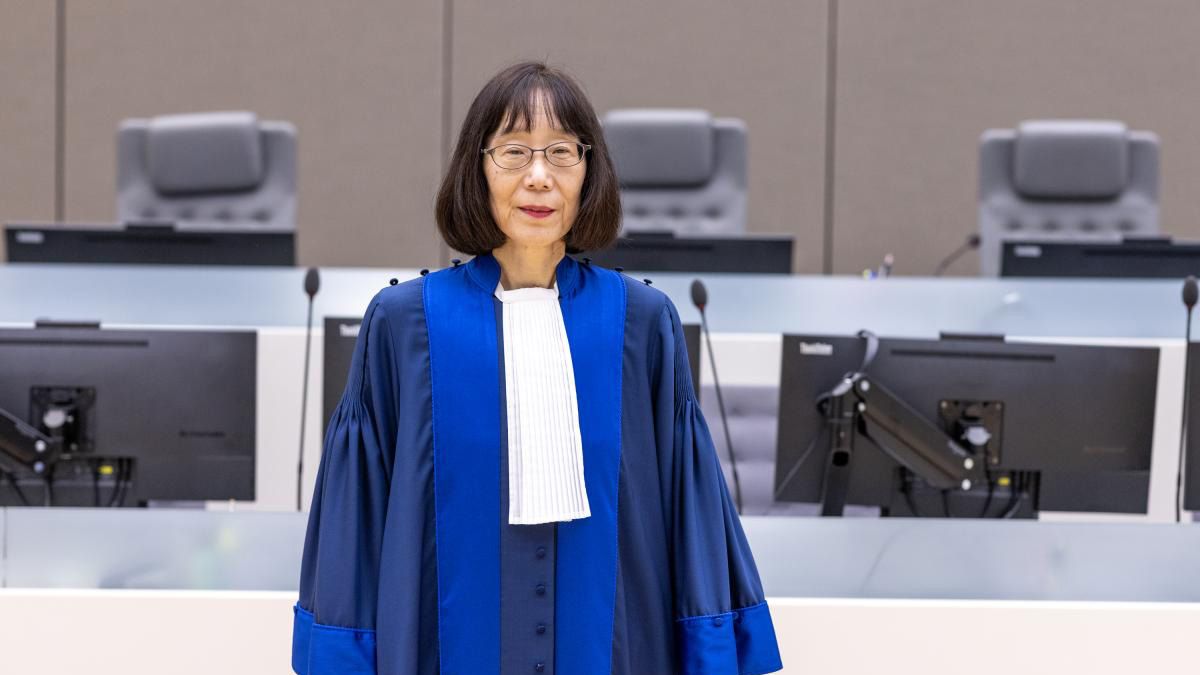

The United States designated International Criminal Court (ICC) president Judge Tomoko Akane of Japan and ICC senior trial lawyer Abdoulaye Seye of Senegal for sanctions on 18 August 2026, in the latest escalation of Washington's campaign against the Hague-based tribunal.
The designations were made under Executive Order 14203, signed by US President Donald Trump in February 2025 and titled "Imposing Sanctions on the International Criminal Court".
The measures freeze any property or interests in property the two officials hold within US jurisdiction or in the possession of US persons, bar them from the US financial system, and expose US citizens who transact with them to penalties.
No specific ruling identified
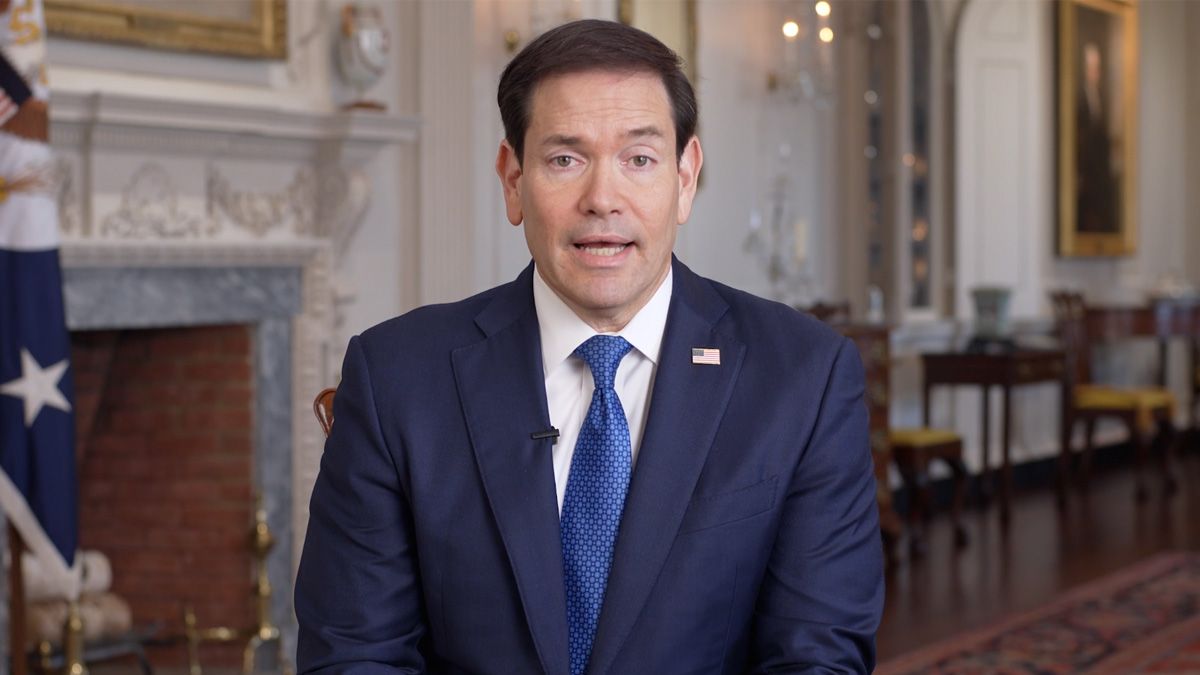
In a press statement issued by the Office of the Spokesperson, US Secretary of State Marco Rubio said he was designating the two officials in furtherance of a diplomatic campaign launched the previous month to address what he described as the court's abuses of power.
Rubio said the two "have directly engaged in efforts by the ICC to investigate, arrest, detain, or prosecute officials whose government has not consented to ICC jurisdiction".
The statement did not identify any particular decision, chamber or case in which either Akane or Seye had participated. Agence France-Presse noted that Rubio's statement was issued without providing examples.
Rubio further stated that the ICC is "a corrupt and fatally politicized supranational court that has maliciously abused its authority and exceeded its mandate", and that Washington "will not tolerate its assault on state sovereignty".
The absence of a stated factual basis marks a departure from earlier rounds. When four judges were designated in June 2025, the State Department published a fact sheet naming the specific rulings attributed to each.
That document stated that Judge Solomy Balungi Bossa of Uganda and Judge Luz del Carmen Ibáñez Carranza of Peru had ruled to authorise the investigation concerning US personnel in Afghanistan, and that Judge Reine Alapini-Gansou of Benin and Judge Beti Hohler of Slovenia had ruled to authorise arrest warrants for Israeli Prime Minister Benjamin Netanyahu and former Defence Minister Yoav Gallant.
Akane's February response
When Executive Order 14203 was first issued in February 2025, targeting then chief prosecutor Karim Khan, Akane issued a statement expressing deep regret over what she described as an attempt to harm the court's independence and deprive victims of atrocities of justice and hope.
She described the ICC as a judicial body enforcing rules of international law that had become indispensable amid ongoing global atrocities, and framed the order as part of a wider series of escalatory attacks on the court's ability to administer justice across all its situations.
Akane said the court and its personnel would firmly reject any attempt to influence its independence or politicise its judicial function, adding that the ICC would comply only with the law under all circumstances. She called on states parties, civil society and other nations to stand united in the court's defence.
A widening list
The Trump administration has now sanctioned nine of the ICC's 18 judges, both of its deputy prosecutors, its former chief prosecutor and one other member of the prosecution office, according to figures provided by the court.
The programme began on 6 February 2025 with the designation of then chief prosecutor Karim Khan. The June 2025 round added Alapini-Gansou, Bossa, Ibáñez Carranza and Hohler.
On 20 August 2025, Rubio designated Judge Kimberly Prost of Canada, Judge Nicolas Guillou of France, and deputy prosecutors Nazhat Shameem Khan of Fiji and Mame Mandiaye Niang of Senegal, describing them as persons who had engaged in efforts to investigate or prosecute nationals of the United States or Israel.
A further round followed in December 2025, targeting Judge Gocha Lordkipanidze of Georgia and Judge Erdenebalsuren Damdin of Mongolia. Legal commentators linked those designations to an Appeals Chamber decision of 15 December 2025 in the Palestine situation, which upheld a Pre-Trial Chamber ruling on Article 18 of the Rome Statute. Akane presided over that bench and was not sanctioned at the time.
Documented effects on sanctioned judges have been extensive. According to reporting by Middle East Eye drawing on court filings, Bossa's account at a credit union in New York, held since 2003, was frozen, and she lost access to US-based technology services including her personal email account.
Hohler told European lawmakers earlier this year that her credit cards were cancelled immediately upon designation, making routine transactions difficult.
Reactions
Japan's Ministry of Foreign Affairs issued a statement on 19 August 2026 noting that Akane had been additionally designated. It said Japan has consistently supported the ICC in its efforts to prosecute the most serious crimes of concern to the international community and to uphold the rule of law.
From that standpoint, the ministry said, the announced measures are very unfortunate. It added that Japan would remain committed to strengthening the rule of law in the international community while maintaining communication with related countries.
The ICC said the sanctions undermine the rule of law. "When judicial actors are threatened for applying the law, it is the international legal order itself that is placed at risk," the court said.
Dutch Minister of Foreign Affairs Tom Berendsen wrote on X that the Netherlands, which hosts the court, disapproves of the latest sanctions against ICC officials and staff, adding that international courts must be able to carry out their mandates freely.
Kanae Doi, Japan director at Human Rights Watch, said the decision was an affront to victims and an attempt to shield American and Israeli officials from justice. She called on the Japanese government to condemn the measures and work with other member states to protect the court's mandate.
Human Rights Watch, the American Friends Service Committee, the Center for Constitutional Rights and the Open Society Institute filed suit in a US federal court on 11 August 2026 challenging the sanctions against ICC personnel, a United Nations human rights expert and three Palestinian rights organisations.
Background
The ICC was established in 2002 under the Rome Statute and operates under a mandate from 125 states parties. It prosecutes genocide, war crimes and crimes against humanity, acting as a court of last resort where national systems are unwilling or unable to pursue accountability.
The United States signed the Rome Statute but never ratified it. Israel and Russia are also not parties.
Akane, addressing member state delegations in a previous annual address, said the court would not accept pressure of any kind. Her nine-year term is among those due to conclude, with six judicial vacancies to be filled at elections scheduled for the end of 2026.