Greenpeace Indonesia records 592 hotspots as Kalimantan fires send haze into Malaysia
Smoke from fires in Kalimantan has crossed into Sarawak and approached Kuching, as Greenpeace Indonesia warns that an early start to the fire season could worsen transboundary haze.
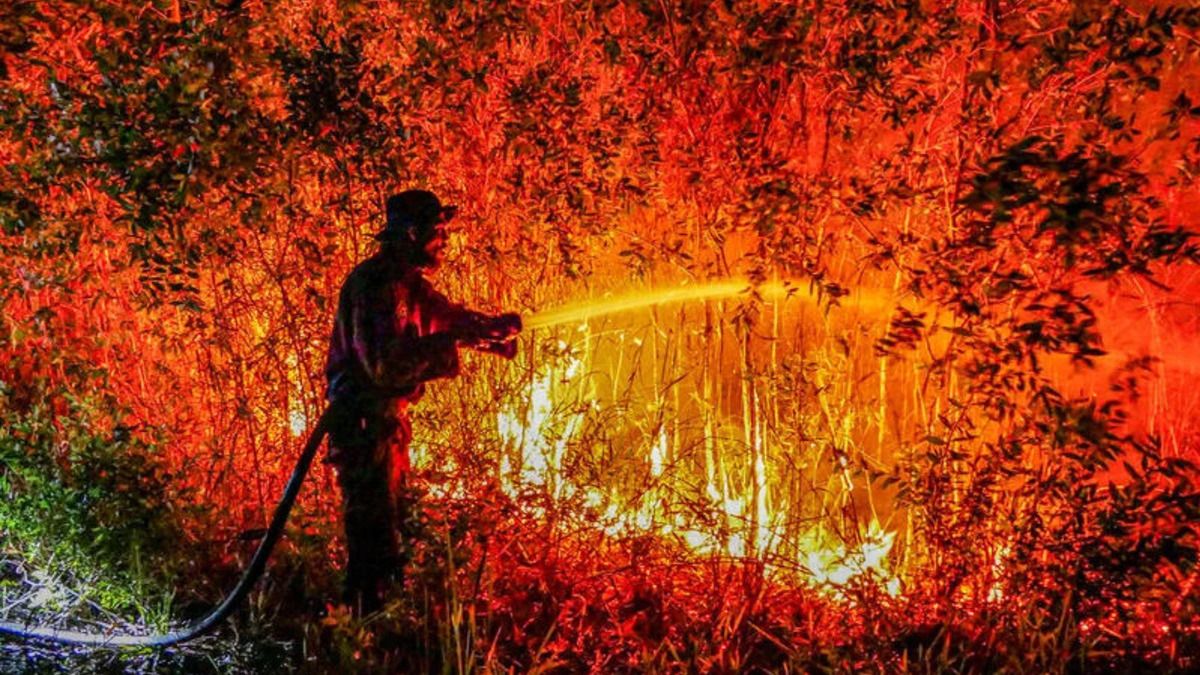
- Greenpeace Indonesia recorded 592 hotspots across Kalimantan, including 455 on peatland, between 11 and 16 August.
- Haze from Kalimantan crossed into Sarawak and approached Kuching during several periods in August.
- Authorities are expanding firefighting support as dry conditions, thick smoke and limited rainfall complicate operations.

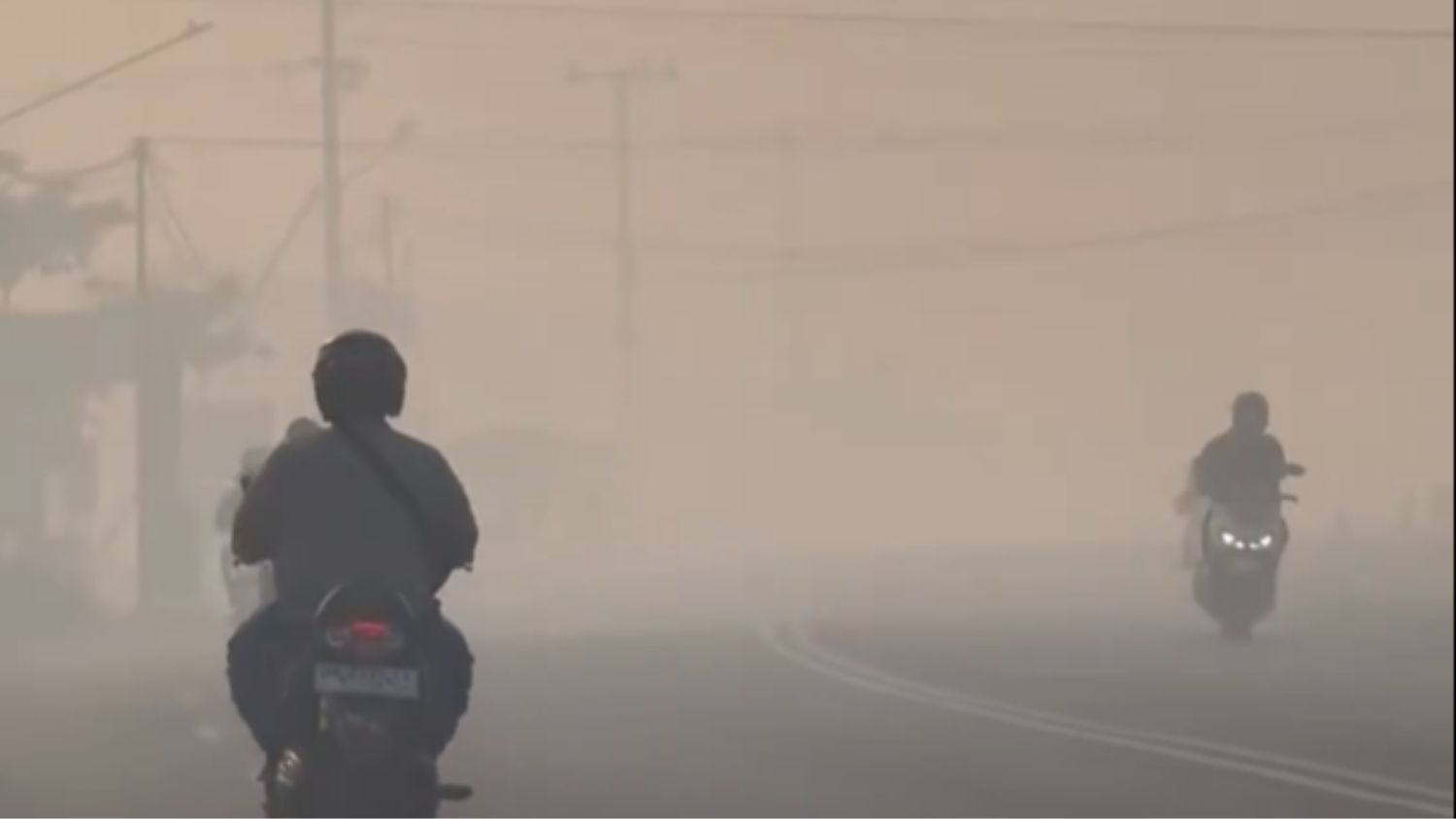
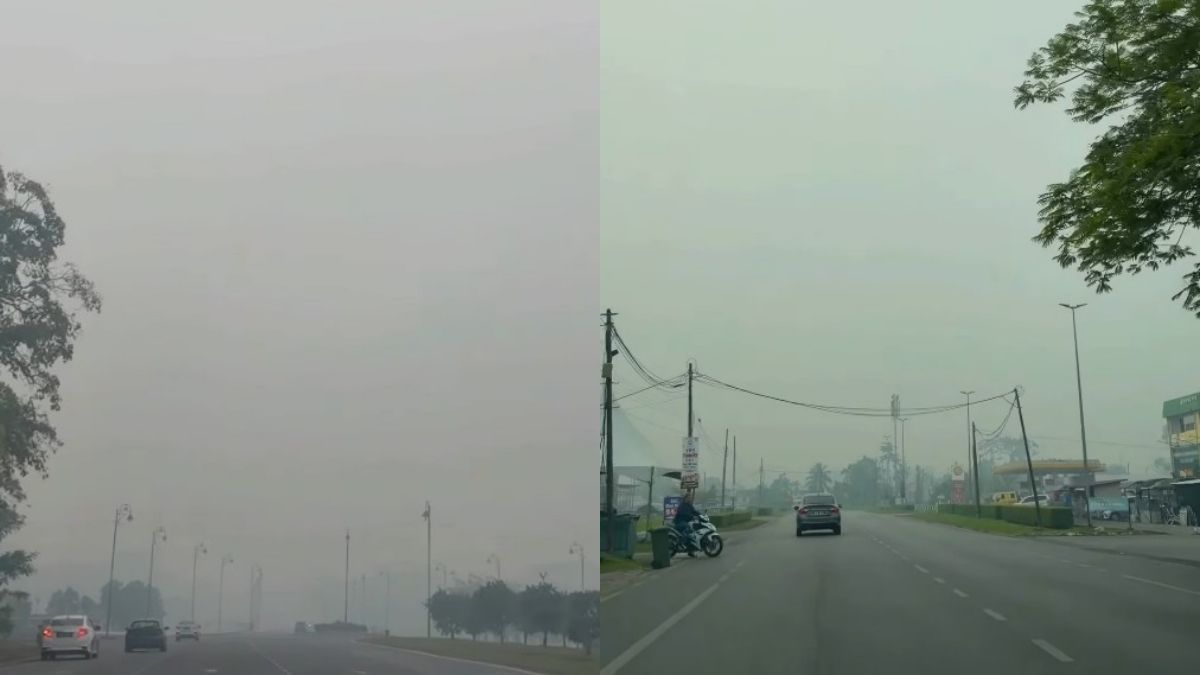
Smoke from forest and land fires in Indonesia has crossed into neighbouring Malaysia, with monitoring showing haze from Kalimantan reaching Sarawak and approaching Kuching, according to Greenpeace Indonesia.
The development has raised concerns over the spread of fires during Indonesia's dry season, while authorities have continued firefighting operations in several provinces and strengthened aerial support in Central Kalimantan.
Greenpeace Indonesia said its monitoring between 11 and 16 August 2026 recorded 592 hotspots across Kalimantan, including 455 on peatland.
Of the total, 322 hotspots were recorded in West Kalimantan, 181 in Central Kalimantan and 86 in South Kalimantan.
Haze crosses into Sarawak
Greenpeace Indonesia Senior Researcher Sapta Ananda Proklamasi said the organisation had monitored transboundary haze using data from the ASEAN Specialised Meteorological Centre (ASMC), cross-checking it with information from Indonesia's Meteorology, Climatology and Geophysical Agency (BMKG).
The monitoring showed that smoke from fires in Kalimantan had reached neighbouring areas of Malaysia during August, including Sarawak and Kuching.
According to ASMC's haze distribution maps, smoke from Kalimantan crossed into Sarawak, including Kuching, between 6 and 11 August.
Between 12 and 17 August, haze again crossed into Sarawak and came close to Kuching. A similar pattern occurred on 18 and 19 August.
Sapta said the pattern was similar to haze distribution during September 2019, when Indonesia experienced one of its major fire seasons and the area burned reached 1.6 million hectares.
Greenpeace research found that haze from forest and land fires in that period affected West Kalimantan for at least 17 days, while Sarawak was affected for 11 days.
Monitoring conducted between 11 and 16 August this year showed that the distribution of smoke was beginning to resemble the conditions observed in September 2019, Sapta said.
"In 2015, 2019 and 2023, transboundary haze, particularly from Kalimantan, occurred mainly between September and October. But based on the available data, massive smoke in Kalimantan and transboundary haze this year have already occurred in August," Sapta said on Wednesday, 19 August.
"This is an indication that forest and land fires and smoke could become increasingly severe if they continue until October or for more than three months," he said.
South Papua records 284 smoke sources
Greenpeace also recorded 284 sources of smoke in South Papua during the same monitoring period.
Of those, 278 were detected in Merauke, including areas designated as national strategic projects.
Sapta said South Papua contained wetland ecosystems, including swamp forests and peatlands, which could be vulnerable to fire when they dried out and land use changed.
"This condition is becoming increasingly worrying when land clearing and drainage take place as a result of national strategic projects," he said.
Greenpeace calls for greater prevention
Sapta said the government continued to treat forest and land fires as a seasonal disaster, with action often taken after fires had grown and smoke had become dense.
He referred to an instruction issued by President Prabowo through the Minister of State Secretary on 11 August, which included weather modification operations and the deployment of helicopters and aircraft for firefighting.
"Weather modification operations are not the right answer. These operations require significant resources. This approach is a response, not prevention," Sapta said.
He said prevention should address issues including water resources, declining water availability and fire vulnerability in wetlands and degraded peatlands.
Air quality deteriorates
Smoke from the fires has also affected air quality in several cities in Kalimantan.
IQAir data showed that air quality in Pontianak, West Kalimantan, had been in the unhealthy category since 31 July 2026. In Palangkaraya, Central Kalimantan, air quality had at one point reached the hazardous category.
The West Kalimantan Health Office reported a 5 per cent increase in acute respiratory infection (ARI) cases.
The Central Kalimantan Provincial Health Office recorded 2,052 ARI cases between 7 and 14 August 2026.
Greenpeace Indonesia Forest Campaigner Belgis Habiba said the situation involved both environmental damage and public health.
"When forests burn, people living in surrounding areas are forced to breathe polluted air and face health risks from exposure to forest and land-fire smoke," Belgis said.
"The state must take serious action to break the cycle of forest and land fires, rather than treating them simply as an annual 'event'," she said.
Fires reported in several Indonesian provinces
BNPB said forest and land fires continued to dominate disaster incidents recorded across Indonesia between 18 August and 19 August.
In North Sulawesi, fires broke out in Bolaang Mongondow Regency at about 10:30 WITA on 18 August.
The fires were reported in Inobonto I Urban Village in Bolaang District and in Buntalo, Dulangon, Solog and Sauk villages in Lolak District.
The incident burned 3.25 hectares of land.
The Bolaang Mongondow BPBD deployed personnel and coordinated with relevant agencies to conduct firefighting and other response measures.
In Central Sulawesi, fires were reported in Longge Village, Ampana Tete District, Tojo Una-Una Regency, at about 20:00 WITA on 18 August.
BNPB said the local BPBD coordinated with relevant agencies to prevent the fire from spreading to residential areas. The latest report at the time said the fire was still visible and strong winds were affecting the area.
Forest and land fires were also reported in Trenggalek Regency, East Java, at about 18:30 WIB on 18 August.
One of the affected locations was Sumberingin Village in Karangan District, where about 1.5 hectares of land were reported to have burned.
BNPB urged residents and local governments to increase vigilance against the risk of further forest and land fires.
The agency also advised people not to clear land by burning and not to discard cigarette butts in forested areas or dry land.
Local governments were asked to activate forest and land-fire task forces, prepare water sources and conduct regular patrols in fire-prone areas.
Forestry minister inspects Central Kalimantan fires
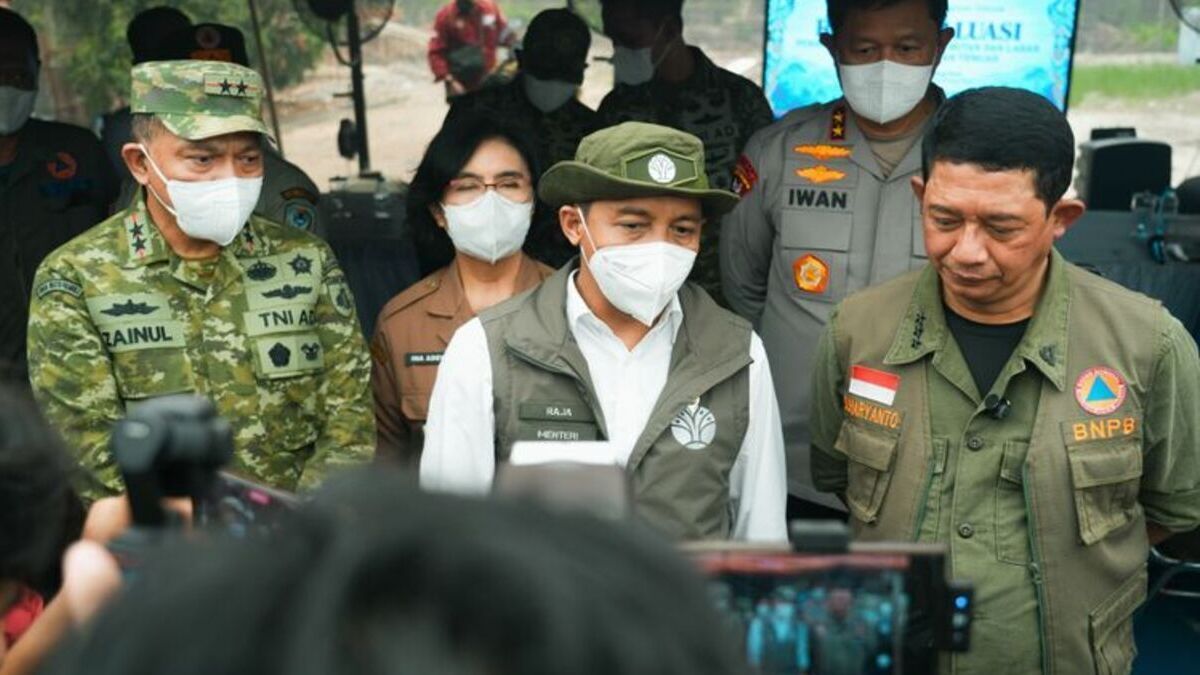
Forestry Minister Raja Juli Antoni visited efforts to tackle forest and land fires at Camp Peat Tumbang Nusa in Pulang Pisau Regency, Central Kalimantan, on Wednesday.
The minister stressed the need for stronger cooperation between agencies as the region entered the peak of the dry season and fires continued to affect peatland.
During the visit, Raja Juli planted an ironwood tree in a nursery before inspecting an automatic peatland water-level monitoring device.
The device showed a water level of around -0.99 metres. The Forestry Ministry said the reading indicated hazardous conditions because the ideal peatland water level should be above -0.4 metres.
The minister then met representatives of the Pulang Pisau Regency Government, BNPB, BMKG, the Indonesian Military (TNI), National Police (Polri), local governments, Manggala Agni, the Fire-Aware Community (MPA) and other groups involved in firefighting operations.
He thanked personnel working in affected areas.
"What I respect, am proud of and care about most are the colleagues who are struggling in the field, whether from the TNI, Polri, BNPB, BPBD or Manggala Agni," Raja Juli said.
Central Kalimantan remains in peak dry season
BMKG told the meeting that Central Kalimantan remained in the peak of its dry season.
"The peak of the dry season in Central Kalimantan is expected to occur in August and September. Rainfall is expected to begin increasing again in early October," a BMKG representative said.
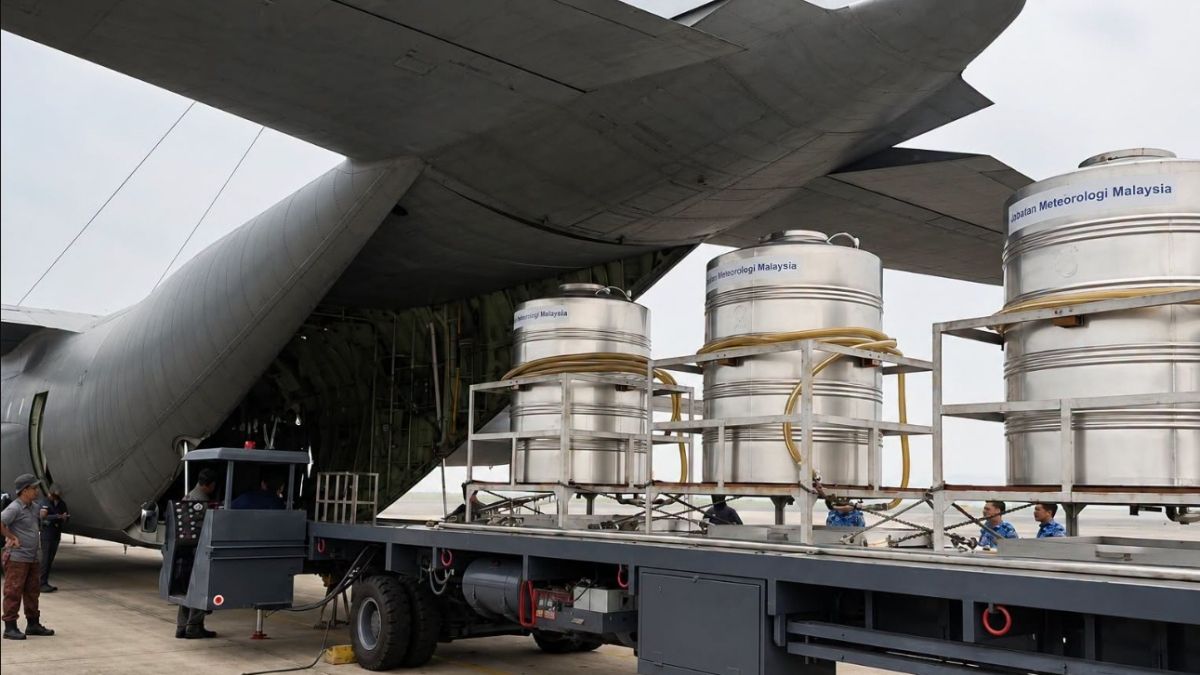
BMKG also reported that weather modification operations had been conducted several times. However, cloud development had limited the amount of rainfall produced.
"After verification, the results of the weather modification operations have indeed not been optimal. Rain has occurred at several points, but its intensity remains very low, so it has not been sufficient to help extinguish hotspots in several locations," the representative said.
The Forestry Minister said El Niño had arrived earlier than previously expected.
"Since the beginning of the year, it had actually been predicted that El Niño would arrive earlier. Looking at the previous cycles, which occurred in 2015, 2019 and 2023, the next cycle should have been around 2027. But it has now arrived earlier," he said.
Aerial firefighting affected by thick smoke
BNPB said aerial support in Central Kalimantan had been strengthened with patrol helicopters, fixed-wing patrol aircraft and water-bombing aircraft.
The agency stressed, however, that ground task forces remained the main force in fighting the fires.
"Water bombing is used to support personnel, particularly to reach fire hotspots that are difficult or impossible to access by land," a BNPB representative said.
Thick smoke over the previous two days had created difficulties for aerial operations, particularly around Jabiren and Tanjung Taruna towards the Sebangau National Park area.
The density of the smoke had reduced visibility and affected flight safety.
"Because the smoke has become increasingly thick, our helicopters cannot reach the targets," the BNPB representative said.
He added that visibility had reportedly fallen below one nautical mile at the airport.
Authorities consider further weather modification
BNPB and BMKG said they would continue monitoring weather conditions and assess whether weather modification operations could resume if sufficient cloud growth occurred.
The Pulang Pisau Regent called for continued support from the central government, particularly for prevention and preparedness.
"We hope there will be increasingly strong response measures, particularly for prevention and preparedness, so that incidents like this do not continue to recur," the regent said.
Raja Juli said he would coordinate with central government ministries and agencies over requests from local authorities, including additional water sources, bore wells, water-bombing support and weather modification operations.
He said the government would examine the possibility of installing additional permanent and temporary bore wells.
"For weather modification operations, there is already a commitment from BNPB and BMKG. Wherever there is potential for clouds suitable for seeding, particularly in the six priority provinces including Central Kalimantan, we will optimise this," the minister said.
Firefighting equipment handed to communities
During the visit, Raja Juli also symbolically handed firefighting equipment to the Fire-Aware Community.
The assistance consisted of one portable engine, three rolls of firefighting hose, one set of personal protective equipment, seven field shirts, seven pairs of boots, five helmets, one firefighting mask and four pairs of protective goggles.
The Forestry Minister said government agencies, security forces, firefighting personnel, volunteers and local communities all had roles in responding to forest and land fires.
"Once again, I would like to express my respect to all members of the TNI, Polri, Manggala Agni, BNPB, BPBD, MPA and everyone working in the field," Raja Juli said.
"Everyone is working hard, working together and giving their best to fight forest and land fires," he added.