Three Palestinian families remain surrounded by Israeli settlers in Qusra
About 15 Palestinians, including at least two children, remain confined to their homes in Qusra, south of Nablus, amid an alleged siege by Israeli settlers, according to OHCHR.
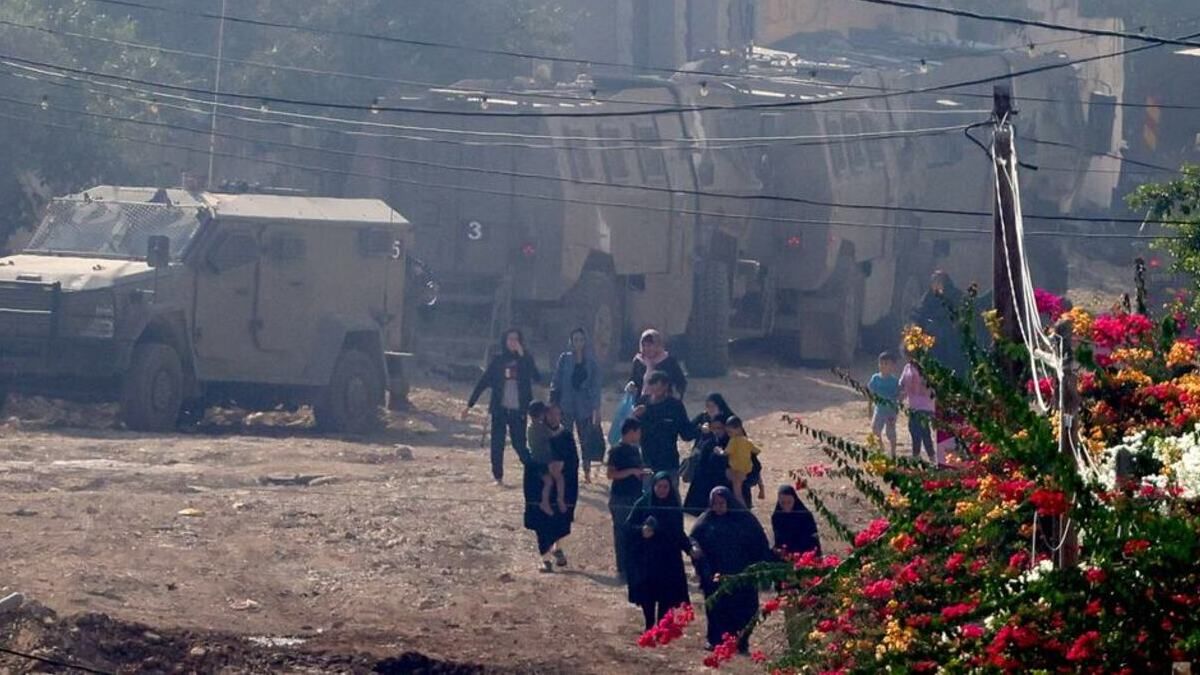
- Three Palestinian families remain surrounded by Israeli settlers in Qusra, according to OHCHR.
- The families allegedly lost access to electricity and water and face a threat of displacement.
- UN agencies report continuing settler violence, military restrictions and displacement across the occupied West Bank.

Three Palestinian families, comprising about 15 people including at least two children, have remained confined to their homes in the Ras al Ein area of Qusra village, south of Nablus, amid an ongoing siege by Israeli settlers, according to the United Nations Office of the High Commissioner for Human Rights (OHCHR).
OHCHR said the families had been living “in a state of terror” and alleged that Israeli settlers had cut off their electricity and water supplies.
The UN office said the families faced an urgent threat of displacement after being surrounded by settlers.
“These criminal actions by the settlers, supported or acquiesced to by Israel, the Occupying Power, are making life unbearable for these Palestinian families and are clearly aimed at forcing them to leave their homes and their land,” OHCHR said.
“Time is running out for these three families before they are forcibly displaced,” it added.
Reports said the United States had been involved in efforts to end the siege that began on Sunday. The US ambassador to Israel has also called for the removal of people he described as “Israeli terrorists”.
Families moved into one home
Following its initial statement, the head of the OHCHR office in the Occupied Palestinian Territory, Ajith Sunghay, told UN News that the three families had subsequently been moved into a single home.
The house remained surrounded by Israeli settlers, according to Sunghay.
He said the situation raised concerns about the ability or willingness of Israeli forces to protect Palestinian communities in the occupied territory.
“Again, the Israel Defense Forces (IDF) is either unable or unwilling to protect Palestinian communities, which they are expected to do so under the Geneva Convention; or worse, that the IDF is in collusion with the Israeli settlers, all aimed at displacing Palestinians and occupying their lands,” Sunghay said.
He also said about 20 Palestinian families from Qusra had been evacuated by IDF soldiers “for security purposes”.
Sunghay called for urgent international action to help end what he described as an increasingly dangerous situation in the occupied West Bank.
“We really welcome statements, we really welcome dialogue,” he said, while adding that such measures were not sufficient.
“I think we are past the stage of boiling point. We are seeing unprecedented level of settler violence and we call on Member States to act, use its leverage in every possible manner,” he said.
Attacks reported since November 2025
OHCHR said Palestinians living in Qusra had been subjected to increasingly frequent attacks since November 2025, when Israeli settlers established an outpost nearby.
The Palestinian families had previously asked Israeli military personnel present at the site to intervene, but OHCHR said those requests had not resulted in their protection.
Instead, the UN office said, Israeli security forces appeared to have prevented medics, solidarity activists and journalists from reaching the families.
Israeli soldiers dismantled tents belonging to settlers on Wednesday, according to OHCHR, but the settlers continued to surround the Palestinians’ homes.
The developments in Qusra have unfolded alongside other incidents involving Israeli settlers and Israeli military operations across the occupied West Bank.
Palestinians face restrictions in Taybeh
Sunghay also referred to the Israeli military's move to cordon off the town of Taybeh on Tuesday, restricting access for people who do not live there.
The measure was reportedly introduced to protect residents from attacks by Israeli settlers.
Sunghay said such measures could leave Palestinians bearing the consequences of violence carried out by settlers.
“In such circumstances…it's the Palestinians who pay the price and face the brunt of the problems, although it’s the Israelis who are settlers who are creating violence, attacks, and issues for the Palestinians,” he said.
He also pointed to the return of Israeli settlers to Ganim, one of four Israeli settlements in the northern West Bank evacuated in 2005. The other three were Kadim, Sa-Nur and Homesh.
“This is a trend that we have seen repeatedly that's happening in West Bank,” Sunghay said.
UNRWA reports continued settler violence
The UN agency for Palestinian refugees, UNRWA, said on Thursday that Israeli settler violence and harassment continued to affect Palestinian communities across the West Bank.
The agency said affected communities included those in the South Hebron Hills and the Jordan Valley.
“In parallel, settlement expansion continued, including the establishment of several new settlement outposts,” UNRWA said.
UNRWA also reported continued Israeli military restrictions in northern parts of the occupied West Bank.
Israeli forces have extended a military closure order affecting the Tulkarm and Nur Shams refugee camps until 30 September 2026, while a closure order affecting Jenin camp has been extended until 20 August 2026.
UNRWA said the renewed orders followed earlier restrictions that had severely limited access to the largely emptied camps.
More than 34,000 Palestinian refugees remain forcibly displaced from the Tulkarm, Nur Shams and Jenin camps as a result of the Israeli military operation known as “Iron Wall”, which began in January 2025, according to UNRWA.
Further displacement reported amid military operations
The latest developments come as humanitarian organisations continue to report displacement and access problems across the occupied West Bank.
The UN Office for the Coordination of Humanitarian Affairs (OCHA) said humanitarian partners had reported continued violence linked to settler activity and operations by Israeli forces, alongside further reports of Palestinians being displaced from their homes.
Humanitarian partners working in the health sector are operating a network of 870 service points across the West Bank, including 230 mobile clinics.
The mobile facilities are intended to provide healthcare to underserved communities, including areas where the construction of clinics and other structures is effectively prohibited, according to OCHA.
Humanitarian organisations have also warned that restrictions on movement continue to affect medical services.
Checkpoints, road closures and Israeli military operations continue to delay or prevent the movement of ambulances, mobile health teams, patients and healthcare workers, OCHA said.
The UN agencies have called for continued access to affected communities as displacement, settler violence and military operations persist across the occupied West Bank.