Mahmoud Abbas condemns US visa refusal as he urges UN support for Palestinian statehood and two-state solution
Palestinian President Mahmoud Abbas condemned the US refusal to grant visas to his delegation and used a remote UN address to call for a two-state solution and an independent Palestinian state.
- Mahmoud Abbas addressed the UN General Assembly by pre-recorded video after the US denied visas to his delegation.
- Abbas called for preserving the two-state solution and establishing an independent Palestinian state alongside Israel.
- Palestine continues to seek full UN membership while holding non-member observer state status.

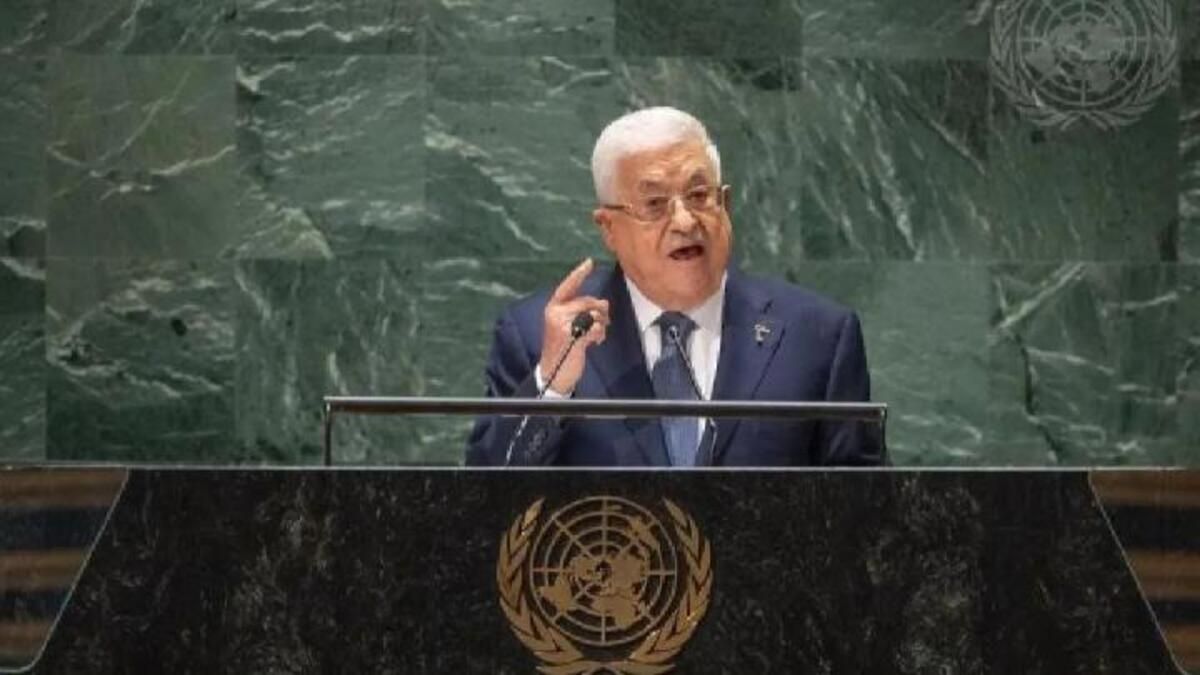
Palestinian President Mahmoud Abbas has condemned the United States' refusal to grant visas to his delegation for the United Nations General Assembly, while using his address to call for the preservation of the two-state solution and the establishment of an independent Palestinian state.
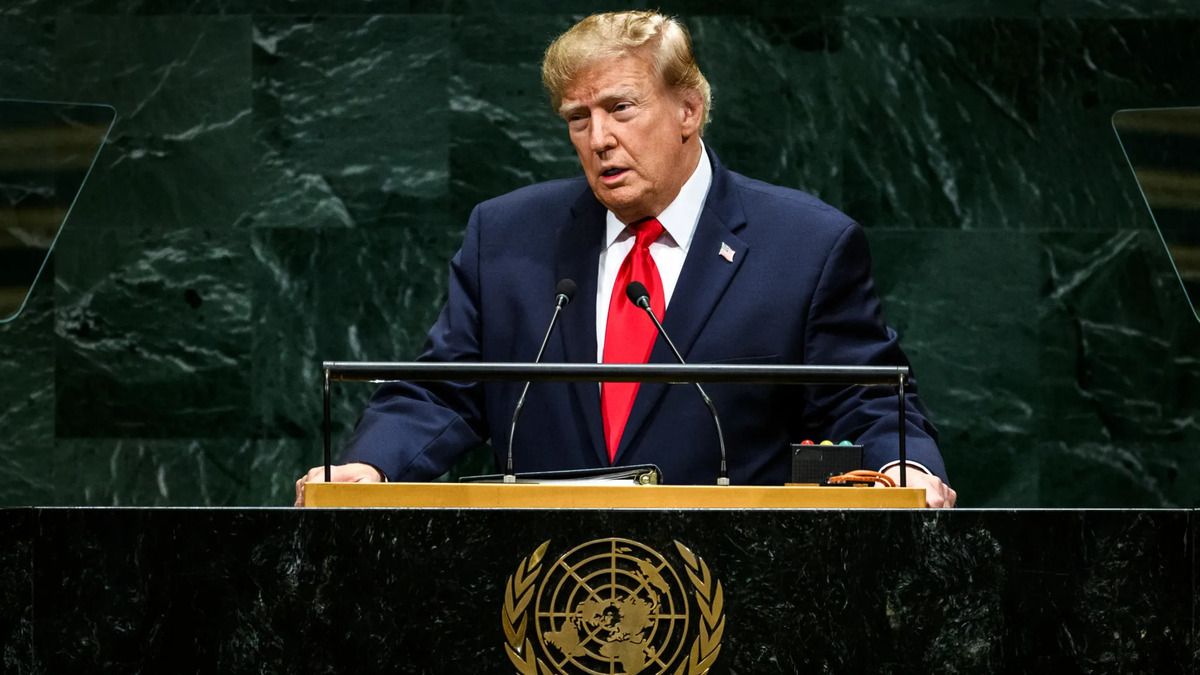
Abbas delivered his address by pre-recorded video during the 81st session of the UN General Assembly on Wednesday (23 September), after the US denied visas to members of the Palestinian delegation.
The General Assembly had earlier voted 152-3, with four abstentions, to allow the Palestinian president to participate remotely. The United States, Israel and Paraguay voted against the resolution.
The UN said the arrangement followed the US decision to deny or revoke visas for representatives of the State of Palestine ahead of the 80th and 81st sessions.
Under the arrangement approved by the General Assembly, Abbas' pre-recorded statement could be played in the Assembly Hall after being introduced by Palestine's representative, who was physically present.
Abbas challenges US decision
In his address, Abbas described the US decision as unlawful and punitive and said Washington, as the host country of the United Nations, had responsibilities towards delegations attending the organisation's meetings.
The issue had been raised at the General Assembly before Abbas' address. The UN said Palestine's Permanent Observer Riyad Mansour argued that the visa denial violated the agreement governing the UN headquarters in New York.
The Agreement between the United Nations and the United States regarding the Headquarters of the United Nations states that US authorities should not impose impediments on the transit of representatives of UN members to or from the headquarters.
The agreement also provides that visas required for representatives should be granted without charge and as promptly as possible.
The US has defended its visa restrictions, saying the Palestine Liberation Organisation and Palestinian Authority have failed to meet commitments made in relation to US policy.
The State Department has also cited Palestinian efforts to pursue the Israeli-Palestinian conflict through international institutions including the International Criminal Court and International Court of Justice.
Abbas calls for two-state solution
Abbas devoted much of his address to Gaza, the occupied West Bank and the future of Palestinian statehood.
He called for international support for a two-state solution, saying Palestinians seek a democratic and non-militarised state that would exist alongside Israel in peace.
He said protecting the territory on which a future Palestinian state would be established was necessary to preserve the possibility of such a settlement.
He also rejected the displacement of Palestinians and cited settlement expansion, annexation and settler violence among the issues threatening the future of a Palestinian state.
Abbas said the Palestinian plan was based on protecting Palestinians from displacement, preserving their land, democratically renewing Palestinian institutions and establishing a sovereign Palestinian state, with East Jerusalem as its capital.
He said the process should be based on international law and Palestinian self-determination and should ultimately lead to security, peace and greater regional cooperation.
Gaza and West Bank
Abbas also criticised Israel's military campaign in Gaza and Israeli settlement activity in the West Bank.
He described Israel's actions in Gaza as a "genocidal war" and referred to what he called the ethnic cleansing of Palestinians by Israeli settlers in the occupied West Bank. These are Abbas' characterisations of the situation.
He warned that continued violations of international law could undermine the two-state solution and referred to the possibility of another "Nakba", using the Arabic term for the mass displacement of Palestinians associated with the 1948 war.
Abbas also raised attacks on Muslim and Christian religious sites, saying such incidents could contribute to a broader conflict along religious lines.
Palestine seeks full UN membership
Abbas said Palestinians would continue pursuing an independent state and called on countries that have not recognised Palestine to do so.
He thanked the 160 countries he said had recognised Palestinian statehood and called for Palestine to be admitted as a full member of the United Nations.
The State of Palestine currently holds non-member observer state status at the UN. Its bid for full membership has faced opposition at the Security Council, where the United States holds a permanent seat and veto.
The remote address nevertheless allowed the Palestinian leadership to participate in the General Assembly's high-level debate after the US visa decision.
The UN resolution specifically permits pre-recorded statements from the Palestinian president or another senior representative when Palestinian representatives are prevented from attending UN meetings in person.
Abbas ended his address by reiterating the Palestinian demand for self-determination and an independent state, while calling for a political settlement that would provide security and peace for both Palestinians and Israelis.