China, Philippines trade fresh accusations after new Scarborough Shoal confrontation
China and the Philippines exchanged competing accounts after a new confrontation near Scarborough Shoal, further escalating South China Sea tensions as both sides lodged diplomatic protests and continued talks on a regional code of conduct.
- China and the Philippines issued conflicting accounts of a confrontation near Scarborough Shoal.
- • The incident followed a separate clash at Second Thomas Shoal earlier in the week.
- • Despite rising tensions, ASEAN and China continue negotiating a South China Sea Code of Conduct.

China and the Philippines exchanged fresh accusations on Thursday after a new confrontation near the disputed Scarborough Shoal, known as Huangyan Dao in China and Bajo de Masinloc or Panatag Shoal in the Philippines, further escalating tensions in the South China Sea days after a separate clash at Second Thomas Shoal.
The incident came a day after Chinese Foreign Minister Wang Yi warned Philippine Foreign Affairs Secretary Ma. Theresa Lazaro that Manila would face “bitter consequences” if it continued what Beijing described as provocations with support from countries outside the region.
China says Philippine vessels entered its territorial waters
China's Coast Guard (CCG) said two Philippine government vessels entered what Beijing described as China's territorial waters off Huangyan Dao on Thursday despite repeated warnings.
CCG spokesperson Jiang Lue said the Chinese coast guard responded by tracking, intercepting and expelling the vessels through what he described as "professional, standard-compliant, legitimate and lawful" measures.
The CCG also said several vessels from the Philippines' Bureau of Fisheries and Aquatic Resources (BFAR) attempted to enter waters near Huangyan Dao on Wednesday and were driven away after verbal warnings.
Jiang reiterated China's claim that Huangyan Dao is "an inherent territory of China" and urged the Philippines to stop what it described as infringing and provocative activities. He added that the coast guard would continue law enforcement operations in the area to safeguard China's territorial sovereignty and maritime rights.
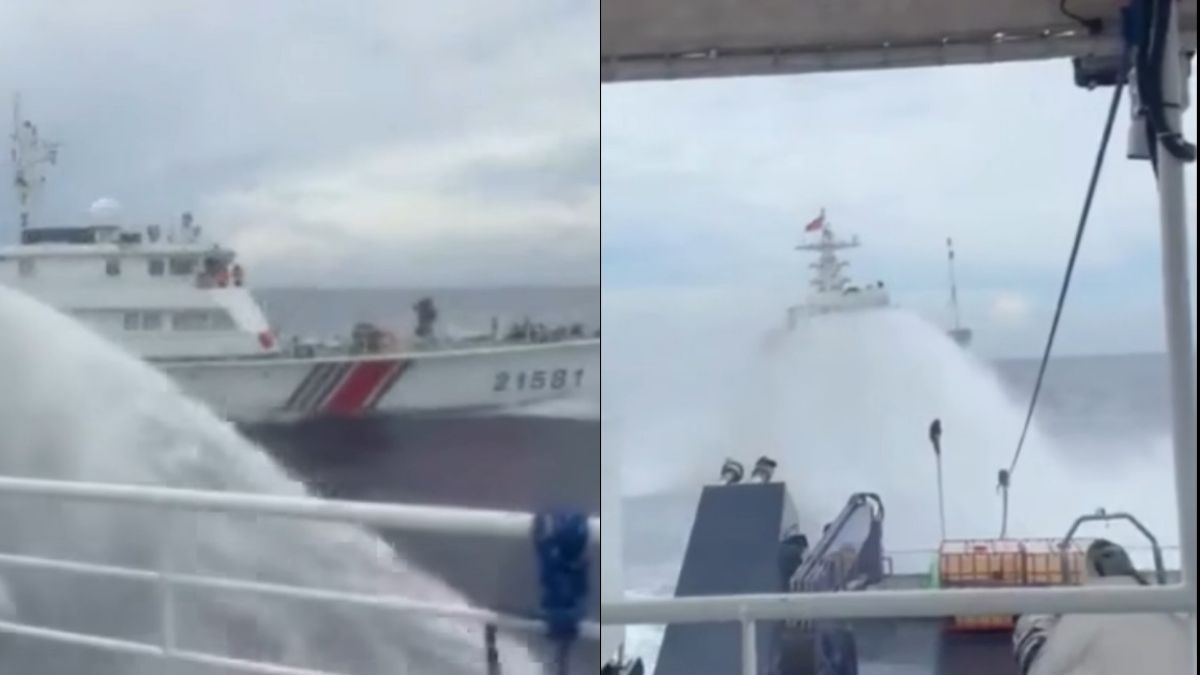
Philippines alleges water cannon attack
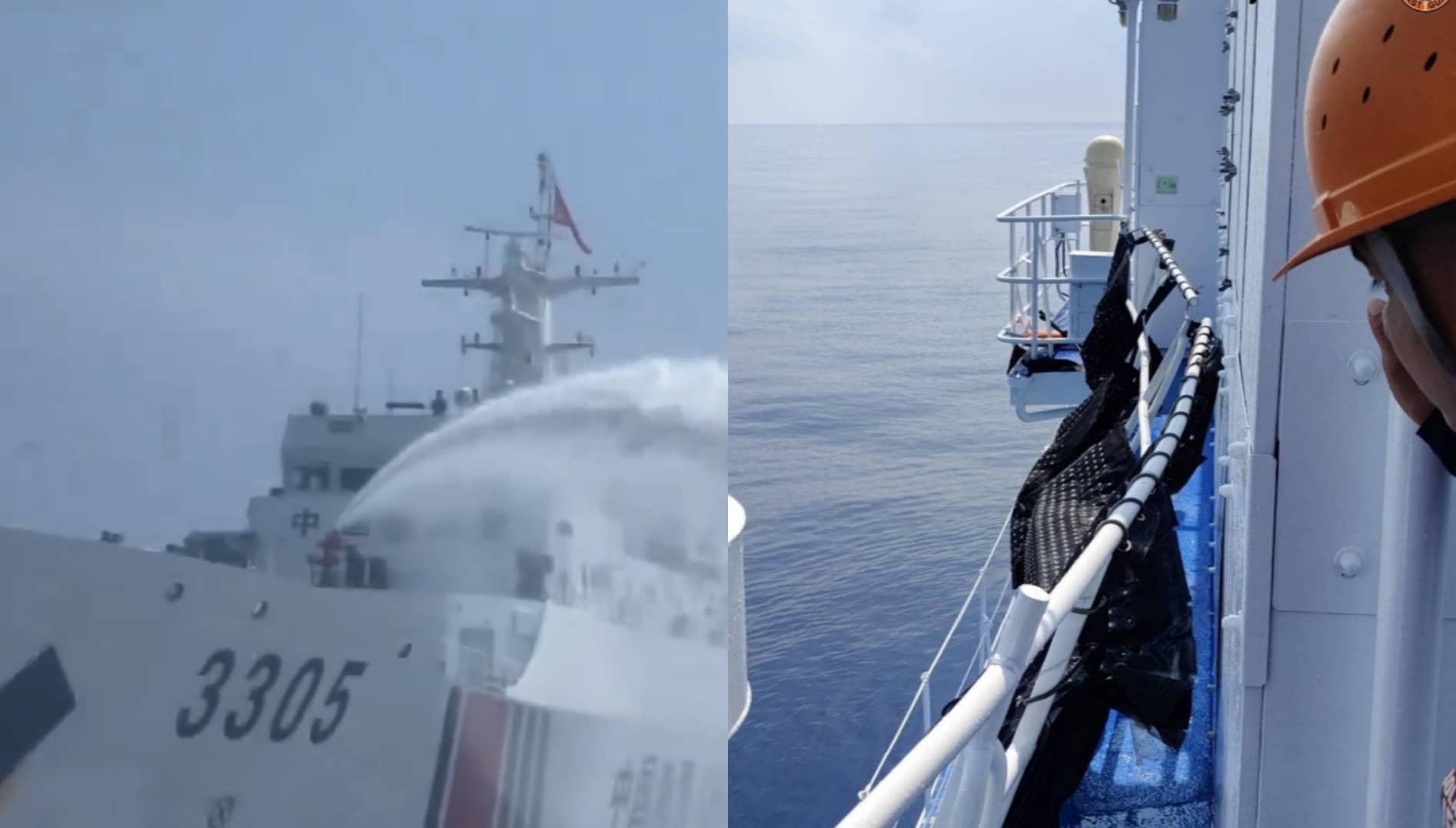
The Philippine Coast Guard disputed China's account, accusing the Chinese Coast Guard of carrying out "illegal, coercive and aggressive actions" during the encounter.
Philippine Coast Guard spokesperson Commodore Jay Tarriela said Philippine vessels were delivering fuel and food supplies to Filipino fishermen when a Chinese coast guard vessel fired a water cannon at a BFAR vessel.
According to Tarriela, the water cannon blast lasted for more than two minutes and scored an indirect hit on the Philippine vessel.
He added that eight Philippine vessels remained near Scarborough Shoal later on Thursday to continue their operation while monitoring 10 Chinese vessels in the area.
Latest incident follows clash at Second Thomas Shoal
The confrontation occurred only days after another serious incident on 20 July near Second Thomas Shoal, known as Ayungin Shoal in the Philippines and Renai Jiao in China.
The Philippines accused Chinese coast guard personnel of striking a Philippine Navy sailor with a wooden baton during the encounter, leaving him with a serious head injury.
On 22 July, the Armed Forces of the Philippines rejected a China Coast Guard claim that it had authorised a medical evacuation mission near the BRP Sierra Madre, saying the operation was conducted solely under Philippine authority within the Philippines' Exclusive Economic Zone under the 2016 South China Sea arbitral award and the United Nations Convention on the Law of the Sea (UNCLOS).
The military described the Chinese claim as a "false narrative", said the injured sailor had received medical treatment, and pledged to continue lawful operations in the West Philippine Sea.
China, meanwhile, said Philippine vessels had approached its coast guard ship dangerously and alleged that Philippine personnel attacked Chinese officers using oars and long sticks.
The latest confrontation prompted renewed diplomatic protests from both governments and added to a series of incidents in contested waters over recent years.
Foreign ministers hold first meeting in two years
Against the backdrop of rising tensions, Wang Yi and Lazaro held their first ministerial-level bilateral meeting in two years on Wednesday on the sidelines of the 59th ASEAN Foreign Ministers' Meeting in Manila.
According to the Philippine Department of Foreign Affairs, Lazaro lodged a strong protest over what Manila described as violent actions by the Chinese Coast Guard near Ayungin Shoal and raised concerns over actions that it said infringed upon the Philippines' maritime rights, including remaining Chinese installations at Bajo de Masinloc.
Lazaro also condemned an AI-generated video published by China Daily portraying Filipinos as monkeys, describing it as "unacceptable, offensive, and distressing".
The Philippine side reiterated its position that disputes should be resolved peacefully in accordance with the 1982 United Nations Convention on the Law of the Sea (UNCLOS) and the 2016 South China Sea Arbitral Award, while stressing the need to exercise restraint, keep communication channels open and pursue practical ways to manage tensions.
The two ministers also noted progress in negotiations on the ASEAN-China Code of Conduct for the South China Sea and expressed willingness to conclude the agreement by the end of the year. Lazaro also reaffirmed the Philippines' adherence to its One China Policy, consistent with the 1975 Joint Communiqué between the two countries.
The Philippine Department of Foreign Affairs said the meeting was held in line with President Ferdinand Marcos Jr.'s directive to pursue dialogue and diplomacy with China while firmly protecting Philippine national interests.
Beijing warns against outside involvement
China's foreign ministry said Wang told Lazaro that bilateral relations had reached "a crossroads" and urged Manila to make what he described as a "correct and rational choice".
According to the Chinese readout, Wang accused the Philippines of creating repeated maritime incidents that disrupted regional peace and stability.
He warned that relying on countries outside the region to confront China would ultimately result in the Philippines bearing the consequences of its own actions.
Wang also said China had never posed a security threat to the Philippines and called for both sides to resolve maritime disputes through dialogue.
ASEAN-China code of conduct talks continue
Despite the heightened tensions, ASEAN and China continue negotiations on a long-awaited Code of Conduct (COC) for the South China Sea.
Lazaro said negotiators had made "good progress" and still aimed to conclude the agreement before the end of the year.
She said negotiators were accelerating discussions through monthly meetings to resolve four remaining issues, including whether the code would be legally binding, its geographical scope, its relationship with the existing Declaration on the Conduct of Parties in the South China Sea, and the definition of key terms such as self-restraint.
Australian Foreign Minister Penny Wong said any final code should not prejudice the rights of claimant states or third parties under UNCLOS.
Trump pledges to raise issue with Xi
Philippine officials said US President Donald Trump assured President Ferdinand Marcos Jr. during a telephone conversation on Thursday that he would raise the Philippines' concerns over the South China Sea during his next meeting with Chinese President Xi Jinping.
The call followed Marcos' meeting with US Secretary of State Marco Rubio in Manila on Wednesday, during which both sides discussed growing tensions between Manila and Beijing.
According to the Philippine Presidential Communications Office, Marcos is seeking to reset relations with China while pursuing an end to violent confrontations in the disputed waters.
Indonesia calls for restraint
Indonesia urged all parties to exercise restraint and maintain peace following the recent confrontations in the South China Sea.
Foreign Ministry spokesperson Nabyl Achmad Mulachela said the incidents underscored ASEAN's importance in managing regional relations and reiterated Jakarta's support for resolving disputes through dialogue, diplomacy and international law, particularly UNCLOS.
He also called on ASEAN member states and dialogue partners to uphold the principles of the ASEAN Charter, the Treaty of Amity and Cooperation and the ASEAN Outlook on the Indo-Pacific.