Six-time League of Legends champion Faker appointed honorary police officer in South Korea
South Korean esports star Lee Sang-hyeok, better known as Faker, has been appointed an honorary police officer and ambassador for youth online gambling prevention by the Korean National Police Agency. He will support awareness campaigns promoting the country’s self-reporting system for young people affected by cyber gambling.
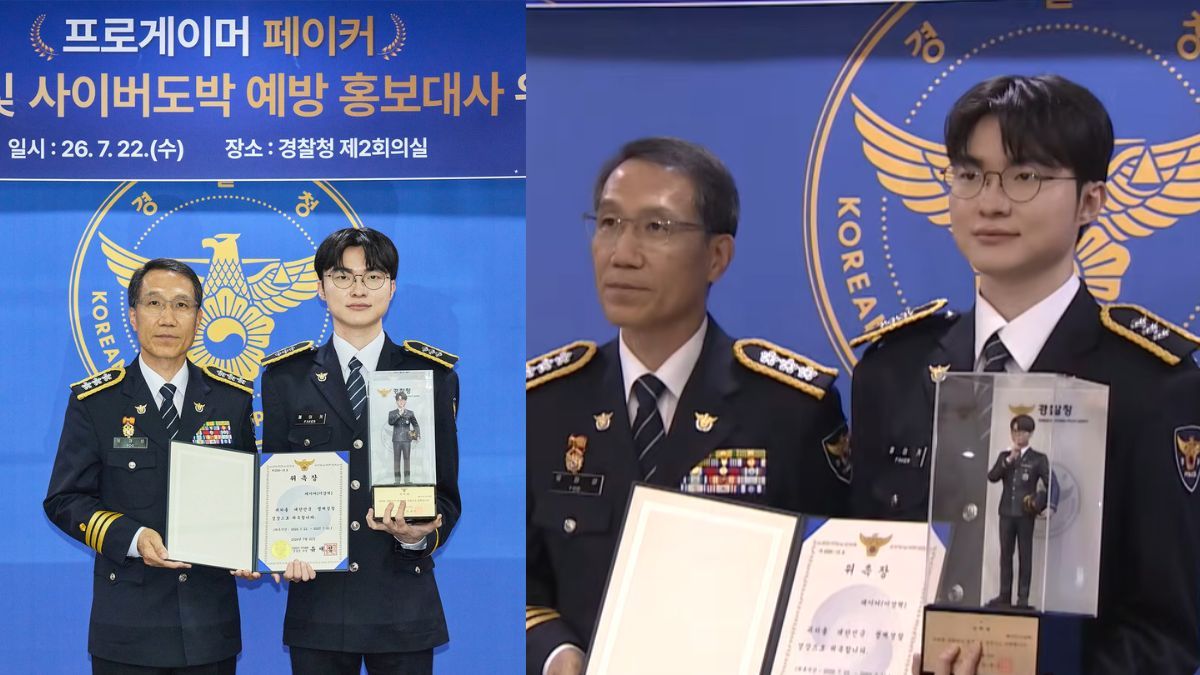
- Faker, whose real name is Lee Sang-hyeok, was appointed an honorary police officer with the rank of sergeant by South Korea’s National Police Agency.
- He will serve as an ambassador promoting awareness of youth online gambling risks and the self-reporting system.
- The programme has received 806 self-reports since launching in May, according to police figures.

SOUTH KOREA: South Korean esports star Lee Sang-hyeok, better known as Faker, has been appointed an honorary police officer and ambassador for youth online gambling prevention by the Korean National Police Agency.
The appointment was announced on 22 July, with the agency recognising Faker’s global influence and long-standing reputation among younger audiences as a reason for selecting him for the role.
Faker, a professional League of Legends player for T1, was given the honorary rank of sergeant, according to the Korean National Police Agency.
The rank reflects the role’s connection to cyber investigation-related work, where sergeant is an entry rank for some officers recruited through career programmes.
Faker to promote gambling prevention efforts
As part of his new role, Faker will participate in promotional videos and posters supporting South Korea’s youth online gambling self-reporting system.
According to the Korean National Police Agency, the campaign aims to encourage young people involved in online gambling to seek assistance before the issue worsens.
The agency posted on X that Faker would join efforts to combat youth cyber gambling, writing that “cyber gambling is not a game” while encouraging young people to seek help through the reporting system.
Faker said he felt honoured by the appointment and recognised the responsibility that came with the role.
“I will actively participate in ambassador activities, including widely publicising to teenagers the dangers of online gambling and the self-reporting system,” Lee said, according to statements reported by Chosunbiz.
Police cite Faker’s influence among young people
According to Chosunbiz, the police selected Faker because of his significant recognition in South Korea and internationally, as well as his influence among teenagers.
Aju Press reported that authorities highlighted values demonstrated throughout Faker’s esports career, including discipline, focus and perseverance, as qualities that could positively influence young people.
During the appointment ceremony in Seoul’s Seodaemun District, Faker also presented a signed T1 uniform that will be given to young participants who actively take part in gambling recovery programmes, according to Aju Press.
Youth online gambling reporting system
South Korea’s National Police Agency launched its youth online gambling self-reporting system on 18 May, with the programme scheduled to run until 31 August.
According to police figures cited by Chosunbiz, the system had received 806 self-reports as of 16 July.
The programme is open to young people under the age of 19 who have experienced online gambling, as well as their guardians.
Reports can be submitted through the 117 School Violence Reporting and Counselling Centre.
Following a report, school liaison officers and gambling counsellors conduct initial consultations and assessments before connecting individuals with treatment services where necessary.
Aju Press reported that young people who voluntarily report their involvement will not automatically face criminal penalties.
Authorities will consider factors including the amount of money involved, the individual’s remorse and progress in recovery when reviewing cases for possible leniency.
Faker’s esports legacy
Faker, whose professional career began in 2013, is widely regarded as one of the most successful esports players in history.
He has won six League of Legends World Championship titles and has spent his entire career with South Korean esports organisation T1.
His achievements have earned him recognition beyond esports, including inclusion in Time magazine’s 2026 list of influential figures in sports.
The new appointment marks a shift from Faker’s role as a competitive player to a public ambassador using his influence to promote awareness of online gambling risks among young people.