Former Irish swimming coach George Gibney jailed for 15 years over child sexual abuse
Former Irish swimming coach George Gibney has been sentenced to 15 years and six months in prison for sexually abusing four girls in the 1970s and 1980s, following a conviction decades after allegations first emerged.
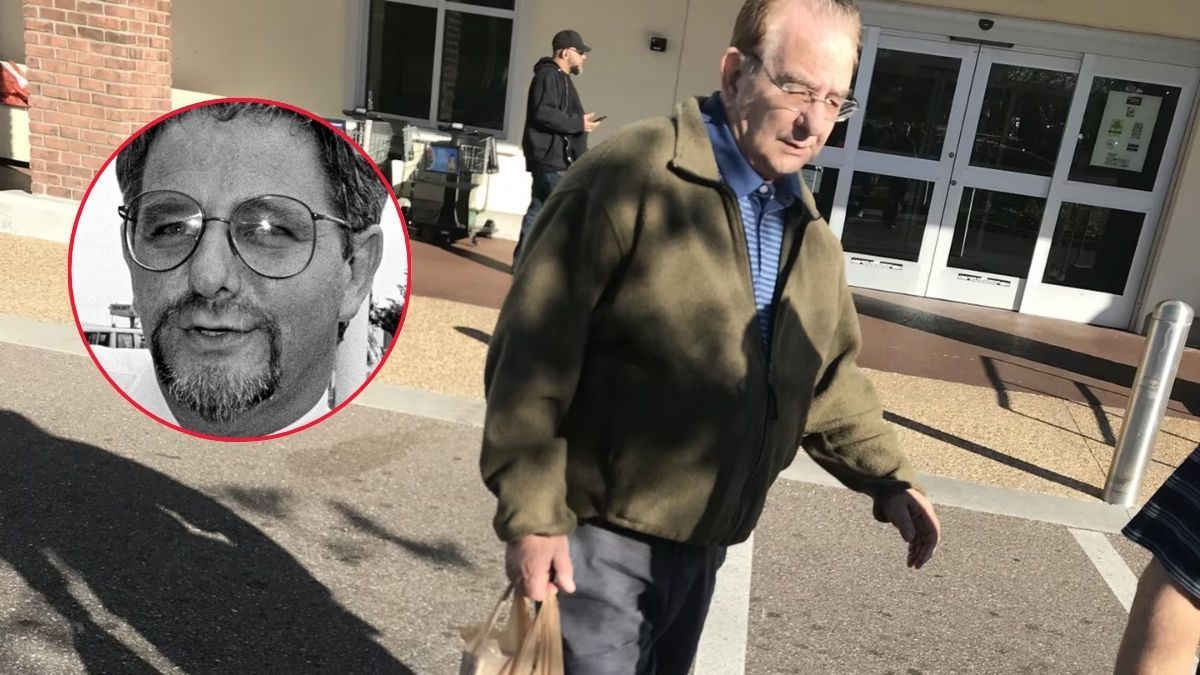
- George Gibney received an effective prison sentence of 15 years and six months for offences against four girls.
- The case followed decades of allegations, renewed attention from a BBC podcast and his extradition from the United States.
- Survivors and support organisations said the outcome affirmed victims’ experiences and highlighted the importance of reporting historical abuse.

Former Irish swimming coach George Gibney was sentenced to 15 years and six months in prison on Monday for sexually abusing four girls in the 1970s and 1980s, decades after allegations against him first emerged.
Judge Micheál O’Higgins imposed an aggregate sentence of 16 years and eight months, with 14 months suspended, at Ireland’s Central Criminal Court. The sentence was backdated to July 2025, when Gibney first entered custody.
The 78-year-old was convicted in July of 39 counts of indecent assault and one count of attempted rape involving children. A jury acquitted him of one additional count of indecent assault relating to one complainant between 1976 and 1977.
Gibney appeared in court in a wheelchair for sentencing. According to RTÉ News, his victims hugged one another in the packed courtroom after he was wheeled out.
The judge said he had taken account of the victims’ young ages and the predatory circumstances in which Gibney exploited his authority as a coach to abuse children entrusted to his care.
O’Higgins described the abuse as “systemic and repeated” and said Gibney’s “predatory nature” elevated the seriousness of the attempted rape offence.
He imposed a 12-year sentence for attempted rape, reduced by two years, resulting in a 10-year term. The indecent assault offences carried a combined sentence of six years and eight months, to run consecutively to the attempted rape sentence.
The judge said the sheer number of assault charges and the severity of the offences complicated sentencing. He also took into account mitigating factors, including Gibney’s age, declining health, decision not to oppose extradition from the United States and guilty pleas to five counts of indecent assault.
Gibney had initially faced 79 counts. He pleaded guilty to five indecent assault charges at the beginning of the trial, while 33 charges were dismissed after the prosecution presented its evidence.
Survivors say the sentence marks a turning point
Outside the court, survivor Orla Poole urged other people who had experienced abuse to seek support and stressed that victims were not responsible for what happened to them.
“Know that you do not have to carry this burden alone. You are not at fault,” she told reporters.
“The only guilt for what we went through lies with the convicted paedophile.”
Poole said she had spent decades remaining silent because of Gibney’s behaviour, believing she was alone and that others might not believe her.
“I thought no one would believe me if I was to say something. That, I think, is no longer the case in Ireland,” she said.
She encouraged survivors to speak to organisations such as the Dublin Rape Crisis Centre and One in Four, as well as therapists, trusted friends or the police, when they felt ready.
“It can be a liberating and cathartic experience. You are not alone,” she said.
Poole added that the abuse had affected people beyond the survivors themselves, including their friends, families and children.
“This court case didn’t just deliver justice for me, but also, I hope, for others,” she said.
“It has shown that even after 50 plus years, justice can be got. Historical offenders can be held to account for their actions and choices.”
She said the case demonstrated that the practice of ignoring abuse or expecting children to remain silent should end.
Abuse took place at swimming facilities and in coach’s home
The offences occurred at Glenalbyn swimming pool in Stillorgan and Newpark Sports Centre in Blackrock, both in County Dublin, according to The Irish Times.
The court heard that some of the girls were between eight and 13 years old when Gibney abused them. Some were assaulted in his car when he gave them lifts to swimming practice, while other incidents took place in his office.
Two sisters were also abused at his home while they were babysitting his children. The abuse included kissing, inappropriate touching and forced sexual acts.
Judge O’Higgins said Gibney had insinuated himself into the friendship group of the victims’ parents, exploiting the trust placed in him as a sports coach.
After sentencing, Detective Chief Superintendent Thelma Watters of An Garda Síochána’s Garda National Protective Services Bureau said Gibney’s crimes were aggravated by his position of trust.
“Parents entrusted their children in the expectation of care and safety, this trust was egregiously broken. Children had their childhood and adult lives forever changed,” she said.
Watters acknowledged the lasting effects of sexual abuse on survivors and their families, noting that disclosing experiences of abuse can be particularly difficult when the incidents happened many years earlier. She urged anyone who had experienced historical sexual abuse, or who had information about such offences, to contact the authorities.
Podcast renewed attention after decades in the United States
Gibney had previously faced child sexual abuse allegations in Ireland in the early 1990s. In April 1993, he was charged with 27 offences, but a judicial review prevented the Director of Public Prosecutions from proceeding with the case because of the time that had elapsed.
He subsequently left Ireland, first taking up a coaching role at a swimming club in Edinburgh before moving to the United States, where he lived in Colorado and later settled in Orlando, Florida.
Although he had been a prominent figure in Irish swimming, he lived in relative anonymity in the United States for years.
The 2020 BBC podcast series Where is George Gibney?, produced with Second Captains, brought renewed attention to the case. Following the series, four complainants who had not been involved in the earlier proceedings came forward with allegations to Irish police, known as An Garda Síochána.
After more than 30 years in the United States, Gibney was arrested in Florida on 1 July 2025, by US marshals acting on an Irish extradition warrant. He was subsequently extradited to Ireland to face prosecution.
During the trial, his defence raised concerns about jurors who had listened to the podcast. After his conviction, Gibney indicated that he would not appeal.
Swimming body reiterates support for survivors
Swim Ireland, the national governing body for swimming in Ireland, acknowledged the sentence in a statement on 12 October and expressed support for the survivors and their families.
The organisation recognised the courage of those who came forward, shared their experiences and took part in a lengthy legal process.
“No swimmer, child or family should ever experience such harm within our sport,” Swim Ireland said.
It added that support remained available to survivors in the case and to others affected by abuse in swimming, regardless of whether they had participated in legal proceedings.
The organisation directed survivors, family members and others in the swimming community to its “Here to Listen” safeguarding service for information on available support.
Rachel Morrogh, chief executive of the Dublin Rape Crisis Centre, said the sentence sent a clear message that the victims were believed and were not to blame.
“Half a century since the abuses took place, the court has sent an unambiguous message that George Gibney’s victims are believed, that it was never their fault and that all the shame and blame lies with the perpetrator,” she said.
Morrogh also said the sentence validated those who had come forward in the early 1990s, even though the earlier cases did not proceed to trial.
She expressed hope that the outcome would bring relief not only to the four women involved in the latest prosecution but also to others who had sought justice over several decades.