Hunan-born Singaporean tycoon, Vicki Zhao's ex-husband, loses A$60 million in six days at Perth casino
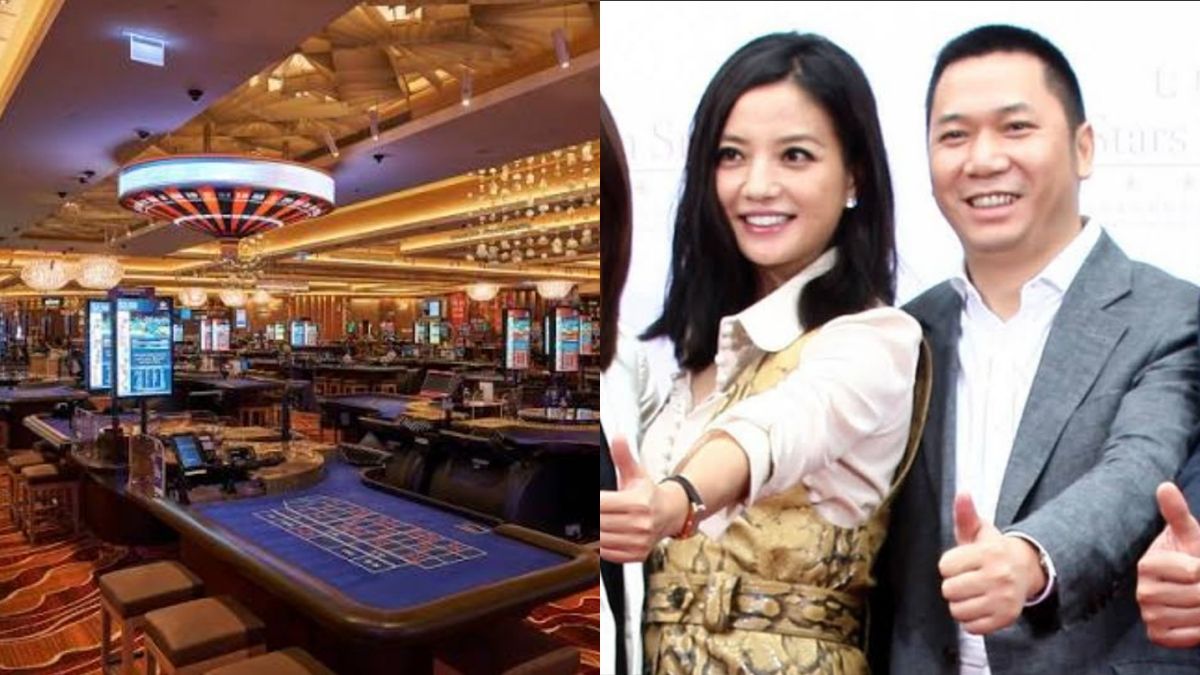
A Hong Kong High Court judgment dated 30 June 2026 has revealed that Singaporean businessman Huang Youlong lost A$60 million (approximately S$53.7 million) at Crown Perth within six days in 2015, exposing a multimillion-dollar gambling credit dispute, bounced cheques and an unsuccessful lawsuit over interest payments.
- A Hong Kong court revealed Huang Youlong lost A$60 million at Crown Perth during a six-day gambling trip in February 2015.
- The dispute centred on a casino credit arrangement involving Suncity and a lawsuit seeking 24 per cent annual interest.
- The court dismissed Michelle Chua's claim, finding the alleged verbal agreement lacked commercial credibility.

HONG KONG: Singaporean tycoon Huang Youlong (黄有龙) lost A$60 million (approximately S$53.7 million) in just six days at Crown Perth during a gambling trip in February 2015, according to a Hong Kong High Court judgment delivered on 30 June 2026, which has shed fresh light on one of Australia's largest known casino losses and a complex cross-border gambling credit dispute.
The judgment detailed how the multimillion-dollar gambling losses triggered years of legal wrangling involving casino credit arrangements, dishonoured cheques, a luxury Hong Kong property transferred as partial repayment and an ultimately unsuccessful claim for millions of dollars in interest.
Deputy High Court Judge Alan Kwong dismissed the lawsuit brought by former Crown executive Michelle Chua (蔡一凤), ruling that her account of an alleged verbal interest agreement with Huang was not credible and ordering her to pay legal costs.
High-stakes gambling trip
According to the judgment, Huang travelled to Perth on 25 February 2015 intending to gamble at Crown Perth, Western Australia's only legal casino.
The Hunan-born businessman, who later became a Singapore citizen, is widely known for his former marriage to Chinese actress Vicki Zhao.
The couple married in 2008 and welcomed their daughter in 2010 at Gleneagles Hospital in Singapore.
Court documents described Huang as an ultra-wealthy businessman with close ties to Alibaba founder Jack Ma.
The judgment stated that Crown's credit department declined to extend gaming credit because Huang already owed substantial gambling debts to casinos elsewhere.
According to the court, an alternative arrangement was subsequently created to allow Huang to continue gambling despite the refusal.
Internal casino arrangement
The judgment said Chua, then Vice President of Marketing at Crown Melbourne, oversaw what was described as an "Internal Casino Arrangement".
Under the arrangement, junket operator Suncity Gaming Promotion obtained A$40 million in gaming chips from Crown and assumed responsibility for recovering the debt.
Chua claimed she had entered into a verbal agreement with Huang under which Suncity would provide A$40 million worth of gaming chips. She alleged Huang agreed to repay the amount within three months using an exchange rate of A$1 to HK$6.30 and to pay annual interest of 24 per cent if repayment was delayed.
The judgment recorded: "On 25 February 2015, [Huang] flew to Perth in order to gamble at the Casino using the gaming chips of AUD40 million procured and/or arranged by [Chua] pursuant to the 1st Credit Agreement."
A$60 million lost in less than a week
According to the court, Huang lost the initial A$40 million within just 48 hours.
Rather than ending his gambling, he immediately requested a further A$20 million in gaming credit in an attempt to recover his losses.
The second attempt also failed, with Huang losing the additional A$20 million.
The combined losses totalled A$60 million within less than one week, making it likely one of the largest publicly documented gambling losses in Australian casino history.
No official public register exists documenting Australia's largest casino losses.
Debt repayments and bounced cheques
Although Huang eventually repaid the A$60 million principal to Suncity by 2019, the court heard that repayment efforts became increasingly complicated.
The judgment stated that Huang's personal assistant issued three security cheques worth A$11.4 million each as part of efforts to secure the outstanding debt.
One of those cheques later bounced when Chua attempted to cash it.
In August 2015, Huang also agreed to purchase a luxury property in Hong Kong's exclusive Regalia Bay development for approximately A$13.3 million before transferring ownership to Chua as partial repayment.
The agreement also included an additional payment of approximately A$950,000.
The court heard the additional payment was described as a "wedding gift" for Chua following her recent marriage and was intended to express appreciation for her assistance in managing Huang's gambling debts.
Court rejects interest claim
Despite the repayment of the principal debt, Chua later sued Huang, arguing she remained personally entitled to 24 per cent annual interest under the alleged verbal agreement.
Judge Kwong rejected that argument.
In his written judgment, he concluded that Chua's version of events "does not sit comfortably with basic commercial common sense and ordinary logic of events".
He added: "I am not persuaded that it is credible."
The court dismissed Chua's claim in its entirety and ordered her to pay Huang's legal costs.
Judge Kwong also found that any debt arrangement, including questions relating to interest, lay between Huang and Suncity rather than Chua personally.
Medical evidence questioned
Huang did not attend the hearing in person.
Instead, he submitted witness statements together with a medical certificate stating he was in France and unable to undertake flights lasting longer than three hours because of chest pains.
Judge Kwong also criticised that evidence.
The judgment described the medical document as "wholly unreliable", noting it failed to identify the doctor's professional qualifications, provide a diagnosis or contain any substantive medical assessment.
Links to Suncity
Court documents also examined the relationship between Chua and Suncity.
According to the judgment, Suncity Gaming Promotion was operating as a junket operator connected to Crown's business operations.
The documents stated that Chua maintained business connections with Suncity.
The court further noted that Suncity's sole shareholder was Chau Cheok Wa (周焯华) .
According to the judgment, Chua's mother, Lim Sui Mee, and her cousin, Si Chong Su, were investors in Suncity.
The judgment also stated that although Chua had been described as Chau's "cousin", they were not biologically related.
Chau was convicted in January 2023 of leading a criminal syndicate and operating illegal gambling and fraud activities before being sentenced to 18 years' imprisonment.
Wider scrutiny of Crown
The case also highlighted the period during which Australian casinos aggressively competed for wealthy international gamblers through junket operators.
The judgment noted that Crown's practices later became the subject of extensive regulatory scrutiny.
Following the Bergin Inquiry in New South Wales, separate Royal Commissions were established in Victoria and Western Australia in 2021.
Those inquiries found Crown Resorts unsuitable to hold casino licences because of systemic governance failures, including anti-money laundering deficiencies, relationships with criminal-linked junket operators and broader corporate governance shortcomings.
The Perth Casino Royal Commission initially found Crown Perth unsuitable to retain its gaming licence.
However, following a lengthy remediation programme, the casino was ultimately permitted to continue operating.
The commission's final report, delivered in 2022, observed that casino operators had fiercely competed to attract high-value gamblers as the number of integrated casino resorts expanded rapidly worldwide between 2005 and 2015.
Subsequent investigations also found Crown casinos had been exploited by organised crime groups for money laundering.
The Hong Kong court judgment did not suggest any criminal wrongdoing by Huang in relation to the gambling transactions that formed the subject of the civil proceedings.