Hundreds of snakes escape as floods strand animals and force mass evacuations in China
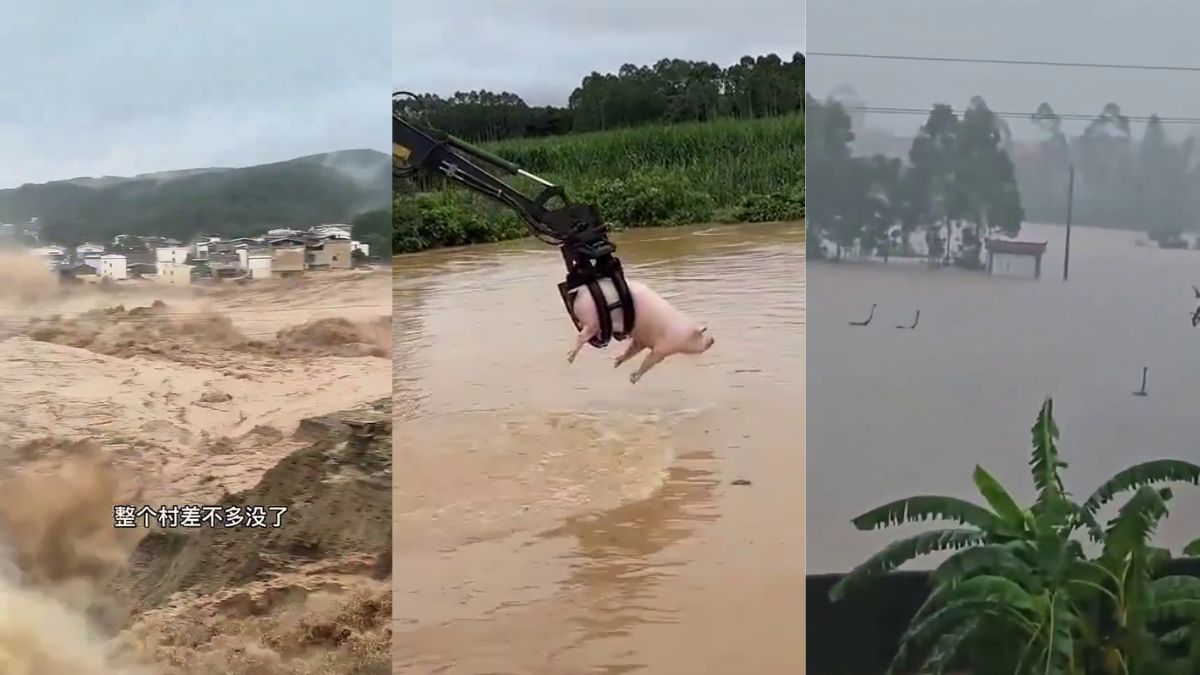
Severe flooding in southern China has forced nearly 50,000 people to evacuate after a reservoir breach in Guangxi. The floods also reportedly released hundreds of farmed snakes into nearby communities and left livestock stranded across affected areas.
- Nearly 50,000 people were evacuated after a reservoir breach in Guangxi amid severe flooding linked to Typhoon Maysak.
- Authorities reported two deaths and upgraded the regional flood emergency response to Level II.
- Flooded snake farms reportedly released hundreds of snakes into surrounding areas, prompting rescue and containment efforts.

CHINA: Nearly 50,000 residents have been evacuated in southern China after floodwaters breached a reservoir in Guangxi during torrential rains linked to Typhoon Maysak.
According to China's state-run Xinhua News Agency, the breach occurred at Liulan Reservoir in Nanning, the capital of the Guangxi Zhuang Autonomous Region, on the morning of 6 July.
Authorities said approximately 48,000 people were evacuated from affected areas as floodwaters spread across parts of the region.
Two people have been reported dead following the severe weather, according to state media.
Emergency response upgraded
The flooding followed days of intense rainfall brought by Typhoon Maysak, which affected much of Nanning between 4 and 6 July.
Authorities upgraded Guangxi's flood-control emergency response from Level III to Level II as conditions worsened.
China operates a four-tier emergency response system, with Level I representing the highest level of emergency.
Emergency management personnel, firefighters, and water resources officials were deployed to conduct rescue, evacuation, and relief operations.
Flooding affects neighbouring countries
The remnants of Typhoon Maysak have also affected neighbouring Vietnam.
According to reports, heavy rain and landslides damaged homes, farmland, and infrastructure in the northern provinces of Lao Cai and Cao Bang between 4 and 6 July.
Authorities in both countries continue to monitor river levels and weather conditions as recovery efforts begin.
Hundreds of snakes reportedly escape flooded farms
The floods have also created unusual challenges in Guangxi, where local media reported that hundreds of farmed snakes escaped after floodwaters damaged breeding facilities.
According to Red Star News, a snake farm in Dengwei village, Hengzhou, was destroyed by flooding, allowing an estimated 800 to 900 snakes to escape.
Wu Zhi, head of the Dengwei village committee, told Chinese media that the incident occurred on 6 July and that one villager had been bitten by a snake and was receiving treatment in hospital.
He said not all of the escaped animals were venomous, with many believed to be water snakes.
Residents report snakebite incidents
Local residents told Chinese media that some trapped villagers had suffered snakebites while stranded in flood-affected areas.
According to CCTV.com, several snake farms in the region are located in low-lying areas vulnerable to flooding.
A local snake farmer told the outlet that farms in the area typically raise cobras, king rat snakes and water snakes, with cobras being venomous.
Authorities have not released official figures on the number of escaped snakes recovered.
Volunteer teams join rescue efforts
Following reports of escaped snakes, local residents from nearby unaffected villages organised volunteer snake-catching teams to assist authorities.
Wu told Chinese media that volunteers had entered flooded communities to remove snakes found near homes and debris.
He said most of the snakes captured so far were non-venomous water snakes, while many others were believed to have been swept away by floodwaters.
Authorities have advised residents not to attempt to catch snakes themselves and to report sightings to local officials.
Animals stranded by flooding
Chinese media also reported that other animals were affected by the flooding.
According to Shanghai Daily, pigs and ostriches were among the animals stranded as floodwaters inundated farms and rural communities.
Rescue operations and damage assessments remain ongoing across Guangxi as authorities continue to respond to the aftermath of the floods.