US national debt passes US$40 trillion as interest costs overtake Medicare
Total United States public debt reached US$40.05 trillion on 18 August 2026, less than five months after crossing US$39 trillion. Interest payments have become the second-largest federal expenditure, and long-dated Treasury yields have risen to levels last seen before the global financial crisis.
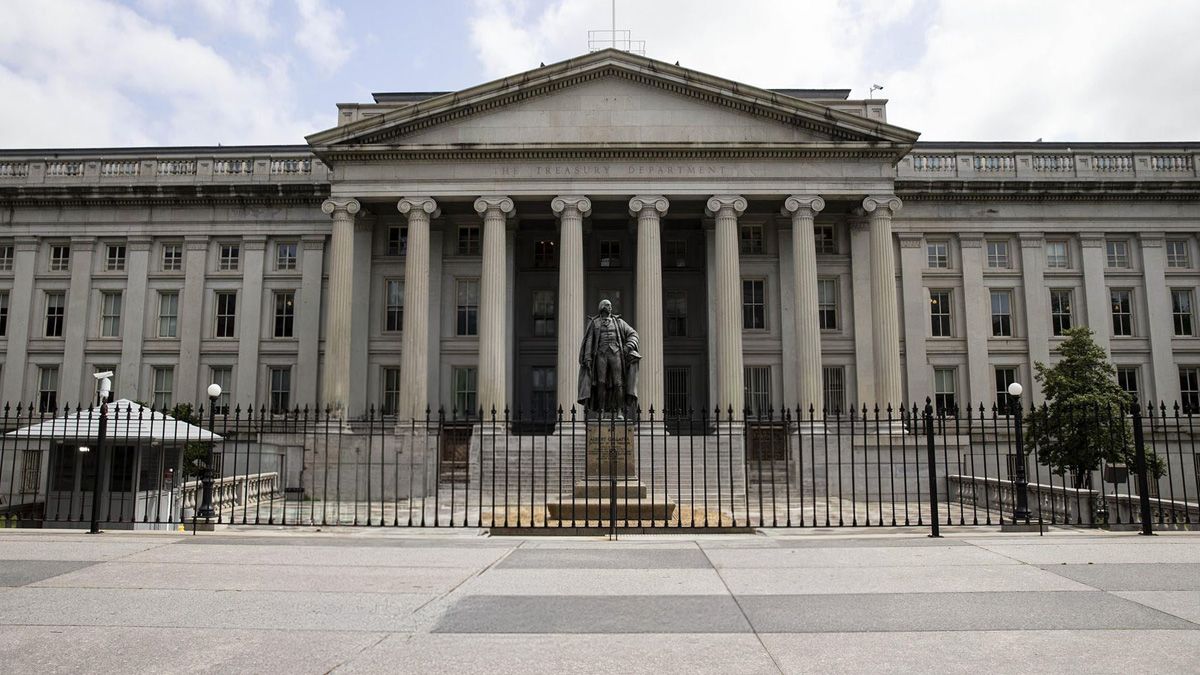

Total United States public debt has surpassed US$40 trillion for the first time, according to figures published by the Treasury Department on Wednesday, 19 August 2026.
The Treasury's daily cash and debt balances statement recorded total public debt outstanding of US$40.047 trillion as of Tuesday, 18 August 2026. Treasury debt data is released on a one-day delay.
That total comprised US$32.266 trillion in Treasury securities held by the public and US$7.782 trillion in intra-governmental holdings.
The threshold was crossed less than five months after the debt passed US$39 trillion, and roughly four and a half years after it topped US$30 trillion.
It also arrived considerably earlier than official forecasts had anticipated. The Congressional Budget Office projected in May 2023 that the country would not reach US$40 trillion until fiscal year 2028.
Speed of accumulation
The federal debt has more than doubled in under a decade. It stood at US$19.95 trillion in January 2017, and at roughly US$19.4 trillion ten years ago.
Maya MacGuineas, president of the non-partisan Committee for a Responsible Federal Budget, noted that the total has quadrupled in less than 20 years, after taking until 1981 to reach US$1 trillion for the first time.
"It is staggering how predictable the fiscal decline of a global power can become," MacGuineas said in a statement issued shortly after the Treasury data was released.
Michael Peterson, chief executive of the Peter G. Peterson Foundation, a fiscal watchdog group, said the current trajectory pointed to US$50 trillion within six years.
"We're really putting our economy and our country's future in jeopardy," Peterson said.
Deficits and revenue shortfalls
Federal spending continues to outpace revenue collection. The Treasury last week reported a monthly deficit of US$432.3 billion for July 2026.
That was the highest monthly shortfall since March 2021 and the fourth-highest in United States history.
The cumulative deficit for the first 10 months of fiscal 2026 is approaching US$1.8 trillion. The current fiscal year ends on 30 September 2026.
That 10-month figure has already exceeded the total gap recorded for the whole of fiscal 2025, with two months still to run.
Part of the revenue shortfall stems from tariff policy. Tariff refunds turned customs receipts negative for a third consecutive month, following a Supreme Court decision striking down some of the tariffs imposed by President Donald Trump.
Structural drivers
Demographic pressures are a significant contributor. Roughly 10,000 members of the "baby boom" generation retire each day, and life expectancy among senior citizens has increased.
That has raised outlays on Social Security and Medicare, while payroll and income tax revenues have fallen short of covering federal costs.
The United States spends approximately US$7 trillion annually. Around 60 per cent of that is earmarked for mandatory programmes including Social Security, Medicare, Medicaid and veterans' care, which generally rise with living costs.
Legislative choices have added further pressure. Successive packages have combined tax reductions with higher spending, including the Tax Cuts and Jobs Act of 2017, pandemic relief measures passed under both Trump and former President Joe Biden, and the One Big Beautiful Bill Act of 2025.
The Congressional Budget Office estimates that the One Big Beautiful Bill Act will add a further US$4.7 trillion to the debt.
Public debt rose by US$7.8 trillion during Trump's first term, with more than half accumulating during the pandemic response in his final nine months in office. It has increased by a further US$3.8 trillion since January 2025.
Debt rose by US$8.4 trillion during Biden's four-year term, driven by Covid-19 recovery spending alongside infrastructure investment and clean energy subsidies.
Interest costs
Interest payments have risen sharply as both borrowing and interest rates increased. Debt service costs have totalled close to US$1.2 trillion in the current year.
Marc Goldwein, senior policy director at the Committee for a Responsible Federal Budget, said those costs have more than tripled over the past five years.
Fiscal year 2025 marked the first time debt service costs exceeded Pentagon funding. In the first 10 months of fiscal 2026, interest costs overtook Medicare outlays to become the second-largest line item in the federal budget, behind Social Security.
"We're spending significantly more to service past debt than to invest in our future," Goldwein said, adding that "our debt is begetting more debt. It creates a vicious cycle."
Bond market response
The debt trajectory has fed through to the bond market. Yields on long-dated Treasuries reached their highest levels in nearly two decades on 18 August 2026.
Days earlier, a US$25 billion auction of 30-year Treasury bonds cleared at the highest yield since 2021, indicating that investors are demanding greater compensation to hold United States government debt. Yields move inversely to bond prices.
Demand from foreign investors, who hold nearly one third of Treasuries, has declined over the past year.
Analysts have attributed the rise in yields to a combination of factors, including deficit concerns, inflation uncertainty, rising term premia, questions over the Federal Reserve's rate path, and heavy corporate bond issuance linked to artificial intelligence investment.
On Wednesday, 19 August 2026, Treasury Secretary Scott Bessent announced a doubling of buyback sizes for 10- to 30-year Treasuries, to at least US$4 billion per operation.
Higher long-end yields tend to push up borrowing costs for mortgages, car loans and commercial lending, tightening financial conditions for households and businesses.
Political response
Asked at the White House whether Americans should be concerned about bond market volatility, Trump said he did not think so at all.
"I think we have a very powerful country, and we're powering through these ridiculous interest rates — they're ridiculous. Look, when our country is strong, interest rates should go down," Trump said.
Former Federal Reserve Chair Jerome Powell and others have described the United States as being on an "unsustainable fiscal path". Congress has shown limited appetite in recent years to address the imbalance, which has contributed to credit rating downgrades.
In 2025, Moody's downgraded United States debt, removing its last perfect credit rating. The sovereign remains rated one notch below the top grade, ahead of France and Japan.
Republican lawmakers raised the debt limit by US$5 trillion last year as part of the One Big Beautiful Bill Act, meaning the ceiling is unlikely to bind again until some point in 2027.
International context
The United States is not alone in facing investor scrutiny. Government bond yields in the United Kingdom, France, Germany and Japan are trading at or near multi-year highs as markets weigh spending and deficit concerns.
MacGuineas warned that the consequences extend well beyond government accounts.
"The more we borrow, the more we exacerbate inflation, squeeze out other priorities in the budget, and leave ourselves vulnerable to emergencies at home and turmoil abroad," she said.