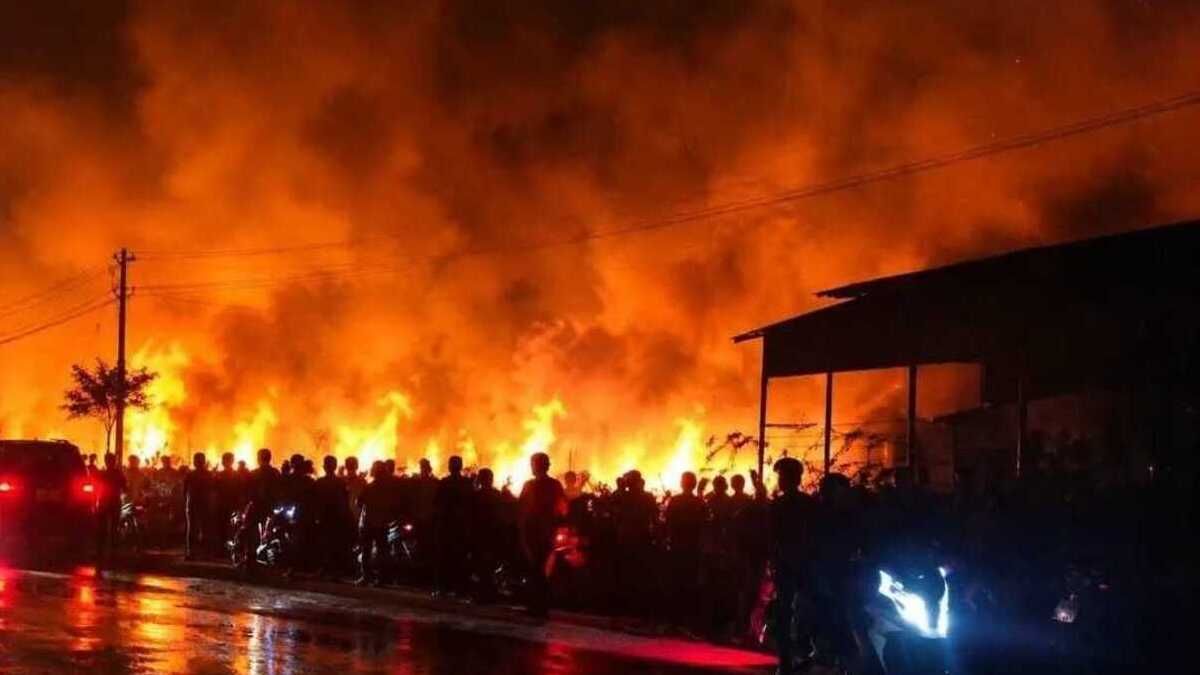
France battles major wildfire as strong winds fuel blaze near Spanish border and hundreds evacuate
Hundreds of firefighters continued battling a major wildfire in southern France's Aude department as strong winds and drought hampered containment, amid growing concerns over the long-term resilience of the country's forests.
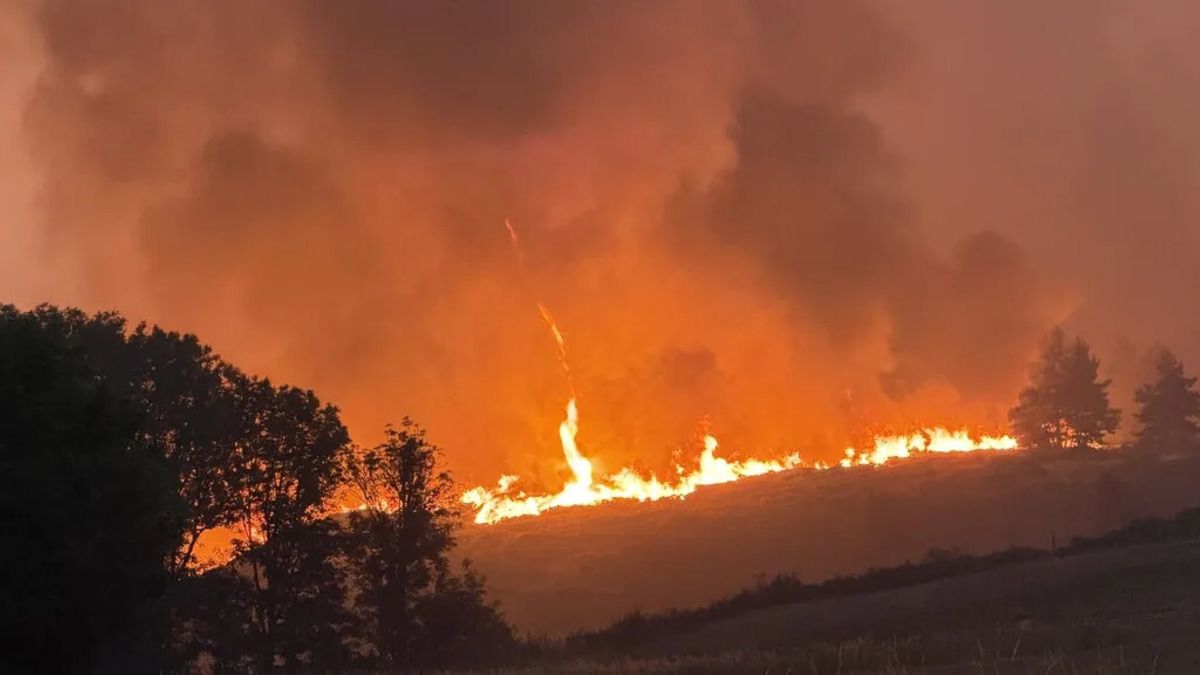
- Hundreds of firefighters continue battling an out-of-control wildfire in Aude amid strong winds and drought.
- Around 200 residents were evacuated or told to remain indoors as a precaution.
- The wildfire has intensified debate over France's declining forest carbon sink and future forest management.

Firefighters in southern France continued efforts on Thursday to contain a major wildfire in the Aude department near the Spanish border, as strong winds and dry conditions fuelled the spread of flames across hundreds of hectares of vegetation.
Local authorities said weather conditions remained unfavourable, with persistent winds posing a significant risk of further fire expansion. The blaze began on Wednesday and rapidly spread through parched vegetation following a period of exceptionally hot weather across much of Europe.
By late Wednesday, the fire had burned through approximately 800 hectares of land. The local prefecture reported at around 11pm that while the fire had been contained in certain areas, it remained out of control.
The wildfire monitoring platform Feux de Forêt, which tracks forest fires across France, warned on social media that high temperatures and strong winds were increasing the risk of fires spreading.
Hundreds of firefighters were deployed across the neighbouring departments of Aude and Hérault. Emergency crews faced challenging conditions, including drought, strong winds and difficult terrain that limited access to affected areas.
Because many parts of the hilly landscape were inaccessible by road, authorities deployed water-dropping aircraft to support firefighters battling the blaze on the ground.
Temperatures of around 30 degrees Celsius combined with powerful wind gusts helped drive the fire through low-lying vegetation that had been dried out by recent heat. Officials said approximately 200 people were either evacuated or instructed to remain indoors in the communes of Pouzols-Minervois and Mailhac as a precaution.
Smoke from the wildfire spread across parts of southern France on Wednesday night. Reports indicated that smoke reached Marseille Airport, where the smell of burning was detected aboard at least one incoming flight. Pilots reportedly reassured passengers that the odour was coming from the wildfire and not from the aircraft.
The wildfire erupted only days after a record-breaking heatwave swept across large parts of Europe. France’s national weather service has warned that another period of extreme heat could affect the country next week.
French health authorities estimate that the recent heatwave may have contributed to around 1,000 excess deaths, highlighting the continuing public health risks associated with prolonged periods of extreme temperatures.
Growing concerns over France’s forests
The latest wildfire has intensified concerns about the future of France’s forests, which are increasingly exposed to rising temperatures, drought, disease, insect infestations and more frequent wildfires.
Forests play a central role in France’s climate strategy. As trees grow, they absorb carbon dioxide from the atmosphere and store it in wood, roots and soil. As a result, forests represent the country's largest land-based carbon sink and are considered essential to France’s objective of achieving carbon neutrality by 2050.
However, recent national forest inventories indicate that the capacity of French forests to absorb carbon is declining. Current estimates show forests absorb around 50 million tonnes of carbon dioxide equivalent annually, representing nearly 10 per cent of France’s total emissions. In the early 2010s, forests were absorbing almost twice that amount.
Experts attribute the decline to repeated droughts that slow tree growth, heatwaves that increase tree mortality and greater vulnerability to diseases and insect pests. More intensive timber harvesting has also been identified as a contributing factor.
Environmental organisation Canopée has criticised government plans that would increase annual timber harvesting from around 53 million cubic metres to 60 million cubic metres by 2030 under France’s proposed third National Low-Carbon Strategy (SNBC 3).
The government argues that greater timber use could help reduce emissions by replacing carbon-intensive construction materials such as concrete and steel, while also supporting district heating systems, wood pellet production and future aviation fuel projects.
Canopée disputes that approach, warning that increased timber harvesting could further weaken the ability of forests to absorb carbon dioxide. The organisation estimates that the planned increase could reduce the forest carbon sink by approximately 11 million tonnes of carbon dioxide annually from 2030 onwards.
According to the organisation, a significant share of the additional timber demand would come from projects linked to the energy transition, including biomass power generation, heating networks, pellet manufacturing and synthetic aviation fuels.
The group also challenges the assumption that wood energy is automatically carbon-neutral. It argues that burning forest biomass releases stored carbon dioxide immediately, while replacement trees can take decades to reabsorb the same amount of carbon.