Chinese residential mist cooling system draws global attention amid summer heat
A rooftop mist cooling system in Shanxi has attracted international attention after footage shared by China's foreign ministry spokesperson highlighted its ability to reduce surface temperatures by 5–8°C within minutes.
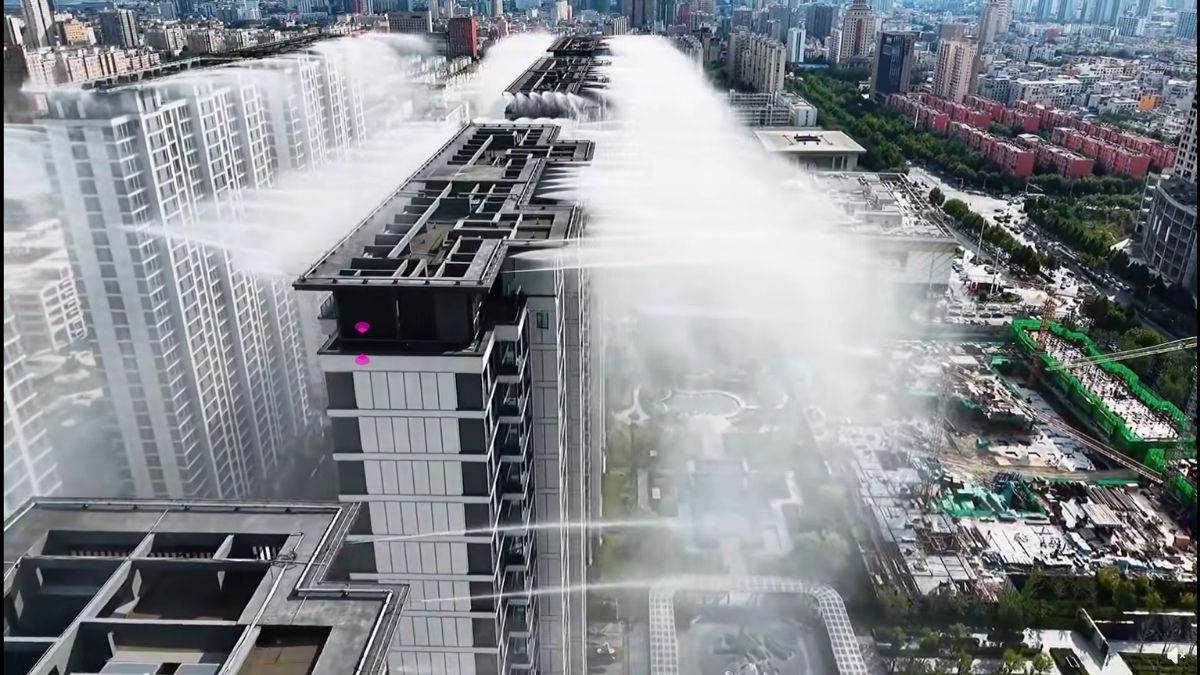
- A rooftop mist cooling system in Shanxi gained international attention after footage was shared on 1 July 2026.
- Mao Ning said the installation can reduce surface temperatures by 5–8°C within minutes.
- Peer-reviewed research explains that evaporative mist cooling reduces heat stress through rapid water evaporation and radiation attenuation.

A mist cooling system installed on the rooftops of a residential community in central China's Shanxi province has drawn widespread attention online, after footage of the technology was shared on social media on 1 July 2026 by Mao Ning, spokesperson for China's Ministry of Foreign Affairs.
Sharing the footage on her social media account, Mao Ning described the installation as a "rooftop rain" system, saying it drops surface temperatures by 5–8°C within minutes. The video has since circulated widely on platforms including X, drawing interest from users in other countries facing similarly high summer temperatures.
Peer-reviewed research on evaporative cooling has offered further detail on the mechanics behind mist-spray systems, which are used to ease heat stress in outdoor, non-air-conditioned spaces affected by the urban heat island effect.
According to the research, mist-spray systems work by releasing fine water droplets that evaporate rapidly under the influence of airflow and solar radiation. This process absorbs sensible heat from the air and converts it into latent heat, while also forming a thin layer of moisture on the skin of people nearby. The resulting mist cloud additionally attenuates solar radiation in the near-infrared and mid-infrared spectrum, contributing to a cooler, more comfortable sensation, according to the study. The technique has been applied in settings ranging from animal housing and greenhouses to building envelopes, solar panels, squares, parks, streets and waiting areas.
As summer temperatures continue to rise in cities around the world, technologies such as mist-spray cooling are drawing renewed attention as a low-energy option for keeping outdoor spaces liveable.