Xi Jinping reaffirms Taiwan reunification pledge at Communist Party anniversary as cross-strait tensions persist
Chinese President Xi Jinping used the Communist Party of China’s 105th anniversary to reaffirm Beijing’s commitment to reunification with Taiwan, oppose "Taiwan independence" and foreign interference, while highlighting the party’s global influence and military strength amid cross-strait tensions.
- Xi reaffirmed reunification with Taiwan as the Communist Party’s "unshakeable" historic mission.
- Taiwan urged Beijing to pursue dialogue as Chinese military activity around the island continued.
- Xi also highlighted the Communist Party’s global influence, military modernisation and China's international role.

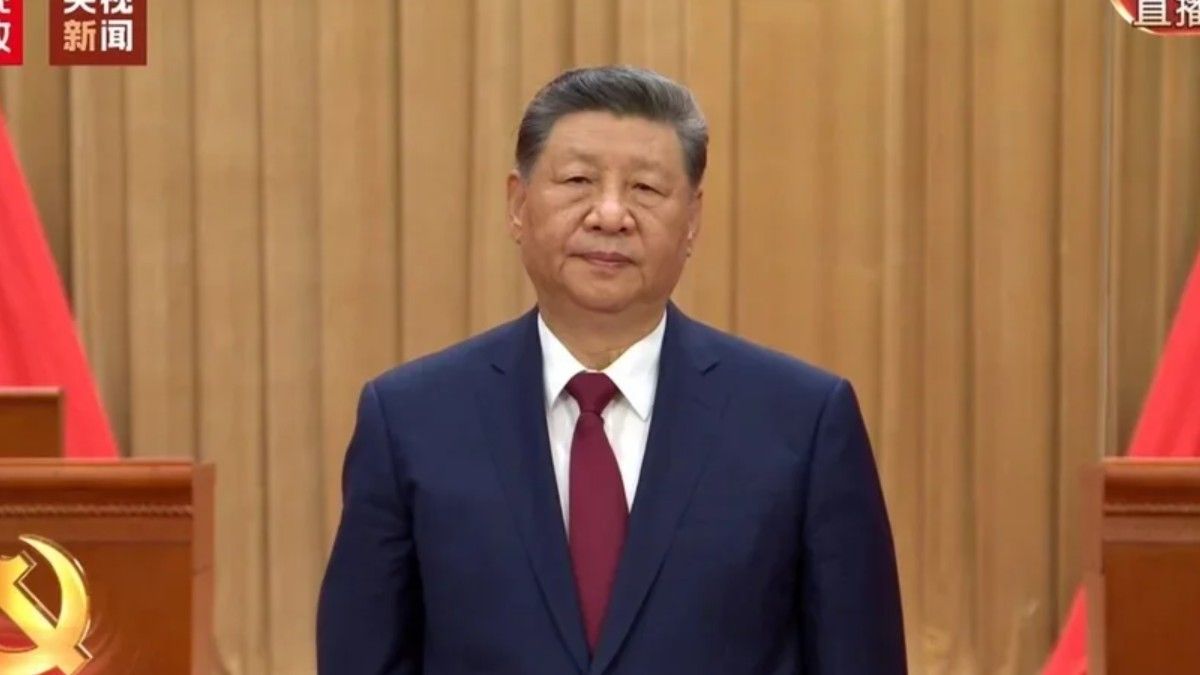
BEIJING, CHINA: Chinese President Xi Jinping reaffirmed Beijing's commitment to achieving what he described as China's "complete reunification" with Taiwan during celebrations marking the 105th anniversary of the Communist Party of China (CPC) on 1 July 2026, reiterating opposition to "Taiwan independence" and foreign interference while emphasising the party's growing global influence and China's military strength.
Speaking at the Great Hall of the People in Beijing, Xi addressed a ceremony commemorating the founding of the CPC and presented the July 1 Medal to recipients recognised for outstanding service to the party.
"Resolving the Taiwan question and realising China's complete reunification is a historic mission and an unshakable commitment for the Communist Party of China," Xi said in remarks carried by state news agency Xinhua.
He added that Beijing would take "resolute actions" to oppose separatist forces seeking "Taiwan independence", resist external interference and advance what it describes as national reunification.
Cross-strait policy reaffirmed
Xi's remarks reiterated Beijing's long-standing position that Taiwan is part of China, a claim rejected by Taipei, which maintains that the Republic of China (Taiwan) is self-governing.
Addressing the Taiwan issue, Xi described reunification as "the common aspiration of all Chinese people" and stressed that safeguarding China's sovereignty, security and development interests remained a core priority.
He also called for continued support for the long-term prosperity and stability of Hong Kong and Macao, saying both special administrative regions should be further integrated into China's broader national development strategy.
Military strength highlighted
Xi used the speech to underline the importance of military modernisation, arguing that national security depended on maintaining a strong armed force under the Communist Party's absolute leadership.
"A strong country must have a strong military, and only a strong military can ensure national security," he said.
China has announced a 7% increase in defence spending for 2026, according to the budget released by the Ministry of Finance in March. Although representing the slowest annual increase since 2021, China remains the world's second-largest military spender after the United States.
Xi also urged efforts to "resolutely" safeguard China's sovereignty, security and development interests while reaffirming the party's control over the People's Liberation Army.
Global role emphasised
The approximately 40-minute speech placed greater emphasis on China's international influence than Xi's previous anniversary addresses, which largely focused on domestic development and national rejuvenation.
Xi described the Communist Party as "the world's largest ruling party with significant global influence", saying it had "deeply changed the trend and trajectory of the world's development through relentless struggle".
He credited the party with leading China through industrialisation after overthrowing imperialism, feudalism and bureaucratic capitalism following its founding on 1 July 1921 and the establishment of the People's Republic of China on 1 October 1949.
Referring to his frequently used description of "changes not seen in a century", Xi said global transformations were accelerating and that "the world has entered a new era of turbulence and transformation".
Against that backdrop, he said China would continue to "promote the building of a new type of international relations", although he did not identify specific countries or initiatives.
Taiwan reports increased military activity
Xi's remarks came amid continued military activity around Taiwan.
Taiwan's Ministry of National Defense said it detected 13 Chinese military aircraft, 10 People's Liberation Army Navy vessels and three official ships operating around the island between 6 a.m. on Tuesday and 6 a.m. on Wednesday.
According to the ministry, nine of the 13 aircraft crossed the Taiwan Strait median line and entered Taiwan's northern, south-western and eastern air defence identification zone.
Taiwan said it responded by deploying aircraft, naval vessels and coastal missile systems to monitor the Chinese activities.
The ministry also reported that Chinese military aircraft were detected 208 times and naval vessels 332 times around Taiwan during June.
It said Beijing has steadily expanded so-called "gray zone tactics" since September 2020 by increasing the frequency of military aircraft and naval vessel operations around the island without engaging in direct conflict.
Taipei calls for dialogue
Responding to Xi's speech, Taiwan's Mainland Affairs Council said it had noted that the Chinese leader had once again reiterated Beijing's established policy towards Taiwan, describing the remarks as largely repeating previous positions.
Taiwan's government nevertheless called on Beijing to engage pragmatically with the current cross-strait reality and public opinion in Taiwan.
It urged Chinese authorities to hold dialogue with Taiwan's democratically elected government without preconditions to resolve differences and maintain peace and stability across the Taiwan Strait.