SSG and NEA defend 'washroom cleaning' course on SkillsFuture amid online bewilderment
Despite online bewilderment, SSG and NEA defend "washroom cleaning" course on SkillsFuture, citing its importance in mandatory cleaning industry training.

SINGAPORE: Despite the online community expressed bewilderment over the inclusion of a "washroom cleaning" course on the SkillsFuture website, both SkillsFuture Singapore (SSG) and the National Environment Agency (NEA) have defended the course, stating that it is an integral part of the mandatory training for workers in the cleaning industry.
In response to recent inquiries by Singapore media TODAY, the government agencies highlighted the demanding nature of the cleaning industry, where workers are required to maintain multiple washrooms daily.
They emphasized the importance of efficiency and effectiveness in the cleaning process for these workers.
"Through practical training, participants will learn effective cleaning methods, the proper use of cleaning agents, and adherence to safety protocols,” they said in a joint statement on Thursday (22 February).
NEA said the course made mandatory for licensed cleaning businesses since 31 December 2022, is also a component of the modules applicable to job levels under the Progressive Wage Model for cleaners. This model allows workers to earn higher wages as they undergo additional training.
As outlined in the specifications for outcome-based cleaning contracts found on NEA's website, one of the requirements for service providers is to ensure that all cleaners deployed for a contract have completed Workforce Skills Qualifications (WSQ) courses within the first 3 months.
This includes courses related to basic cleaning of hard floor surfaces and washrooms.
SSG and NEA said: “Successful completion of the course enhances participants' proficiency in basic cleaning techniques, contributing significantly to their professional development within the cleaning industry.”
Licensed cleaning businesses are obligated to ensure that all their cleaners fulfil this enhanced training requirement or face potential financial penalties.
Non-compliance may result in the suspension or revocation of their license.
According to SSG and NEA, over 500 enrollments for the course were recorded last year across various training providers. Those interested in enrolling may be eligible for subsidies, training allowances, and other benefits as part of the program.
Netizens question practicality of certain courses listed on SkillsFuture
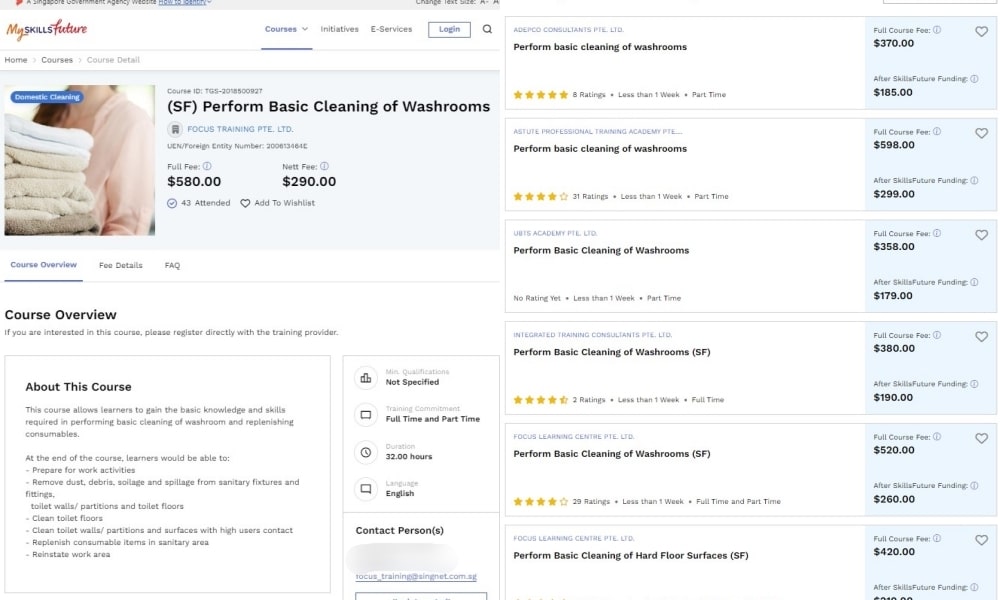
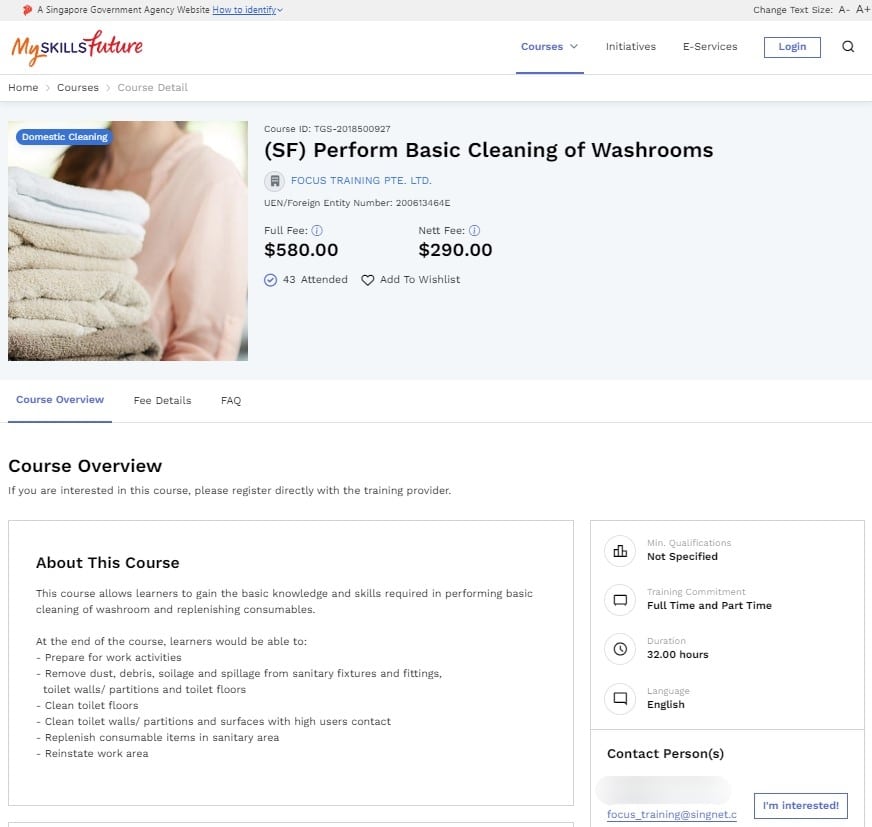
Earlier, a screenshot circulating on social media revealed a short course titled "Washroom Cleaning" listed on SkillsFuture, indicating a full course fee of S$580, which could be reduced to S$290 after SkillsFuture funding.
A search on the MySkillsFuture website unveiled a diverse range of courses, with over 10 options related to “basic cleaning of washrooms.”
Additionally, the listings included courses with titles such as “washroom maintenance,” “public hygiene maintenance,” and “food shop hygiene for beginners.”
In examining one of the course descriptions, it was outlined that this particular program enables learners to acquire the essential knowledge and skills necessary for basic cleaning of washrooms and replenishing consumables.
Upon completion of the course, the training provider claimed that participants are expected to have the capability to “remove dust, debris, soilage, and spillage from sanitary fixtures and fittings, toilet walls/partitions, and toilet floors,” as well as “clean toilet floors,” among other specified skills.
Despite encouragement from PAP ministers for workers to enrol in SkillsFuture courses and upskill in the face of a challenging labour market, some netizens are voicing concerns and scepticism. They question whether some of the courses genuinely deliver tangible benefits for workers.
Some are calling for a thorough examination of the courses listed on SkillsFuture to ensure their relevance and effectiveness in equipping workers with skills essential for job security.
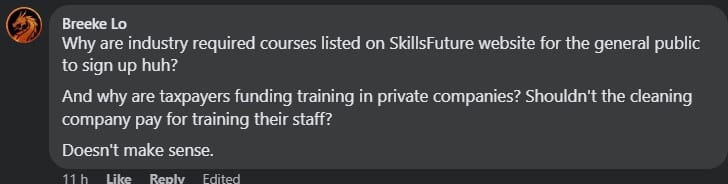
Despite the explanation provided by SSG and NEA, certain netizens, as seen in comments on TODAY's Facebook post, continue to question the necessity of having such a course listed on SkillsFuture.
They are also raising concerns about whether this means taxpayers' money is being used to fund training in private companies, arguing that the responsibility for training staff should fall on the cleaning companies themselves.
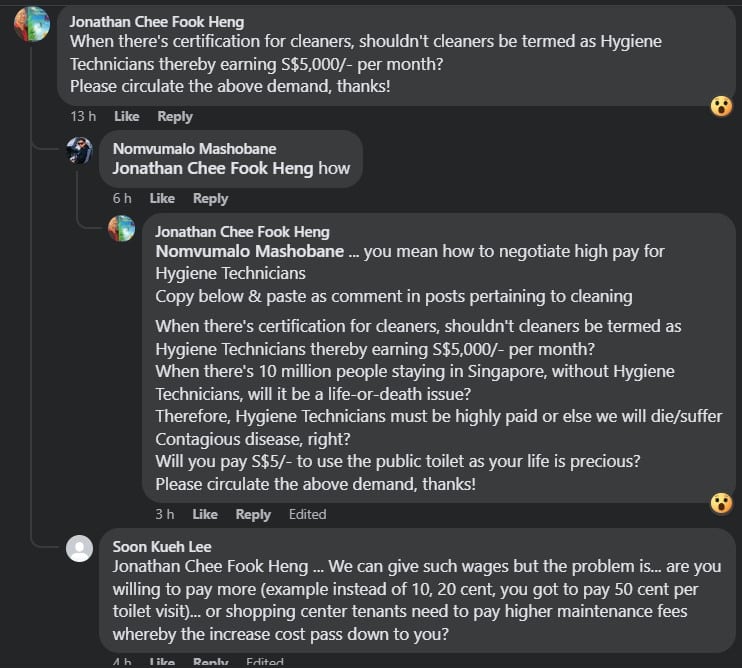
Some individuals are suggesting that as cleaners receive course training, they should consider taking on roles as 'hygiene technicians,' thereby warranting better pay for their enhanced skills.
WP Jamus Lim calls for bridging the gap between training and employment
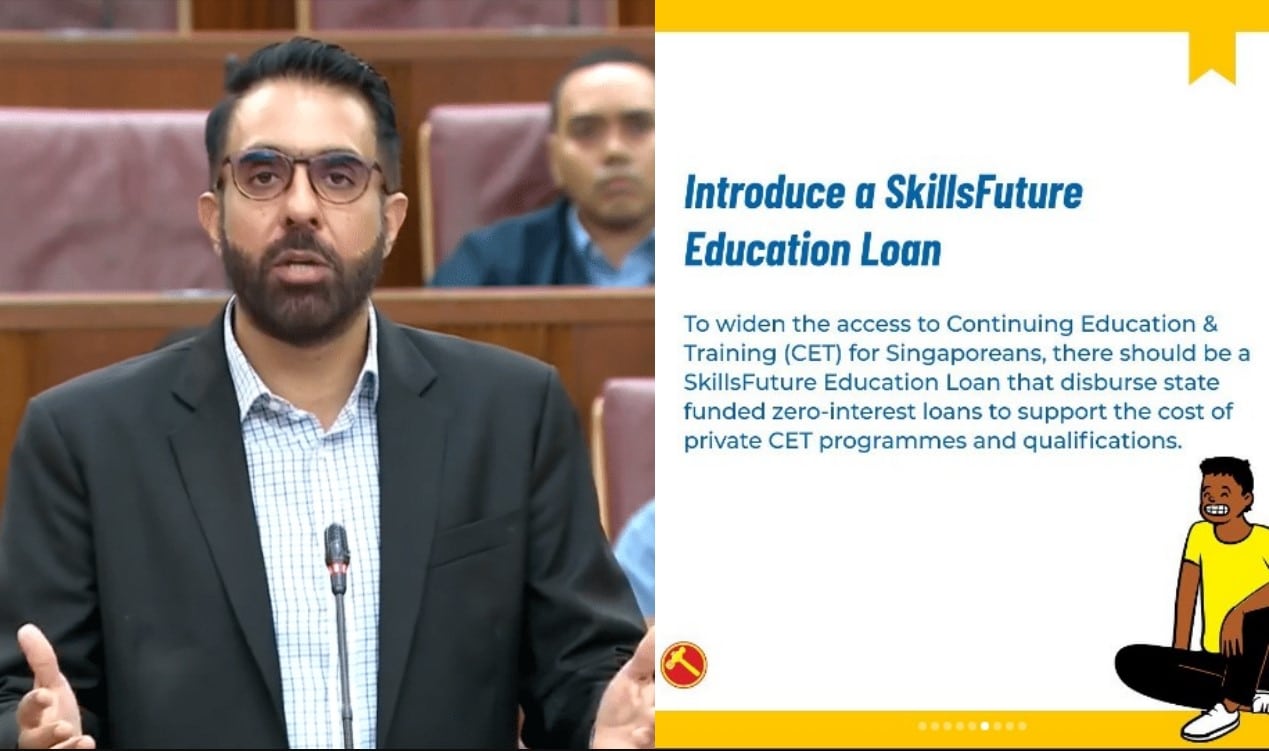
Associate Professor Jamus Lim, Workers’ Party Member of Parliament for Sengkang GRC, has earlier urged refining the SkillsFuture program to better align with industry needs, ensuring that workers gain practical and experiential skills sought by employers.
A critical point raised by Assoc Prof Lim is the necessity for assurance that retraining efforts directly lead to viable job opportunities.
“This has to come from not only making sure that the SkillsFuture courses and retraining programs pursued closely align with actual business needs; it can go further to provide a soft guarantee of a job.”
To achieve this, he suggested the government establish a database of required skills, matching trainees to courses with a commitment to job placement for at least six months post-reskilling.
“To sweeten the deal on the employer side, the government can cover part of the retrained worker’s wages during this period. ”
Jamus Lim pointed out that such an approach is already in practice in several Scandinavian countries for managing unemployment.
As a nation emphasizing the importance of human capital development, he expressed hope that Singapore will progressively enhance its unemployment safety net to suit the demands of a 21st-century economy and society.