Netizens amused by 'washrooms basic cleaning' course on SkillsFuture
Netizens express bewilderment over "Basic Cleaning of Washrooms" course on MySkillsFuture, raising doubts about its relevance in upskilling workers amid a challenging labor market

Last Friday (16 February), Deputy Prime Minister and Finance Minister Lawrence Wong announced Singapore’s 2024 Budget in Parliament.
One notable highlight in this year's Budget is the announcement by DPM Wong that Singaporeans aged 40 and above will receive a substantial S$4,000 top-up in SkillsFuture Credits come May.
This initiative aims to motivate mid-career professionals to update their skills and advance in their respective fields.
While the standard S$500 SkillsFuture credits, available to all Singaporeans aged 25 and above, can be applied to a "wide range of courses," the S$4,000 credit will be specifically targeted at selected training programs with superior employability outcomes.
These include both part-time and full-time diploma courses, undergraduate programs, and courses aligned with the Progressive Wage Model sectors.
The Progressive Wage Model encompasses the cleaning, security, landscape, lift and escalator, and retail sectors, all of which stand to benefit from this initiative.
Netizens bewildered by "Basic Cleaning of Washrooms" course featured on MySkillsFuture
In anticipation of the benefits arising from the enhanced SkillsFuture program, someSingaporeans have explored the available courses on the SkillsFuture website.
To their surprise, a netizen came across perplexing short courses, such as "Perform Basic Cleaning of Washrooms," featured in the course listings.
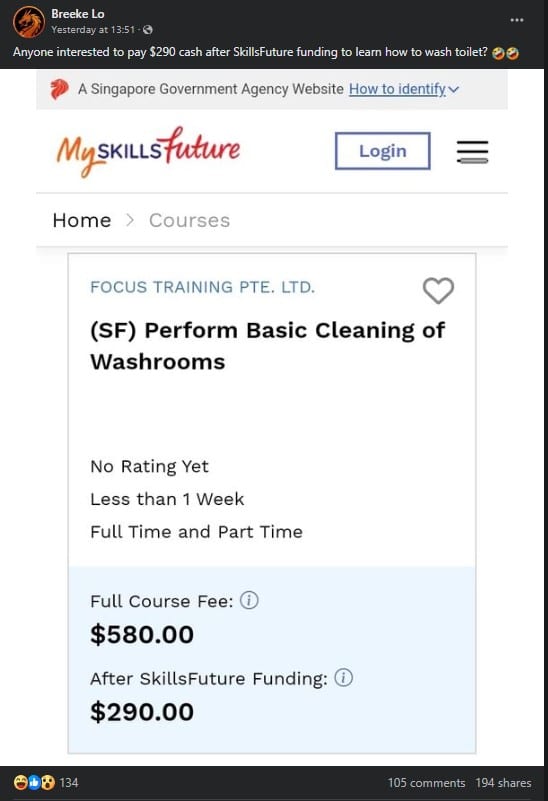
On Monday, the netizen shared a screenshot on the Facebook group "Concerned Citizens Band Together for a Better Singapore."
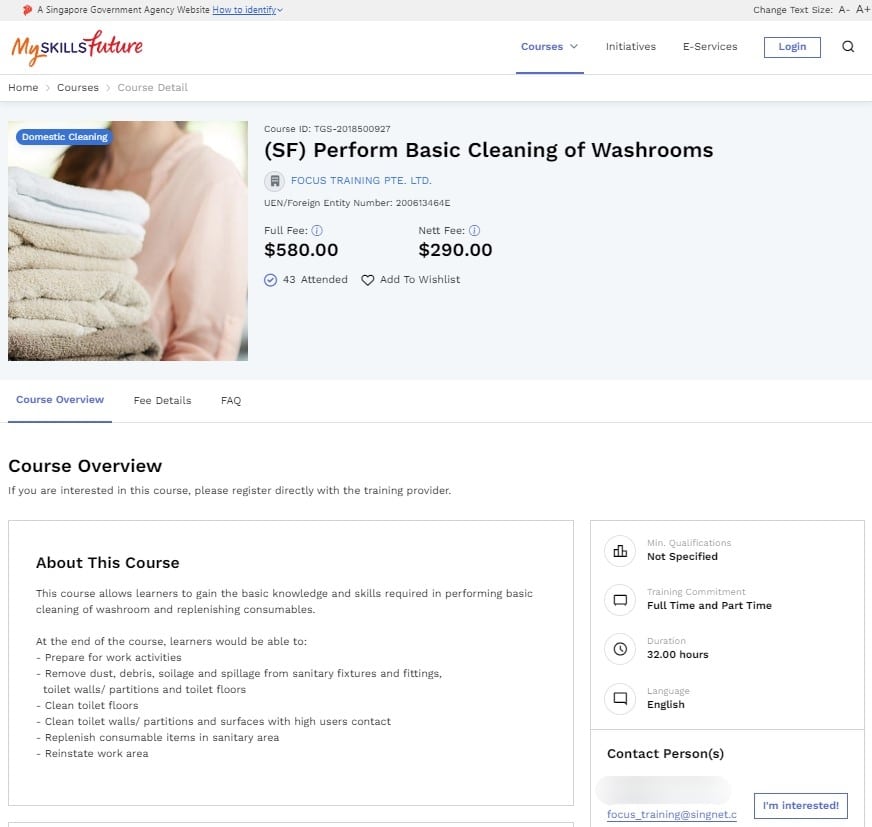
The image displayed one of the short courses titled "Washroom Cleaning" listed on SkillsFuture, with a full course fee of S$580, reduced to S$290 after SkillsFuture funding.
He mocked: "Anyone interested to pay $290 cash after SkillsFuture funding to learn how to wash toilet?"
Netizens question practicality of certain courses listed on SkillsFuture
Beyond the initial bewilderment and amusement, netizens are now raising critical questions about the practicality and relevance of such courses, particularly in the context of Singaporeans, including those who have been retrenched in mid-career.
Some are calling for a thorough examination of the courses listed on SkillsFuture to ensure their relevance and effectiveness in equipping workers with skills essential for job security.
A comment questioning the necessity of these specific courses ridiculed that Singaporean males had already been obligated to perform tasks like washing toilets during National Service.

There are even mockeries suggesting whether these courses require advanced training, diplomas, and degrees.


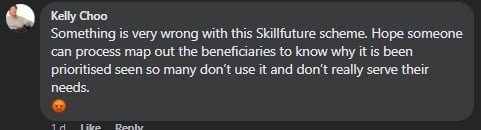
A discerning comment aptly pointed out a significant issue with the SkillsFuture scheme. The comment expressed the need for thorough scrutiny of the course listings, as many individuals seem not to utilize the program, finding that it does not authentically cater to their needs.
Courses claiming to equip trainees with skills to "clean toilet floors"
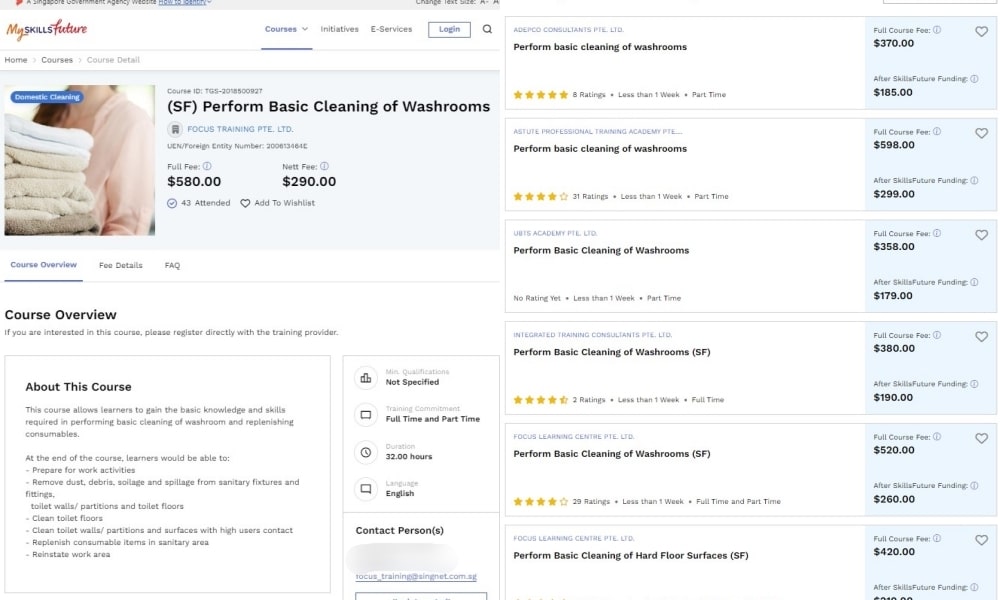
A search on the MySkillsFuture website unveiled a diverse range of courses, with over 10 options related to "basic cleaning of washrooms."
Additionally, the listings included courses with titles such as "washroom maintenance," "public hygiene maintenance," and "food shop hygiene for beginners."
In examining one of the course descriptions, it was outlined that this particular program enables learners to acquire the essential knowledge and skills necessary for basic cleaning of washrooms and replenishing consumables.
Upon completion of the course, the training provider claimed that participants are expected to have the capability to "remove dust, debris, soilage, and spillage from sanitary fixtures and fittings, toilet walls/partitions, and toilet floors," as well as "clean toilet floors," among other specified skills.
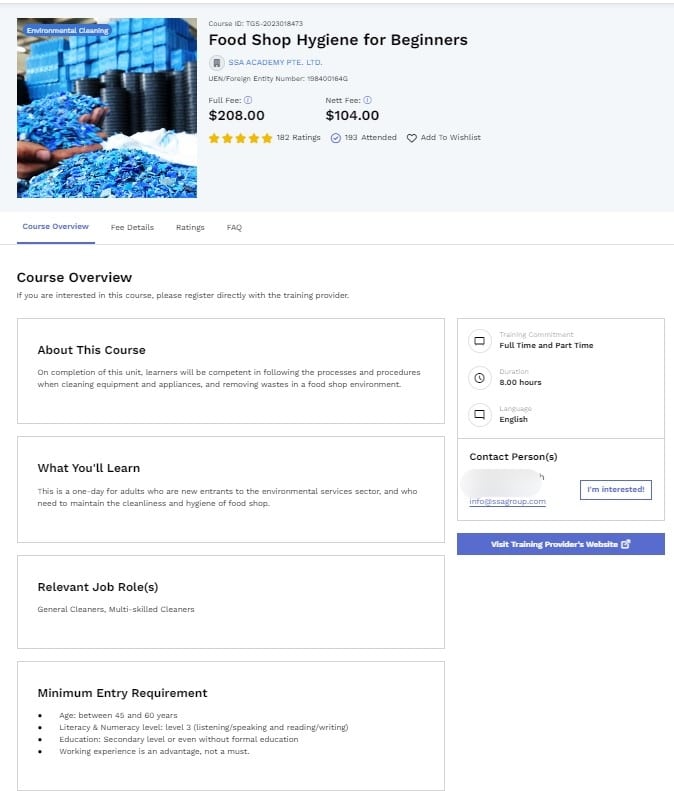
For another course titled "Food Shop Hygiene for Beginners," the claim is that learners, after completing the 8-hour short course, will possess competence in adhering to processes and procedures for cleaning equipment and appliances, as well as properly handling waste in a food shop environment.
It's noteworthy that this particular course has a minimum entry requirement for individuals aged 45-60 years, either with a secondary-level education or even without formal education.
WP Jamus Lim calls for bridging the gap between training and employment
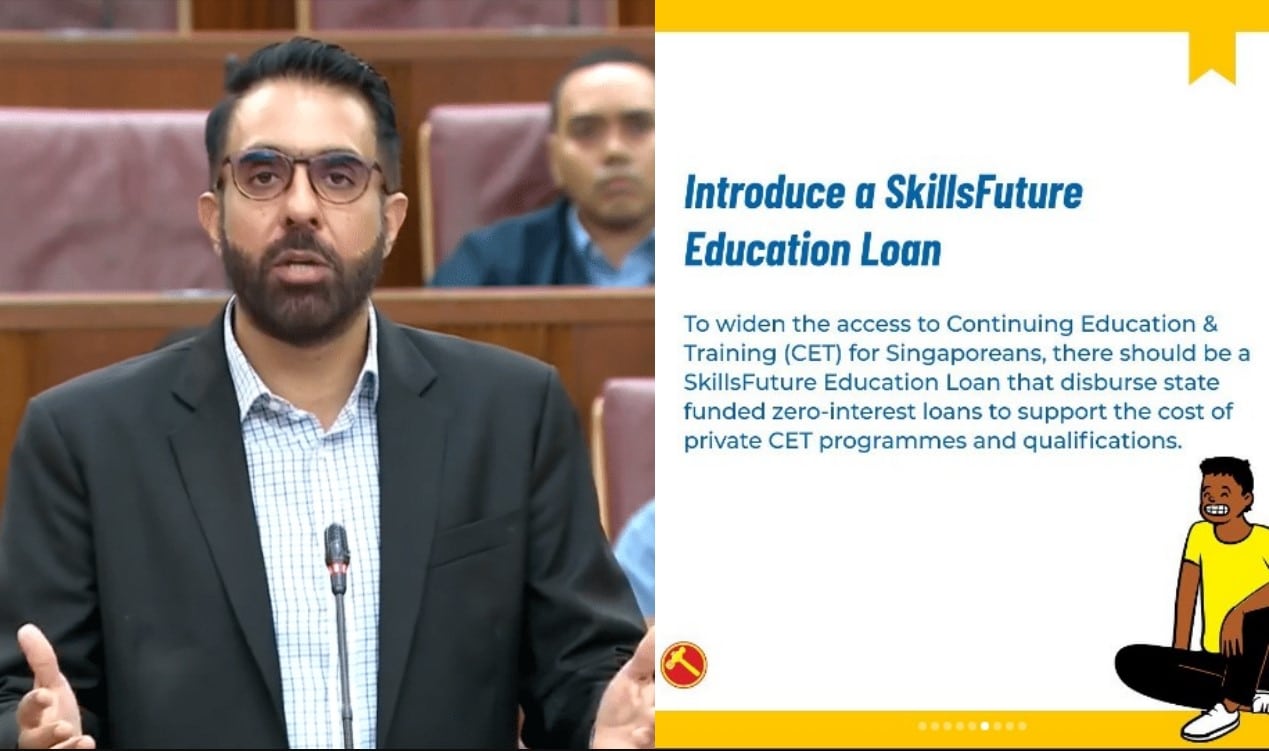
Associate Professor Jamus Lim, Workers' Party Member of Parliament for Sengkang GRC, has earlier urged refining the SkillsFuture program to better align with industry needs, ensuring that workers gain practical and experiential skills sought by employers.
A critical point raised by Assoc Prof Lim is the necessity for assurance that retraining efforts directly lead to viable job opportunities.
“This has to come from not only making sure that the SkillsFuture courses and retraining programs pursued closely align with actual business needs; it can go further to provide a soft guarantee of a job.”
To achieve this, he suggested the government establish a database of required skills, matching trainees to courses with a commitment to job placement for at least six months post-reskilling.
“To sweeten the deal on the employer side, the government can cover part of the retrained worker’s wages during this period. ”
Jamus Lim pointed out that such an approach is already in practice in several Scandinavian countries for managing unemployment.
As a nation emphasizing the importance of human capital development, he expressed hope that Singapore will progressively enhance its unemployment safety net to suit the demands of a 21st-century economy and society.