Mastermind of illegal online gambling empire resided on Rochalie Drive, the same street as PM Lee
Wang Bingang, known for his illegal gambling empire, reportedly remains at large following Singapore's 15 August Islandwide anti-money laundering crackdown. \n \nHe was residing in a lavish rented bungalow on Rochalie Drive in Tanglin during the operation, which intriguingly happens to be in the same neighborhood as Singapore Prime Minister Lee Hsien Loong.

SINGAPORE: On Monday (25 Sep), The Straits Times, Singapore's state media, reported that Wang Bingang (王斌刚), a man who amassed millions by offering illegal online gambling services to Chinese players, is one of several individuals who remains at large after Singapore's anti-money laundering crackdown on August 15th.
His illicit gambling enterprise, known as Hongli International, boldly thrived for years, attracting the scrutiny of authorities in both China and internationally.
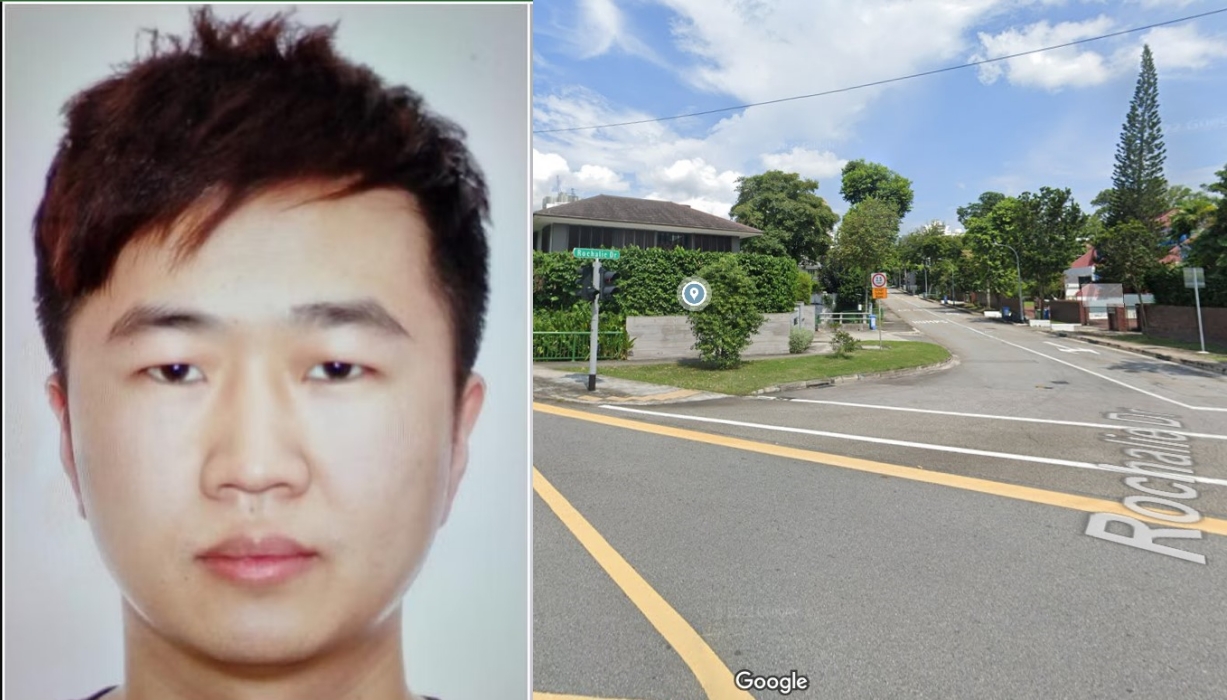
Wang reportedly resided in a luxurious bungalow on Rochalie Drive in Tanglin
At the time of the Singapore police operation, Wang Bingang, now 34, was residing in a luxurious rented bungalow on Rochalie Drive in Tanglin, believed to be shared with Wang Liyun, his supposed wife.
Despite the apprehension of ten foreigners associated with his operation, Wang Bingang’s family and domestic helper reportedly still occupy the residence.
When the ST reporters visited the bungalow last Thursday, they found the metal gate of the two-storey house wide open, revealing two Toyota Alphards and a Rolls-Royce parked in the front yard.
The domestic helper claimed that the couple was in Singapore but not at home during the arrests. However, others have stated that the pair, who used to host parties at the house roughly once a month, have not been seen for approximately a month.
Wang Bingang is a Chinese national but has Cambodian citizenship. His rise to notoriety began in 2012 when he was just 23 years old.
Originating from Anxi, Fujian, he quickly became a millionaire by running the Hongli International (“鸿利国际”) gambling site, based in the Philippines and Cambodia.
Interestingly, Singapore Prime Minister Lee Hsien Loong also resides on Rochalie Drive, the same street where Wang, the alleged figurehead of the S$2.4 billion case syndicate, was reported to be staying.
The duration of Wang Bingang's stay in Singapore remains uncertain.
According to Chinese media reports, Wang Bingang was sentenced by a Chinese court to three years in prison and fined 3 million yuan. His sentence was concluded on February 15, 2018.
Questions arise regarding the timeline of Wang Bingang and his family's relocation to Singapore
It was revealed that in 2022, Wang Bingang joined the prestigious Sentosa Golf Club, a club where foreign membership costs around S$950,000.
However, a notice dated September 12 displayed at the club indicated that he, along with five others implicated in the Singapore investigation, was placed on a defaulters’ list, suggesting unsettled financial obligations.
While Wang Bingang’s name does not appear in business records, his wife, Wang Liyun has interests in various businesses, including a bridal shop.
Both individuals found their names on a list of 34 provided by the Ministry of Law on August 27 to dealers in precious metals and stones, with the intention of flagging suspicious transactions potentially involving money laundering.
Considering that Wang completed his Chinese jail term as late as February 2018 and joined Sentosa Golf Club in 2022, it raises the question of when he and his family actually relocated to Singapore, potentially sometime between 2018 and 2022.
Moreover, the conspicuous wealth associated with Wang Bingang has left many perplexed, especially in the context of his extravagant bungalow on Rochalie Drive, a neighbourhood where properties are known to command prices exceeding S$10 million.
Furthermore, there arises a pressing question regarding whether Wang Bingang continues to operate his illegal gambling network despite having served a prison term in China.
According to the Straits Times, Hongli International appears to remain active, even in the face of a crackdown that occurred eight years ago.
Mr Jason Tower, country director for the Myanmar programme at United States Institute of Peace (USIP), emphasized that Hongli has long been a prominent name in the illegal gambling industry.
He noted that Hongli still maintains active online gambling platforms accessible through social media links.
“You can find many online gambling links that go back to Hongli... they come and go, they seem to be taken down or the websites become defunct very quickly, but a new one will always emerge,” said Mr Tower.
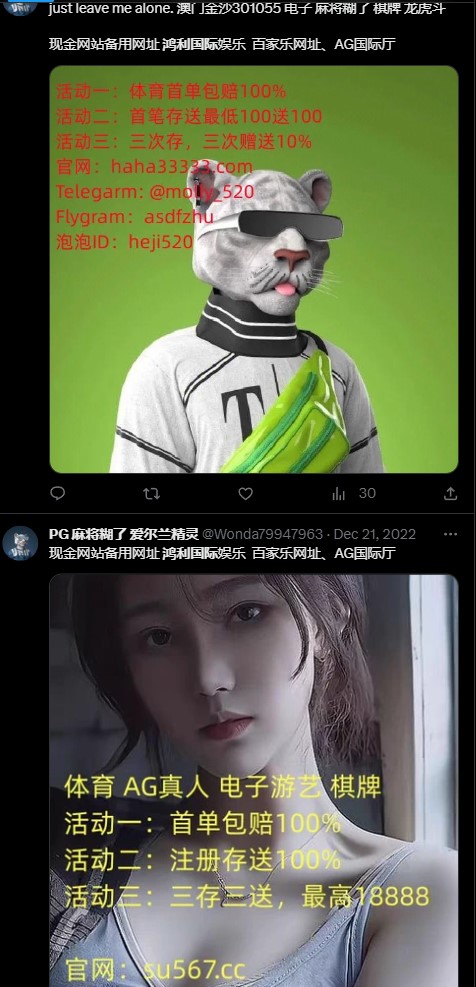
A cursory check on X (formerly Twitter) revealed that similar site names continue to surface in posts from 2016 to 2022.
These posts reference various website addresses associated with gambling sites bearing different names, raising concerns about the enduring presence of Wang Bingang's illicit activities.
Public skepticism on China’s role in Singapore’s S$2.4 billion money laundering case crackdown
Singapore’s role as a major financial hub often places it under scrutiny regarding the movement of vast sums of money, both legitimate and questionable.
The startling island-wide arrests of ten foreign nationals, connected to a staggering S$2,4 billion money laundering case on 15 August, have indisputably jolted the city-state.
At the crux of the debate is timing. The Minister of Home Affairs and Law, K Shanmugam, clarified in an interview with the Chinese newspaper, Lianhe Zaobao, that the investigation and subsequent arrests weren’t influenced by external events, particularly China’s Foreign Minister Wang Yi’s visit on 10 August.
Mr Shanmugam noted that the investigation had spanned several months. The police had diligently traced illicit activities within Singapore and abroad, identified the culprits, and scrutinized the fund flows.
Yet, the events appear somewhat coincidental, leading the public to speculate.
For example, all the accused originate from Fujian, China. This shared origin, combined with other specifics, paints a compelling picture.
Consider Vang Shui Ming, a 42-year-old Turkish national from Fujian. Singaporean authorities seized assets from him, including an astonishing S$962,000 in cash from his home.
Chinese authorities had reportedly sought Vang and his brother, Wang Shuiting for his involvement in a group developing and maintaining profit-oriented gambling platforms.
Su Haijin, with S$4.06 million in a UOB account, is alleged by the prosecution to have funds stemming from illegal remote gambling offenses.
The pressing question remains: Did China share this information with Singapore? If so, when?
A Twitter post by Vanessa Gao on 16 August claimed that Singapore’s Commercial Affairs Department (CAD) had covertly established a task force about three months prior.
https://twitter.com/vc_btxcap/status/1691669914883670247?ref_src=twsrc%5Etfw%7Ctwcamp%5Etweetembed%7Ctwterm%5E1691669914883670247%7Ctwgr%5E86a25b12a004e89384b940bf0c2d7bbb4aba7d16%7Ctwcon%5Es1_&ref_url=https%3A%2F%2Fgutzy.asia%2F2023%2F09%2F12%2Fpublic-skepticism-on-chinas-role-in-singapores-s1-8-billion-arrests-beyond-shanmugams-denials%2F
This team was said to have focused on the dealings of these Fujian-origin foreign nationals, tracing covert transactions via Citibank linked to gambling and narcotics.
It’s still a matter of debate as to whether Singapore’s authorities had been surveilling these individuals even before this period, given how the ten arrested had managed to move over S$2.4 billion of assets more than a year before investigations were supposedly initiated.
Linking these elements with Gao’s enigmatic tweet about an impending visit from a team of the Chinese Ministry of Public Security on 21 August, it crafts a story hard for the typical Singaporean to dismiss.
Although Mr Shanmugam refutes foreign meddling in the apprehensions, given the timeline of occurrences and the undeniable connections to China, it’s evident why some Singaporeans sense a deeper narrative.