California Governor Gavin Newsom moves to commute all 548 death sentences
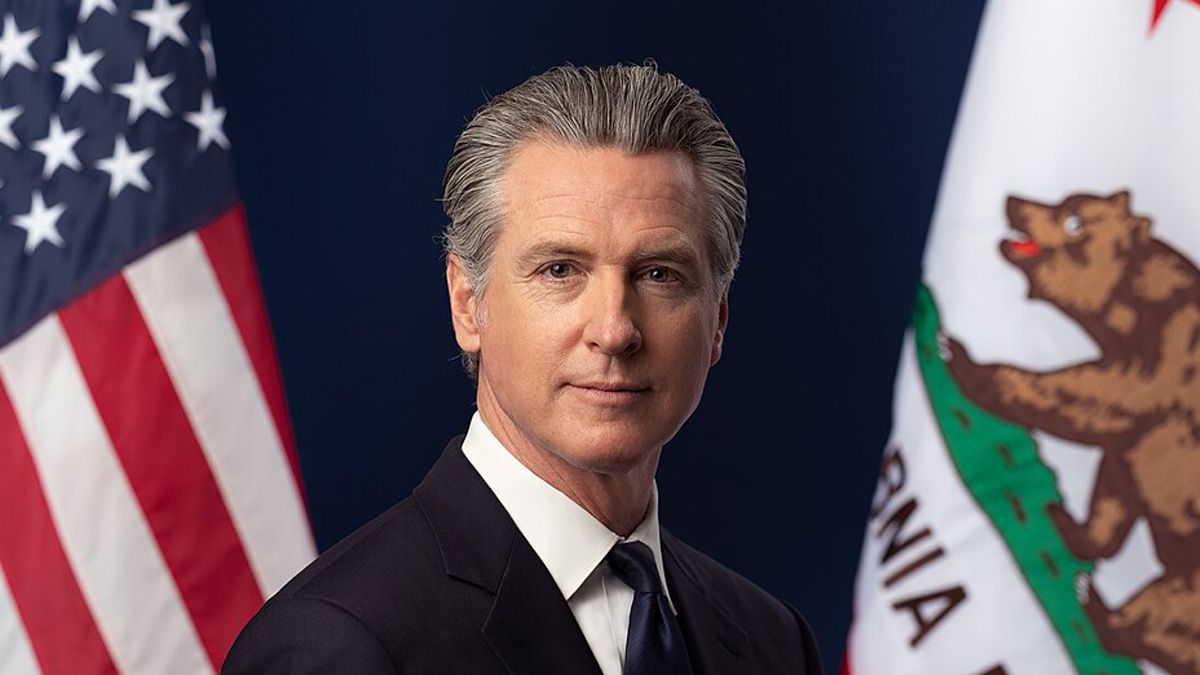
California Governor Gavin Newsom has moved to commute the death sentences of all 548 people on the state’s death row to life without parole. The Death Penalty Information Center calls it the largest mass clemency in US history. The state Supreme Court must approve 382 of the cases.
- Newsom seeks to commute all 548 California death sentences to life imprisonment without parole.
- The California Supreme Court must approve 382 commutations involving prisoners with multiple felony convictions.
- Prosecutors and victims’ groups condemned the move, while the ACLU and abolition groups welcomed it.

California Governor Gavin Newsom announced on Thursday, 5 November 2026, that he is moving to commute the death sentences of all 548 people on the state’s death row to life imprisonment without the possibility of parole.
The California Supreme Court must approve 382 of those commutations, roughly 70% of the total, because the people involved have more than one felony conviction, according to figures provided by the governor’s office.
According to the Death Penalty Information Center, the action is the largest mass clemency in American history. The centre said that if every commutation is approved, the US death row population would fall by nearly 30%.
Of the 548 people affected, 529 are men and 19 are women, according to Newsom’s office.
Newsom, a Democrat, is preparing to leave office in January after eight years as governor and is considering a run for president.
Newsom explains decision in open letter
In a public letter to Californians, Newsom wrote: “I take this action because I firmly believe that state-sanctioned killing is incompatible with California’s values, undermines the foundations of our legal system, and diminishes each of us.”
He described the decision as one of the most difficult of his career and acknowledged that it would revive painful memories for the families of murder victims. He also cited wrongful convictions, racial disparities and concerns about the fairness of capital punishment.
“These offenders will die in prison but not by our hand,” Newsom wrote, according to Law Commentary.
He added: “As Governor, I alone bear responsibility for this decision and its impact, just as I alone would bear responsibility for each execution.”
According to the Associated Press (AP), Newsom said the move came after he realised “the limits of what government can justly accomplish”.
How the commutation process works
Under Article V, Section 8 of the California Constitution, the governor cannot grant clemency to a person convicted of more than one felony without a recommendation from the state Supreme Court. Law Commentary reported that at least four of the court’s seven justices must support each recommendation.
Newsom has asked the court to return its recommendations by the end of 2026, so that he can issue commutation certificates before his term ends. He can act on the remaining 166 cases without the court’s approval.
Prisoners whose sentences are commuted would serve life without parole and keep their criminal convictions. Capital punishment would remain legal in California, so prosecutors could still seek death sentences in future cases.
From moratorium to commutation
Newsom imposed a moratorium on executions in 2019, shortly after taking office, and ordered the closure of the execution chamber at San Quentin State Prison. California last executed a prisoner in January 2006.
The moratorium suspended executions but left existing death sentences in place, which meant a future governor could have resumed them. Commutation would permanently replace those sentences with life imprisonment without parole.
According to AP, Xavier Becerra, the Democrat who will succeed Newsom in January, has said he will extend the moratorium.
Voters twice rejected abolition
California voters have twice rejected abolishing capital punishment at the ballot box: Proposition 34 in 2012 and Proposition 62 in 2016. In 2016, voters also approved Proposition 66, which sought to speed up death penalty appeals and procedures.
According to AP, California has the largest death row in the Western Hemisphere.
Those on death row include Richard Allen Davis, sentenced to death for the 1993 kidnapping and murder of 12-year-old Polly Klaas. They also include Randy Kraft, known as the “Scorecard Killer”, who kept a list of his 16 victims in the 1970s and 1980s.
Jess Nichol, Polly Klaas’s sister, said she once believed Davis deserved the death penalty but that her views had changed.
“The system tells survivors that execution matters to our healing,” Nichol said in a statement. “It doesn’t. It’s a distraction from what we actually need.”
Prosecutors condemn the move
The California District Attorneys Association (CDAA) condemned the decision. Last month, the association wrote to Newsom to express “grave concerns” about the plan. It warned that such a sweeping commutation would cause further pain to victims’ families.
“With the stroke of a pen, Governor Newsom has disregarded the decisions of hundreds of jurors and judges, and the anguish of families who lost loved ones to the worst crimes imaginable,” CDAA President Jeannine M. Pacioni said.
“The victims were never given a commutation. Their families were never given a choice. They deserve far better than this,” Pacioni added.
San Luis Obispo County District Attorney Dan Dow called the move a “sickening abuse of power”.
Dow cited the 1999 kidnapping, rape and murder of Rachel Newhouse and Aundria Crawford by Rex Allan Krebs. He also cited the 1995 torture and murder of 19-month-old Kesha Gurke by Michael Whisenhunt.
“San Luis Obispo County juries sentenced both men to death. A unanimous California Supreme Court affirmed both judgments,” Dow said. “Their families have waited decades for the State of California to keep its word. Today, the Governor broke it.”
Orange County District Attorney Todd Spitzer called the decision “mercy for the wolves and while inflicting the ultimate act of cruelty on the sheep”.
Sacramento County District Attorney Thien Ho said justice required “case-by-case consideration, not one-size-fits-all decisions”. He said the blanket commutation conflicted with the will of voters, who had twice rejected abolition and reaffirmed capital punishment through Proposition 66.
Ho named Charles Ng, who he said tortured and killed at least a dozen people, including two infants. He also named Cary Stayner, known as the “Yosemite Killer”, who was sentenced to death for murdering four people, including a mother and her daughter.
San Joaquin County District Attorney Ron Freitas called the commutation “a mass erasure of justice”. He said his office would keep seeking the death penalty “when and where appropriate”.
Yolo County District Attorney Melinda Aiello noted that two Yolo County juries had returned death verdicts. She apologised to the families of Andrew Stevens and Antonio Diaz.
Victims’ advocates voice anger
Patricia Wenskunas, founder of the advocacy nonprofit Crime Survivors, called the decision “offensive” and “outrageous”. “My heart hurts for every one of the victims and every one of their family members,” she said.
Steve Herr’s son, Sam Herr, was murdered in 2010 by Daniel Wozniak, along with his friend Julie Kibuishi. Herr told AP he was “absolutely disgusted” by the decision and called Newsom “an outright coward”.
Herr said the execution of his son’s killer would have given him closure. “When somebody commits such a heinous crime, they do not deserve to live,” he said.
Topo Padilla, president of Crime Victims United, told KCRA that the governor had not met families or reviewed the cases one by one.
“It was expected that this man was going to take his personal belief and usurp a jury,” Padilla said. He said the announcement was devastating but expected.
According to Law Commentary, Anne Marie Schubert, a former Sacramento County district attorney who leads the Criminal Justice Legal Foundation, said the decision disregarded the judgments of juries and the wishes of victims’ families.
Civil liberties groups welcome the decision
The American Civil Liberties Union (ACLU) welcomed the announcement.
“These commutations reflect what justice demands: an end to a racist, error-prone, and inhumane punishment that has burdened California for far too long,” ACLU Executive Director Anthony D. Romero said.
Romero said a person’s risk of execution was predictable, but “for all the wrong reasons: race, geography, and politics”.
In April 2024, the ACLU, the NAACP Legal Defense Fund and the Office of the State Public Defender sued over California’s death penalty statute. The lawsuit argues that the statute is racially discriminatory and violates the equal protection guarantees of the state constitution.
According to the ACLU, evidence in the case showed that Black defendants were up to eight times more likely to be sentenced to death than similar non-Black defendants. It said Latino defendants were at least six times more likely.
Natasha Minsker, director of the California Anti-Death Penalty Coalition, told KCRA: “The justice system treats you better if you are rich and guilty, than if you are poor and innocent. Today, Governor Gavin Newsom has taken a stand for justice for all.”
Precedents in other states
Other Democratic governors have granted clemency to everyone on their state’s death row, including Kate Brown in Oregon in 2022 and Jared Polis in Colorado in 2020. In 1986, New Mexico Governor Toney Anaya commuted the sentences of all five people then on death row.
In 2024, then-President Joe Biden granted clemency to 37 of the 40 federal prisoners sentenced to death.
Nearly half of US states have abolished capital punishment, but executions continue elsewhere. AP reported that Florida, Alabama and Indiana each carried out a lethal injection on Thursday.