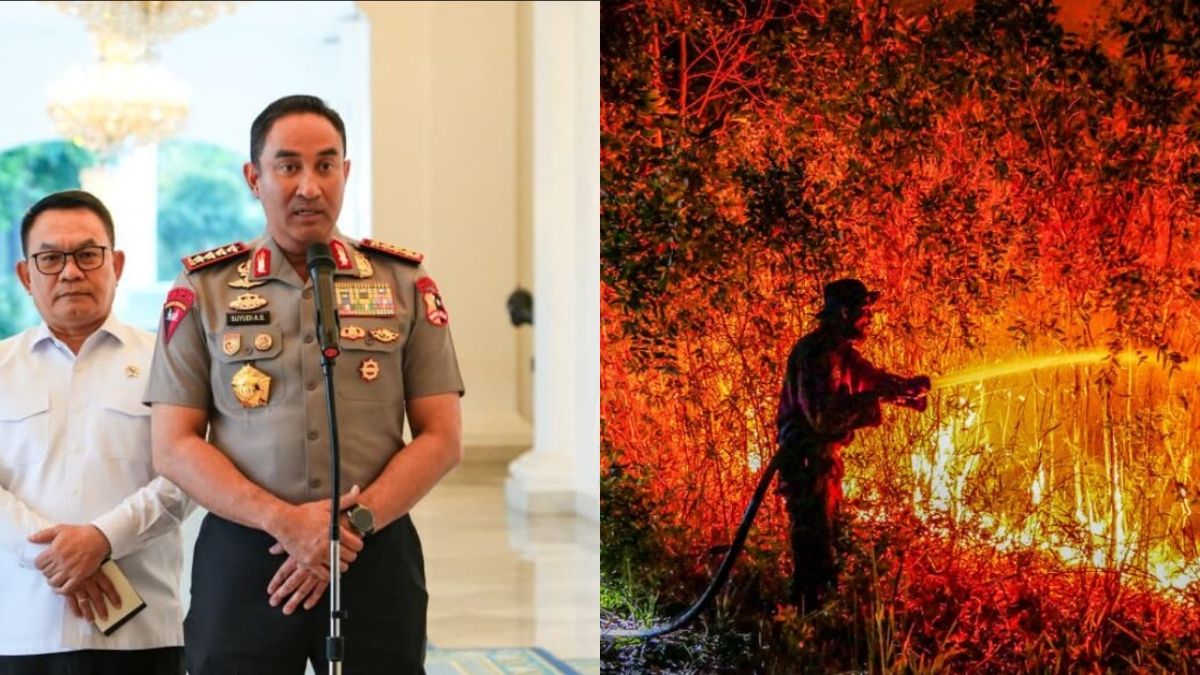
Amnesty gives Prabowo administration failing human rights assessment
Amnesty International Indonesia has given the Prabowo-Gibran administration a failing human rights assessment, citing attacks on defenders, military expansion into civilian affairs, land disputes, restrictions on civil liberties and alleged corruption in public programmes.

- Amnesty documented attacks on at least 406 human rights defenders between October 2024 and October 2026.
- The report raised concerns about military expansion, land disputes, civil liberties and alleged abuses in government programmes.
- Amnesty issued nine recommendations calling for investigations, stronger accountability and reforms to protect human rights.

Amnesty International Indonesia has given the administration of President Prabowo Subianto and Vice-President Gibran Rakabuming Raka a failing assessment on human rights, citing stalled efforts to resolve past abuses, attacks on human rights defenders, the expanding role of the military in civilian affairs and policies it says have undermined communities’ rights.
In a report covering the period from 20 October 2024 to 19 October 2026, the organisation also raised concerns about restrictions on civil liberties, land disputes linked to extractive industries and government development projects, the implementation of the Free Nutritious Meals programme, disaster response, discrimination against minorities and corruption involving public funds.
Amnesty said its assessment drew on monitoring by the organisation and verification of findings from state institutions, including the National Commission on Human Rights (Komnas HAM) and the National Commission on Violence Against Women (Komnas Perempuan), as well as civil society organisations.
It identified three factors underpinning what it described as a deterioration in human rights protection: the adoption of major policies and legislation without meaningful public participation or sufficient human rights safeguards; the expansion of military and police personnel into civilian positions and projects; and public officials’ use of negative labels against critics, which Amnesty said contributed to a shrinking civic space.
The report assessed the administration through political and economic indicators. Its political concerns included changes to the historical narrative surrounding former president Soeharto, the establishment of new military territorial commands and development battalions, and revisions to legislation governing the military, police and criminal justice system.
Its economic concerns included the centralisation of government spending, land acquisition for National Strategic Projects, and questions about transparency and accountability in government programmes, including the Free Nutritious Meals initiative and the Red-and-White Village Cooperatives programme.
Amnesty called on the government to investigate past and current abuses, protect freedom of expression, review policies that affect communities’ rights and strengthen accountability for public spending.
Amnesty records 406 human rights defenders attacked
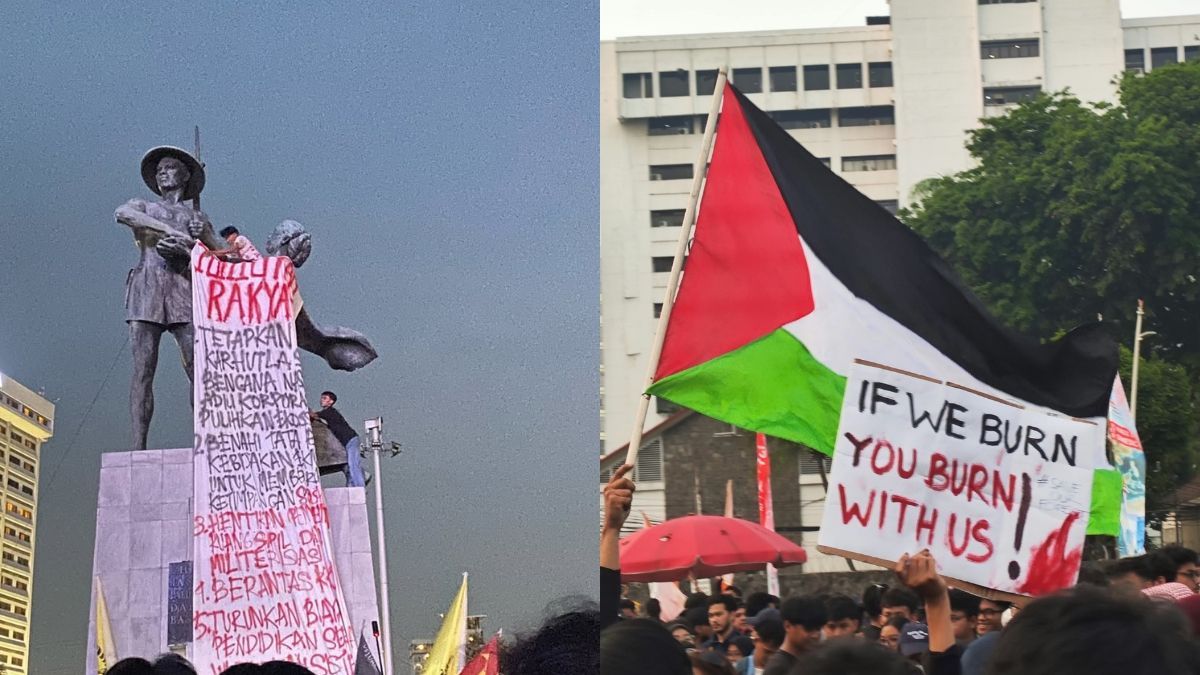
Amnesty said at least 406 human rights defenders experienced attacks between 20 October 2024 and 19 October 2026. The incidents included police reports, criminalisation, physical assaults and attacks on offices.
During protests in 2025 and 2026, at least 6,003 people were arrested and subjected to physical violence, according to the organisation. Of those, 4,210 were released without charge.
At least 51 people had been prosecuted under Indonesia’s Electronic Information and Transactions Law, known as the ITE Law, since Prabowo took office, Amnesty said.
The organisation also highlighted continuing prosecutions linked to demonstrations in August 2025. Student activist Khariq Anhar received a five-month prison sentence over a meme he posted concerning the protests. Amnesty said he was the 460th person convicted in connection with the demonstrations.
The organisation said the climate for public criticism had been affected by language used by senior officials. It cited labels including antek asing (foreign agent), londo ireng, makar (subversion), and teroris (terrorist), which it said had been directed at critics and civil society movements. Other officials had also used terms such as “separatist” against activists, according to the report.
Amnesty said government-affiliated social media accounts had amplified accusations that critics were foreign agents.
Government removal of protest content raises digital rights concerns
Amnesty also raised concerns about restrictions on information in the digital sphere.
It said the Ministry of Communication and Digital Affairs had taken down 486 social media posts connected with demonstrations and violence in Jakarta following protests on 27 August 2026.
Among the material removed were videos documenting the fatal assault on Bambang Setiawan, a mirror seller who was killed in Pejompongan by a group of people, according to Amnesty.
The organisation argued that removing the footage restricted access to information and digital freedom. It also expressed concern that the videos could have been relevant evidence in the investigation into the killing, which Amnesty said had not been fully resolved.
The report called for an end to the criminalisation of human rights defenders for peaceful criticism and urged the government to stop using stigmatising labels against activists.
Military expansion and land disputes from Nabire to Merauke
The expansion of military involvement in civilian affairs was another central concern in Amnesty’s assessment.
The organisation said the growing military presence in development projects and civilian institutions risked weakening civilian oversight and affecting communities’ rights, particularly where projects involved land concessions and extractive industries.
It cited cases involving gold, nickel, coal and palm oil, with disputes over customary land, environmental damage and the treatment of residents who opposed projects.
In Nabire, Central Papua, gold mining has affected customary territories belonging to the Wate and Yerisiam Gua Indigenous communities, Amnesty said. The organisation reported damage to sago forests and pollution of rivers, as well as the criminalisation of Indigenous residents who opposed mining activities.
It also cited land disputes involving the Amungme and Kamoro Indigenous communities in Mimika, where mining-related pollution and an increased military presence were among the concerns raised.
In Morowali and Halmahera, Amnesty said nickel downstream-processing activities had been associated with violations of human rights, including the clearing of customary forests and mud floods. Residents opposing environmental damage had faced accusations of being foreign agents, the organisation said.
In Kalimantan, the report highlighted abandoned coal-mining pits that have claimed children’s lives, pollution of local water sources and the suppression of residents’ protests. Amnesty also criticised provisions in the Mining Law that allow certain company concessions to be extended automatically.
In Merauke, South Papua, Amnesty said thousands of hectares of Malind Indigenous customary forest had been allocated for palm oil and sugarcane development without the free, prior and informed consent of affected communities.
The organisation also reported cases in Kalimantan and Sumatra in which farmers faced criminalisation by companies. It said military and police personnel had been deployed when residents blocked access to customary land.
Amnesty called on the government to halt and review mining operations and National Strategic Projects that damage the environment or harm local communities.
Military personnel involved in village cooperatives and food programmes
The report also highlighted the military’s role in the Red-and-White Village Cooperatives programme, known as KDMP, and the Free Nutritious Meals programme, or MBG.
In East Nusa Tenggara, Amnesty said a new regional military command had been established, military non-commissioned officers were overseeing village cooperatives, and personnel were cultivating vegetable gardens for the school-meal programme.
The organisation argued that these activities illustrated an expansion of military duties beyond national defence into the supervision and implementation of civilian development projects.
Amnesty also raised concerns about the construction of military territorial commands and development battalions in other parts of Indonesia.
It called for an end to the appointment of active military and police personnel to civilian positions and urged the government to review amendments to the laws governing the military and police.
More than 50,000 schoolchildren reported symptoms of food poisoning
The implementation of the Free Nutritious Meals programme was another major concern in the report.
Citing data from the Ministry of Health dated 2 September 2026, Amnesty said 50,059 schoolchildren had experienced symptoms of food poisoning in 560 incidents across 245 regencies and cities since the programme began in January 2025.
The organisation said Komnas HAM had identified governance failures in the programme. It also cited Indonesia Corruption Watch (ICW), which said nearly one-third of foundations partnering with the programme were affiliated with members of the security forces or families of political elites.
Amnesty further argued that the reallocation of funds following cuts to central government transfers to regional administrations had reduced resources available for education.
The report also criticised the KDMP programme, citing concerns raised by the Indonesian Legal Aid Foundation (YLBHI) that cooperative construction could lead to the appropriation of community spaces without free, prior and informed consent.
Amnesty called for independent audits of both programmes, legal accountability for cases of food poisoning and an end to the reallocation of education funding to finance the school-meal initiative.
Amnesty accuses government of obstructing disaster recovery
Amnesty accused the government of failing to provide adequate support for communities recovering from disasters, including floods and landslides in Sumatra in late 2025.
The organisation said fuel shortages had left residents responsible for obtaining diesel for heavy machinery used in recovery work. It also reported shortages of cement that delayed reconstruction and alleged the presence of illegal levies.
Amnesty contrasted these difficulties with the construction of facilities for the school-meal programme and village cooperatives.
It said similar concerns had arisen following an earthquake in East Nusa Tenggara and forest and land fires in Kalimantan.
According to the report, forest and land fires in Sumatra, Kalimantan and Papua had affected 14.5 million people. Amnesty criticised Prabowo’s statement on 12 October that the fires had declined sharply following extensive government intervention, saying residents in affected areas continued to suffer from haze.
The organisation also questioned the government's decision not to continue assistance from a Japanese firefighting team in Kalimantan after its mission ended on 29 September, while fires were still reported in some locations.
Amnesty cited Ministry of Health figures recording at least four deaths from forest and land fires by September 2026: three in Central Kalimantan and one in West Kalimantan.
It also referred to the deaths of a six-year-old child in Kayong Utara, West Kalimantan, on 14 October following a respiratory infection, and a one-year-old child in Samarinda, East Kalimantan, on 15 October after suffering breathing difficulties. Both children died while haze was affecting their communities, the organisation said.
The report did not establish that haze was the sole cause of either child's death.
Amnesty also said at least 108 earthquake survivors had died in evacuation shelters in East Nusa Tenggara. It linked the region's wider social and economic pressures to the deaths of 119 Indonesian migrant workers from the province in Malaysia during 2024, arguing that land dispossession and limited employment opportunities had contributed to migration.
The organisation called for investigations into obstacles to disaster recovery in Sumatra, the deaths of earthquake survivors in East Nusa Tenggara and human trafficking, including cases involving Indonesian migrant workers who died in Malaysia.
Religious minorities and LGBTQI+ people face discrimination
Amnesty challenged claims by the Minister of Religious Affairs on 17 August that Indonesia had achieved its highest level of social and religious harmony.
Citing figures from SETARA Institute, the organisation said Indonesia recorded 221 incidents involving 331 acts of violations of freedom of religion or belief in 2025. In 2024, there were 260 incidents involving 402 acts, according to the same source.
Amnesty also cited Komnas Perempuan findings of an upward trend in violations of freedom of religion or belief over five years.
Among the incidents it highlighted were opposition to the construction of a church in Citraland, Surabaya, and the sealing of a GKPI church in Rajeg, Tangerang, after its congregation was dispersed by an intolerant group.
The organisation also reported discrimination against people with diverse sexual orientations and gender identities.
It said police arrested more than 100 people during raids in Jakarta and Megamendung in February and June 2025. Amnesty alleged that the operations involved arbitrary arrests, the unauthorised collection and distribution of photographs, forced HIV testing and the confiscation of belongings.
It also referred to violence against transgender women in Bogor, where it said there had been no adequate law-enforcement response.
Amnesty criticised Presidential Regulation No. 111 of 2025, which it said classified LGBTQI+ people as a non-military threat. The organisation argued that the provision reinforced stigma and conflicted with constitutional principles of non-discrimination.
It urged the government to repeal discriminatory provisions and ensure that recovery policies took account of gender-specific needs.
Corruption linked to disaster funds and public services
Amnesty said corruption had affected the protection of fundamental rights by diverting resources intended for public services and disaster response.
It cited major corruption cases involving PT Timah, Pertamina and Bank BJB, as well as an alleged extortion case involving 43 police officers. The report also referred to corruption investigations involving the National Disaster Management Agency (BNPB).
According to Amnesty, the Corruption Eradication Commission (KPK) announced a case on 16 October involving Rp148 billion in disaster contingency funds. The amount comprised Rp45.76 billion allocated in 2024, Rp52.27 billion in 2025 and Rp50 billion in 2026.
The funds were intended to support disaster response, including forest and land fires in Kalimantan and Papua, an earthquake in East Nusa Tenggara and flooding in Sumatra.
Amnesty said officials implicated in the case had used some of the funds to purchase 150.4 million shares worth Rp30.98 billion. The allegations form part of a criminal investigation and should be distinguished from findings established by a court.
The organisation also referred to alleged corruption involving Rp49.5 billion in child-nutrition funds at the National Nutrition Agency.
Amnesty argued that corruption in disaster and nutrition programmes had consequences beyond financial losses because it could undermine access to clean air, safe water, adequate housing, food and healthcare.
It called for accountability in cases involving public funds and stronger safeguards to ensure that money allocated for disaster relief and essential services reached the intended beneficiaries.
Women face additional risks in Aceh and disaster areas
Amnesty said women faced overlapping vulnerabilities, particularly in conflict-affected communities and during disasters.
In Aceh, women who survived past conflict continued to need recognition, reparations, healthcare and psychosocial support. Women human rights defenders also faced gender-based violence, according to the report.
During disasters, women, children and people with disabilities require specific protection and services, including safe accommodation, reproductive healthcare, privacy and sanitation. Amnesty said government policies remained insufficiently responsive to these needs.
The organisation also raised concerns about the expansion of the military's role in Aceh, where the 2005 Helsinki peace memorandum addressed the reduction of non-organic military forces.
Amnesty said an increased military presence could revive historical trauma and affect communities' access to customary land and healthcare, including reproductive health services.
It called for the government to respect the Helsinki agreement and ensure that development policies did not undermine the rights of local communities.
Amnesty raises concerns about Indigenous Papuans and military presence
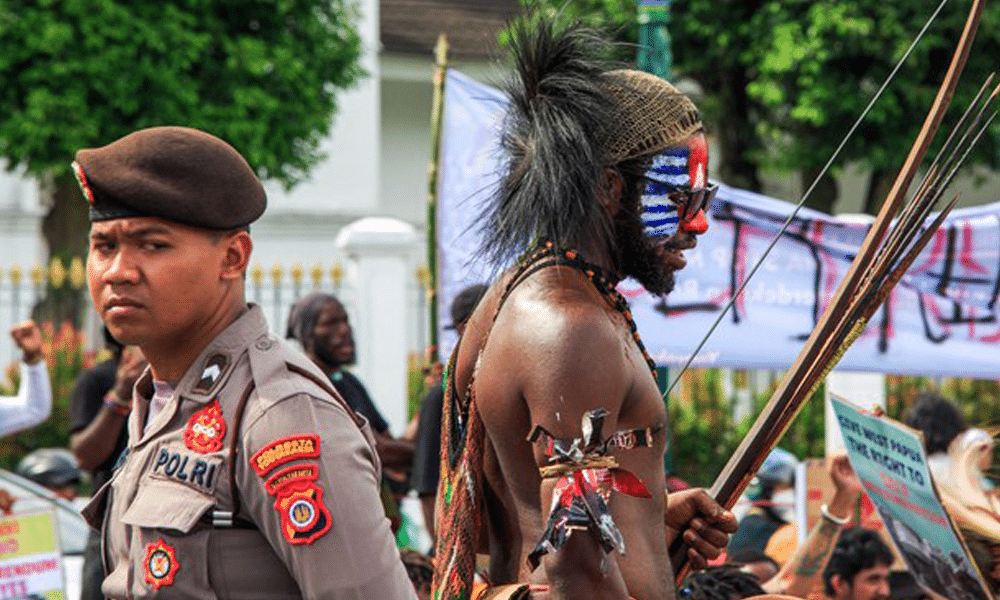
The report also focused on the position of Indigenous Papuans, known as Orang Asli Papua (OAP), in Papua.
Citing figures from population and civil registration agencies across the Papua region, Amnesty said Indigenous Papuans numbered 2,283,703 in 2026, representing 39.4 per cent of a total population of 5,797,499. The remaining 60.6 per cent were non-Indigenous Papuans, according to the figures cited in the report.
Amnesty said the demographic figures raised concerns about Indigenous communities' position in their own territories, particularly amid disputes over land, natural resources and development projects.
The report also cited media figures estimating that 15,980 non-organic Indonesian Army personnel were deployed in Papua. The reported breakdown was 11,480 in the eastern sector, 1,800 in the south, 1,800 in the north and 900 in the west. The figure did not include organic military units, the navy, the air force, police or intelligence personnel.
Amnesty argued that the scale of the reported deployment reflected the continued use of a security-focused approach in Papua.
It called for humanitarian dialogue in the region and an end to militarised responses to disputes over land and livelihoods, particularly those affecting farmers and Indigenous communities.
Amnesty sets out nine demands for the government
Amnesty International Indonesia issued nine recommendations as the Prabowo-Gibran administration entered its third year.
The organisation called on the government to:
-
Establish an ad hoc human rights court to address serious human rights violations from the past.
-
Revoke Soeharto's national hero status and stop denying historical facts concerning past serious human rights violations and the May 1998 rapes.
-
End the criminalisation of human rights defenders under the ITE Law for peaceful criticism and stop labelling critics as foreign agents.
-
Halt the expansion of active military and police personnel into civilian positions, review amendments to the military and police laws, and stop building new regional military commands.
-
Commission independent audits of the Free Nutritious Meals and Red-and-White Village Cooperatives programmes, ensure legal accountability for food-poisoning cases and stop reallocating education funding to finance the meals programme.
-
Investigate alleged obstruction of disaster recovery in Sumatra, deaths among earthquake survivors in East Nusa Tenggara and human trafficking, including the deaths of Indonesian migrant workers in Malaysia.
-
Halt and review mining operations and National Strategic Projects that damage the environment or harm communities.
-
Repeal discriminatory provisions in Presidential Regulation No. 111 of 2025 and ensure that recovery policies respond to gender-specific needs.
-
Open humanitarian dialogue in Papua, respect the Helsinki peace memorandum in Aceh and end militarised approaches to communities' livelihoods.
The report presents Amnesty's assessment of the administration's human rights record over its first two years. Its findings and allegations concerning individual cases, government programmes and public officials remain attributable to the organisation and the other sources it cites.