Indonesia court finds no proof of Gibran’s foreign diploma but rejects bid to remove him as vice-president
Indonesia’s Constitutional Court found no convincing evidence of a foreign diploma establishing Gibran Rakabuming Raka’s completion of senior secondary education, but rejected a petition seeking his removal on legal-standing grounds.
- The Constitutional Court found no convincing evidence of a qualifying foreign diploma, certificate or degree for Gibran.
- The petition challenging his eligibility was declared inadmissible because the petitioners lacked legal standing.
- A separate police complaint alleges criminal offences involving Gibran’s 2019 educational equivalency certificate.

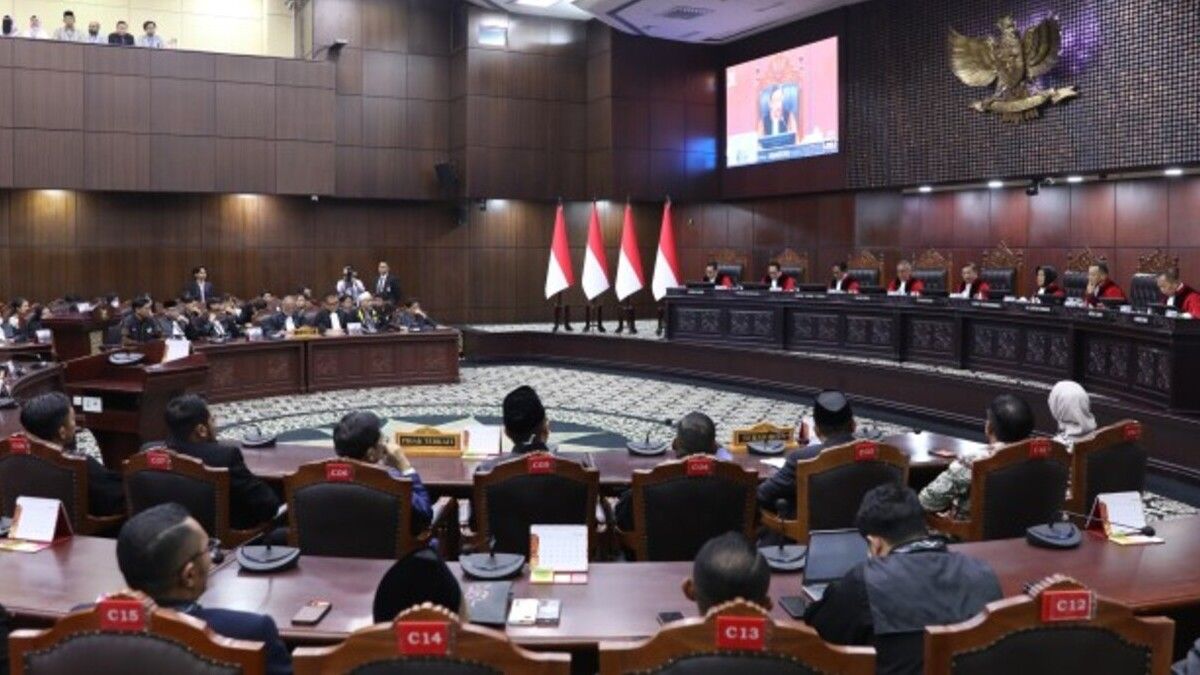
Indonesia’s Constitutional Court has said it found no convincing evidence that Vice-President Gibran Rakabuming Raka possesses a foreign diploma, certificate or degree that could establish completion of senior secondary education or its equivalent.
However, the court did not rule that Gibran should be removed from office. It declared a petition challenging his eligibility for the 2024 presidential election inadmissible because the petitioners did not have the required legal standing.
The ruling was delivered on 6 October in Case No. 01/PHPU.PRES-XXIV/2026, brought by the Indonesian Independent Election Monitoring Committee (KIPP), the Ummat Party, former deputy law minister Denny Indrayana and several individuals.
The petitioners argued that the requirement for presidential and vice-presidential candidates to have completed senior secondary education or its equivalent was mandatory and had to be fulfilled when candidates registered and were formally designated.
They asked the court to disqualify Gibran, annul several General Elections Commission (KPU) decisions concerning his candidacy and the 2024 election result, cancel his inauguration as vice-president and order Parliament to select a replacement.
The court rejected those requests.
Court finds no qualifying foreign education document
The court said it had examined the evidence submitted by the parties and the facts established during the hearings but had not found a document showing that Gibran possessed a foreign diploma, certificate or degree proving completion of an overseas education programme equivalent to senior secondary school.
The issue centred on an equivalency certificate, or Suket, issued in 2019 and used in connection with Gibran’s overseas education.
According to the court, Ministry of Primary and Secondary Education officials told the hearing that the documents supporting the certificate did not include a diploma, graduation certificate or degree.
Instead, the documents included a certificate of attendance, academic records and an explanation of grades.
Constitutional Justice Arsul Sani said those documents did not establish that Gibran had successfully completed a particular level of education. A certificate of attendance, he said, demonstrated participation in education rather than graduation from an educational level.
The court therefore said it had not found convincing evidence of a foreign diploma, certificate or degree that could be used to establish the minimum educational qualification required under Articles 169(r) and 227(l) of Indonesia’s Election Law.
The finding, however, was not accompanied by an order to remove Gibran.
Petitioners lacked legal standing
The court said the petitioners lacked legal standing to file the case as a presidential election results dispute.
Under the Constitutional Court Law and the court’s regulations, a dispute concerning presidential and vice-presidential election results can be brought by a presidential and vice-presidential candidate.
The petitioners in this case consisted of a civil society organisation, a political party and individual citizens. They were not the presidential and vice-presidential candidates in the 2024 election.
The court therefore accepted the respondent’s objection concerning legal standing and declared the petition inadmissible.
The court also said the dispute was no longer substantively an election dispute because Gibran was no longer a vice-presidential candidate.
His status as a candidate ended when he and President Prabowo Subianto were inaugurated on 20 October 2024. The inauguration also marked the completion of the 2024 presidential election process.
The court said questions concerning the validity and fulfilment of presidential and vice-presidential candidate requirements were, in substance, matters for the institution legally authorised to assess those requirements.
At the same time, the court said it was formally authorised to examine the petition because the applicants had challenged KPU decisions relating to the 2024 election.
Constitutional Justice Enny Nurbaningsih referred to the principle ius curia novit, under which courts must examine and decide cases brought before them even where the applicable law is unclear.
KPU explains Gibran’s candidacy verification
The KPU has defended its handling of Gibran’s educational documents during the 2023 candidate verification process.
KPU chairman Mochammad Afifuddin said the commission had relied on the 2019 equivalency certificate and related government documents when determining that Gibran met the educational requirement.
The KPU said the document had also previously been used when Gibran registered as a candidate in the 2020 Surakarta mayoral election and had not been cancelled.
Afifuddin said the KPU respected the Constitutional Court’s ruling, including its criticism that candidate documents should be examined with greater care and caution.
Gibran, meanwhile, said on 7 October that he respected the court’s decision.
Asked about the court’s finding concerning the lack of documentary evidence, he said he could not have continued to university without first completing secondary education.
“If I had not graduated from high school, I would not have been able to go to university,” Gibran told reporters in Jakarta. He said he subsequently completed a bachelor’s degree in Singapore.
Jokowi also faces a separate diploma controversy
The controversy surrounding Gibran’s educational records comes as his father, former president Joko Widodo, faces a separate and longstanding dispute over the authenticity of his university diploma.
The allegations against Jokowi concern his bachelor’s degree from the Faculty of Forestry at Gadjah Mada University (UGM), rather than the high-school equivalency issue examined by the Constitutional Court in Gibran’s case.
Indonesia’s Criminal Investigation Department (Bareskrim) previously examined the allegations and stated that Jokowi’s UGM degree was authentic. ANTARA reported that police had concluded the diploma belonging to the former president was genuine.
The dispute nevertheless remains the subject of court proceedings.
Jokowi has been involved in proceedings connected with allegations that his university diploma was forged. He has said that he would present the original diploma in court if ordered by a judge.
In September, Jokowi also responded to the controversy surrounding Gibran’s education, saying that his son attended Orchid Park Secondary School in Singapore before continuing through a pathway programme at UTS Insearch and later studying at the Management Development Institute of Singapore.
Jokowi said Gibran’s educational documents had been accepted by the KPU during the 2024 candidate verification process.
The separate case concerning Jokowi has also resulted in criminal proceedings against public figures accused of spreading allegations that his degree was fake.
In a hearing on 5 October, prosecutors argued that allegations concerning the authenticity of Jokowi’s diploma must be tested through evidence in court.
Police complaint follows Constitutional Court ruling
The Gibran controversy also moved to the police following the Constitutional Court ruling.
On 7 October, lawyer Ahmad Khozinudin and the Tim Advokasi Penegak Etika, Moral dan Integritas Bangsa submitted a complaint to Bareskrim alleging criminal offences relating to the 2019 equivalency certificate used for Gibran.
The group alleged that the document involved falsification or the use of a document containing false information. It said the complaint concerned both the issuing of the document and its subsequent use.
The complaint followed the Constitutional Court’s finding that it had not found a diploma, certificate or degree from overseas supporting the equivalency certificate.
The police complaint is a separate process from the Constitutional Court case. The court did not find Gibran or any government official criminally responsible for falsifying documents.
The court’s 6 October ruling therefore leaves Gibran in office as vice-president.
It found no convincing evidence of the foreign educational document at issue, but declared the petition seeking his disqualification inadmissible because the petitioners lacked legal standing and because the matter could no longer be treated as an ordinary presidential election-results dispute.