Human Rights Watch urges Anwar to press Min Aung Hlaing on abuses, halt deportations
Human Rights Watch has urged Prime Minister Anwar Ibrahim to press Myanmar junta leader Min Aung Hlaing to end abuses during his Kuala Lumpur visit, and to halt deportations of Myanmar nationals after 1,476 were returned on 29 September.
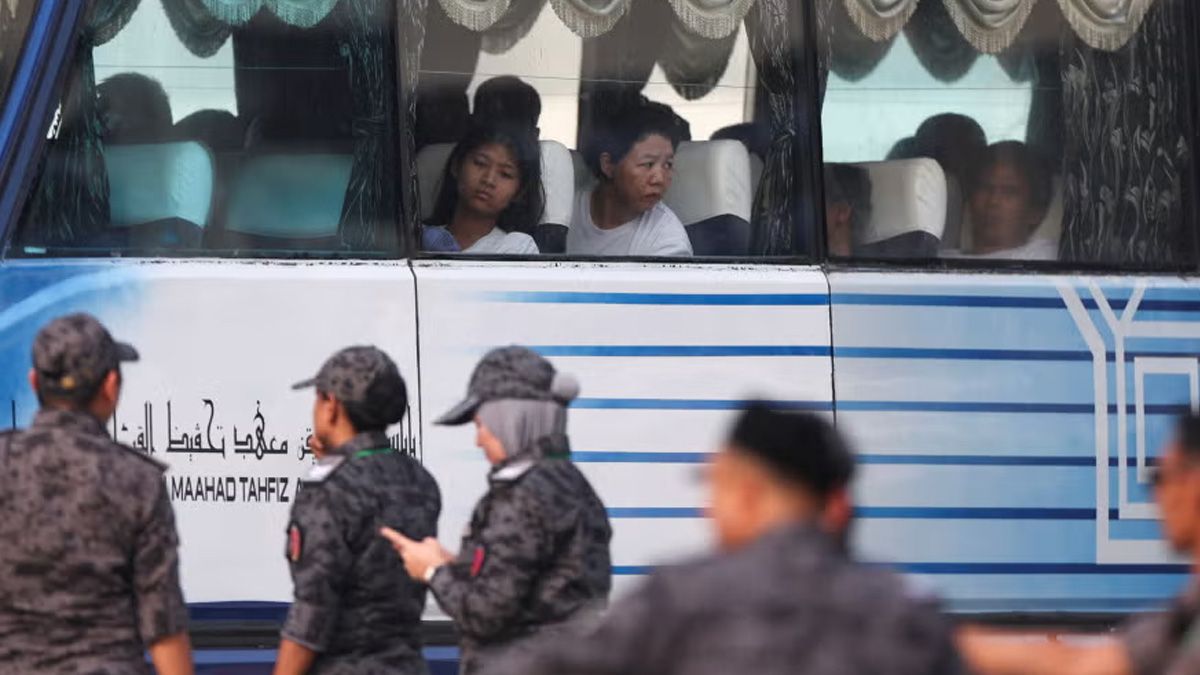
- Malaysia deported 1,476 Myanmar nationals on 29 September, with 3,524 more approved for a second phase.
- Human Rights Watch questions whether consent was voluntary, as deportees were taken directly from immigration detention.
- The group urges Malaysia to suspend deportations and grant UNHCR full access to detention centres.

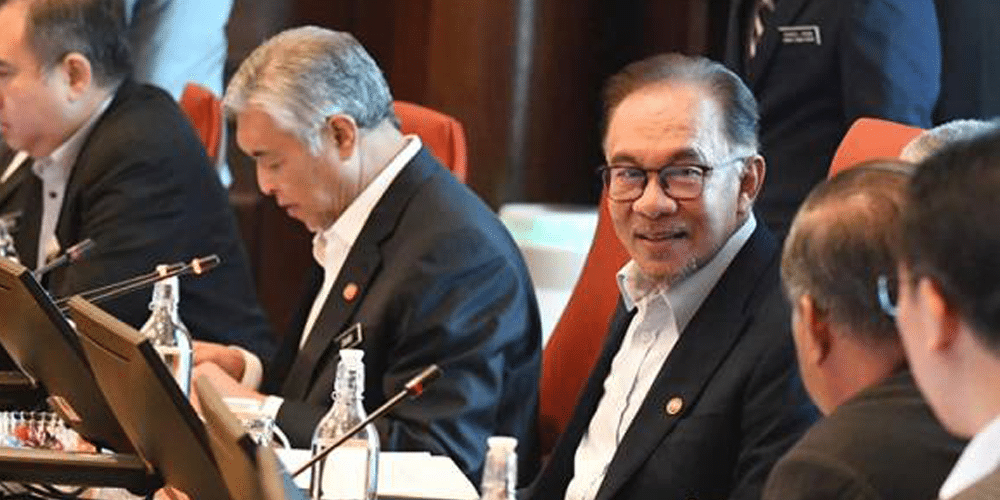
Human Rights Watch (HRW) has called on Malaysian Prime Minister Anwar Ibrahim to press Myanmar's junta leader, Min Aung Hlaing, to end human rights abuses during his visit to Kuala Lumpur on Wednesday, 7 October 2026.
In a statement issued from Bangkok on 7 October, the rights group also urged the Malaysian government to halt plans to forcibly return ethnic Rohingya and others to Myanmar, where it said they face persecution and other rights violations.
According to HRW, Malaysian authorities deported about 1,500 Myanmar nationals on 29 September in coordination with junta authorities, the first batch in a series of phased returns.
Elaine Pearson, Asia director at HRW, said: "Malaysian Prime Minister Anwar Ibrahim's invitation to Min Aung Hlaing to coordinate the forced return of people who fled military atrocities in Myanmar is an invitation for further abuse."
She added: "The Malaysian government, which has provided protection to Rohingya and other refugees from Myanmar for decades, should halt any more returns and urge the junta leader to stop the abuses that have caused millions to leave the country."
Invitation to the junta leader
On 16 September, Anwar announced that he was inviting Min Aung Hlaing, who led the February 2021 military coup in Myanmar, to discuss the return of Myanmar nationals from Malaysia.
HRW noted that the trip is Min Aung Hlaing's sixth bilateral visit to an Asian country since he installed himself as president in April, following what the group described as sham elections, and after stepping down as military commander-in-chief.
The group said he has been implicated in many abuses. The International Criminal Court (ICC) prosecutor has requested an arrest warrant for him over alleged crimes against humanity.
Details of the first deportation
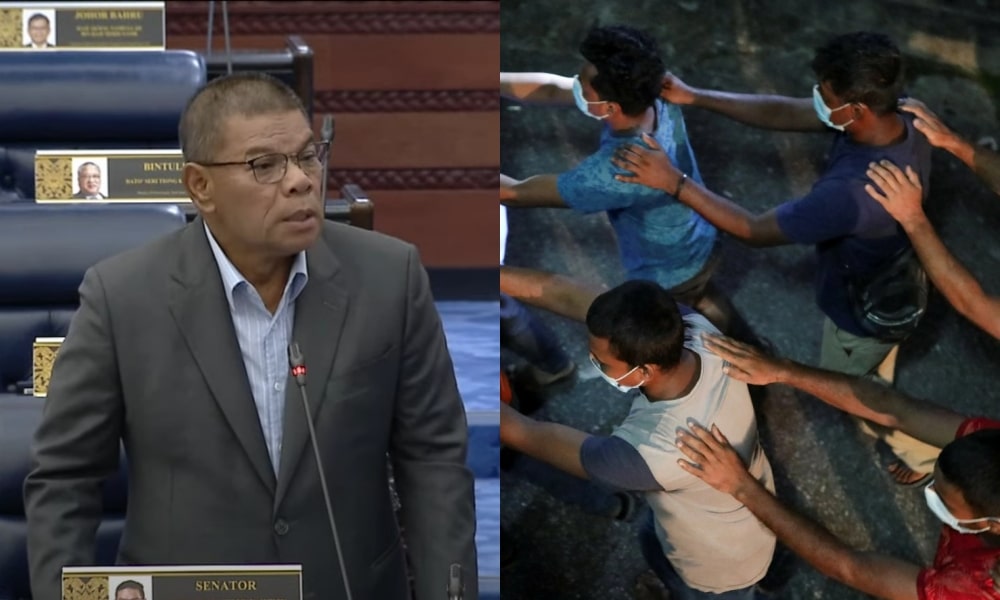
According to Malaysia's state news agency, Bernama, 1,476 Myanmar nationals were sent back on 29 September. They comprised 1,370 men, 79 women, 20 boys and seven girls, aged between eight and 60.
They were transported aboard two Myanmar navy ships and a hospital ship from the Lumut naval base in Perak.
The transfer was the first phase of an arrangement between the Malaysian government and the Myanmar junta to return 5,000 people, which Malaysian officials first announced in July.
Citing media reports, HRW said Malaysia's Ministry of Home Affairs (Home Ministry) stated that junta authorities had identified those slated for return. The ministry did not disclose their ethnicity or refugee status, or say whether Rohingya were among them.
The ministry was quoted as saying further phased returns would follow once identification, documentation and verification were complete.
Second phase approved
On 30 September, Communications Minister Fahmi Fadzil said 3,524 people had been approved for a second phase of deportation, drawn from a list Myanmar authorities submitted in a diplomatic note dated 13 August.
Malaysia is awaiting a date from Myanmar. According to recent reports from the Home Ministry, about 10,400 Myanmar nationals are held in Malaysian immigration detention.
Questions over voluntary returns
Malaysian authorities have claimed the returns were strictly voluntary. However, HRW pointed out that those deported were taken directly from immigration detention centres.
Former detainees of these centres have reported physical abuse and psychological harm, which HRW said raises serious concerns about whether consent was freely given.
The United Nations Refugee Agency (UNHCR) said it had no role in the operation and was not involved in identifying those deported.
Since 2019, the Malaysian government has denied UNHCR access to immigration detention centres, preventing the agency from reviewing asylum claims or assisting detainees who are registered refugees.
HRW said consent given while in indefinite detention, without access to UNHCR or a meaningful protection assessment, cannot be truly voluntary.
A representative of the ethnic Chin refugee community in Malaysia told the media that community leaders knew of several asylum seekers among those deported, including one recognised by UNHCR as a refugee.
Rising hostility towards refugees
HRW said the deportations come amid a wave of public hostility in Malaysia towards refugees, particularly Rohingya, which it said government officials have fomented.
According to the group, the Home Ministry has described refugees as a financial burden, a social problem and a security threat.
HRW added that online hate speech and misinformation targeting Rohingya and migrants have surged this year, leading to harassment and the closure of community schools.
Refugee population in Malaysia
There are no authoritative figures on the number of Myanmar migrants, refugees and asylum seekers in Malaysia.
More than 224,000 refugees and asylum seekers are registered with UNHCR in Malaysia. About 90 per cent are from Myanmar, the vast majority of them ethnic Rohingya.
According to HRW, Malaysia has summarily deported thousands of asylum seekers to Myanmar since the 2021 coup, without assessing their asylum claims or protection needs, and in violation of a Malaysian court order.
In May 2024, UNHCR issued guidance stating that people fleeing Myanmar "are likely in need of international refugee protection".
Conditions in Myanmar
HRW said conditions for safe, dignified and voluntary return to Myanmar do not currently exist, and that the military continues to commit war crimes and crimes against humanity.
According to the group, junta authorities have arbitrarily arrested tens of thousands of people since the coup. Thousands have experienced torture and ill-treatment or died in custody.
A day before the September deportations, Myanmar's military carried out an airstrike near a market in the town of Kyauktaw, Rakhine State, killing 50 people, HRW said.
The group said Rohingya face particular danger if forcibly returned. Myanmar authorities have long denied them citizenship and subjected them to atrocity crimes.
HRW described these as including the ongoing crimes against humanity of apartheid, persecution and deprivation of liberty.
Since late 2023, Rohingya civilians in Rakhine State have been caught in fighting between the junta and the ethnic Arakan Army. HRW said both parties have committed grave abuses, including extrajudicial killings, widespread arson and unlawful recruitment.
Obligations under international law
Malaysia has not ratified the 1951 UN Refugee Convention or its 1967 Protocol. HRW said it is nonetheless obligated to respect the international law principle of non-refoulement.
The principle prohibits countries from returning anyone to a place where they would face a real risk of persecution, torture or other serious ill-treatment, a threat to life, or comparable serious human rights violations.
Calls to Malaysia, ASEAN and other governments
HRW called on the Malaysian government to immediately suspend all deportations to Myanmar, including the planned second phase, and to grant UNHCR full and unimpeded access to all immigration detention centres.
It also urged the Association of Southeast Asian Nations (ASEAN) to maintain its ban on Min Aung Hlaing and other junta leaders participating in the bloc's meetings.
ASEAN members should refrain from organising bilateral visits that undermine their collective ban on junta officials, the group said.
HRW further urged concerned governments to press Malaysia to halt the returns, and to expand resettlement places and support for countries hosting refugees from Myanmar.
It said these governments should not treat returns arranged with Myanmar's military-backed authorities as evidence that the country is safe.
"The Malaysian government should not be outsourcing the decision about who can safely return to Myanmar to the junta authorities," Pearson said.
"Prime Minister Anwar should stop the next ships before they set sail, and provide the UN refugee agency access to refugees and asylum seekers," she added.