US completes Iraq withdrawal as Baghdad faces pressure to disarm Iran-aligned militias
The last US and UK troops have left Iraq, ending Operation Inherent Resolve and a US military presence that began with the 2003 invasion, as Baghdad faces mounting pressure to disarm Iran-aligned militias.
- The last US and UK troops left Erbil on 30 September 2026, ending Operation Inherent Resolve in Iraq.
- The Pentagon says Iraq now bears primary responsibility for IS remnants and Iran-aligned militias.
- Powerful Iran-backed militias refuse to disarm, and Iraq has sought to extend its disarmament deadline.

The US and the UK have withdrawn their last remaining troops from Iraq. The move ends a US military presence that began with the 2003 invasion to topple Saddam Hussein.
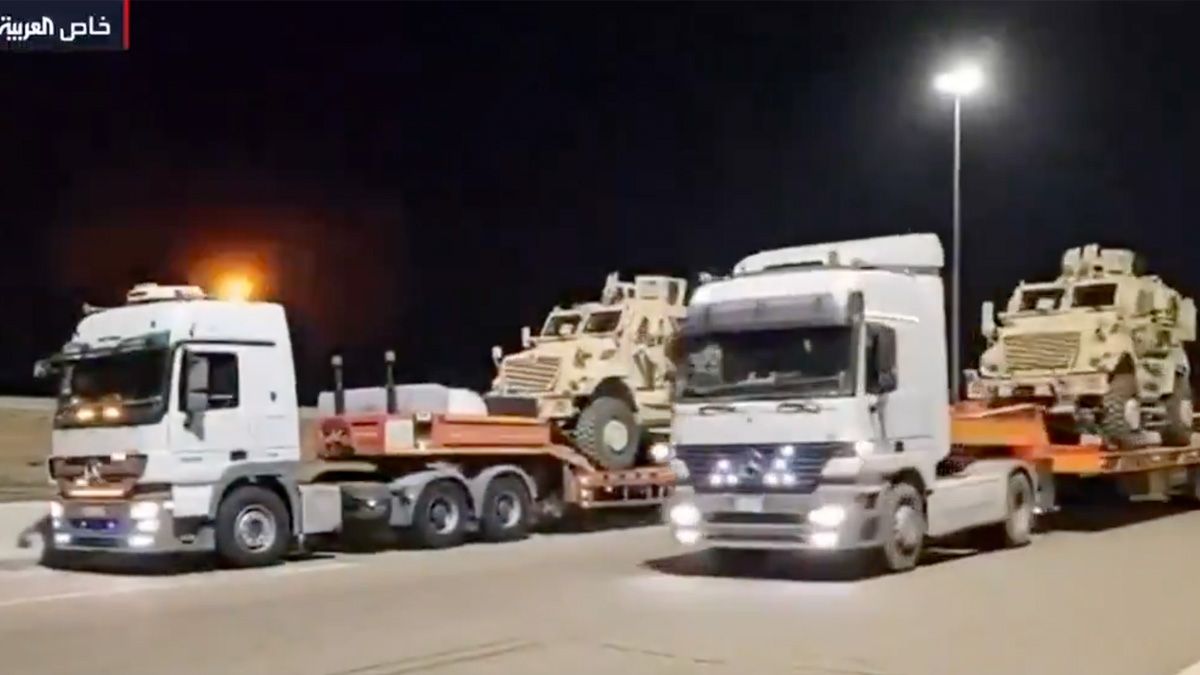
US forces and equipment made their final departure on Wednesday, 30 September 2026, from Erbil Air Base in the semi-autonomous Kurdistan Region. US Central Command (CENTCOM) announced the departure in a statement.
The exit completes a phased withdrawal agreed between Washington and Baghdad in 2024 under the Biden administration. The Trump administration has since honoured the plan.
According to the BBC, around 100 remaining UK military personnel also left Erbil, in a departure co-ordinated with US forces over recent weeks. Their exit ends Operation Inherent Resolve, the international coalition mission against Islamic State (IS).
Pentagon hails end of mission
Chief Pentagon spokesperson Sean Parnell said the milestone reflected "the success of a 12-year campaign that defeated ISIS as an organised military threat in Iraq and across the region".
He said it marked "a transition from a wartime coalition mission to an Iraqi-led security effort supported by a more normal bilateral security relationship".
Parnell said primary responsibility for Iraq's remaining security challenges now rested with the Government of Iraq. He listed these as IS remnants and "Iran-aligned militias that undermine Iraqi sovereignty and regional stability".
He added that the US would continue working with Iraq and its partners "to ensure ISIS can never reconstitute from Iraqi territory". The Department of Defense will continue to provide "targeted" training and intelligence support.
CENTCOM Commander Admiral Brad Cooper said US and coalition forces stationed across the region would "remain ready to respond to any ISIS threats that arise".
CENTCOM said the coalition's joint task force remained operational and was now based in Jordan. US forces will continue operations against IS in Syria, where the United Nations (UN) estimates the group has up to 3,000 fighters.
The UK Ministry of Defence (MoD) said the Iraqi Security Forces (ISF) and the Kurdish Peshmerga had "secured the enduring territorial defeat of Daesh in Iraq".
The MoD said UK personnel had supported and trained more than 111,000 ISF members, including more than 21,000 Peshmerga. It said the Royal Air Force (RAF) had struck more than 2,300 IS targets and is expected to continue flying missions over Syria.
Baghdad marks sovereignty
Iraqi Prime Minister Ali al-Zaidi presided over a handover ceremony in Baghdad. NPR reported that the ceremony took place at the former joint military command centre opposite the US Embassy and was closed to the press.
Al-Zaidi described the withdrawal as the start of "a new phase" characterised by "Iraq's sovereignty, the strength of its institutions, the readiness of its forces, the unity of its decision-making, and balanced partnerships with its friends".
NPR reported that al-Zaidi declared a two-day holiday and dubbed Wednesday "sovereignty day". The BBC reported that Iraq would hold four "Sovereignty Days" as a national holiday.
Sabah al-Numan, spokesperson for the chief of the Iraqi armed forces, told NPR: "We are very proud to reach this day. It is due to the sacrifices of the Iraqi armed forces."
He said Iraq was exploring bilateral military agreements with the US. He thanked the coalition for its efforts but added: "at the end they have to go".
Iran-aligned militias claim victory
According to CNN, Iran and its allies also celebrated the withdrawal, claiming years of pressure had forced the American departure.
One Iran-backed militia, As'hab al-Kahf, congratulated Iraqis "on the humiliating withdrawal of the American occupier under the strikes of the Resistance's drones and missiles", CNN reported.
Sheikh Kadhim al-Fartousi, spokesperson for the Kitaib Sayid al-Shuhada paramilitary group, told NPR that the departure was a victory but not enough. "The exit of the occupier does not mean only that soldiers and equipment go," he said.
Al-Fartousi described US control over Iraq's economy as a form of occupation. NPR noted that since 2003, Iraq's oil revenue has been deposited at the Federal Reserve Bank of New York, giving Washington significant leverage over Iraq's currency.
Disarmament deadline under strain
Al-Zaidi, who took office in May, has pledged "no weapon outside the umbrella of the law, and no force outside the state's institutions".
According to NPR, al-Zaidi agreed at a White House meeting with President Donald Trump in July to disarm the militias by 30 September. He has since asked to extend that deadline to June next year.
Secretary of State Marco Rubio said last week that Washington knew al-Zaidi was committed to the disarmament process. He did not say publicly whether the extension had been agreed.
NPR reported that three of the most powerful Iran-backed militias have said they will not hand over weapons while Iraq remains vulnerable. CNN reported that the groups have added new demands since the US withdrawal.
A leading commander of Harakat al-Nujaba, a US-designated Foreign Terrorist Organisation, told CNN on condition of anonymity that the disarmament demand was "American, Zionist, Western, and Gulf-backed, aimed at weakening Iraq".
Lahib Higel, deputy programme director for the Middle East and North Africa at International Crisis Group (ICG), told CNN it was "quite an impossible task to quickly disarm these groups".
She said it was difficult to imagine the groups laying down their arms "for as long as the regime stands in Tehran".
War with Iran and regional tensions
The withdrawal comes as Washington and Tehran remain at an impasse over a ceasefire to end their seven-month war, Breaking Defense reported. CNN reported that the war killed Supreme Leader Ayatollah Ali Khamenei.
According to the BBC, militias have targeted US and UK forces at Erbil since the war began. At the height of the US bombing campaign, the base faced up to 28 drones and missiles a day.
The BBC reported that RAF Regiment gunners shot down more than 100 drones in the first six weeks of the war. Hundreds of North Atlantic Treaty Organization (NATO) troops left Baghdad in March as tensions rose.
CNN reported that Iraqi groups loyal to Iran fired drones at a vital Saudi oil pipeline this month, disrupting global crude supply and sending oil prices soaring.
Kurdish concerns and the IS threat
Kurdish leaders have expressed concern that the withdrawal leaves them vulnerable to attacks by Iran and Iran-backed militias, NPR reported. The Kurds have historically relied on US protection.
Al-Numan said the Iraqi military would not leave the Kurdistan Region undefended. He said Iraq was discussing purchasing air defence systems from South Korea, Turkey and the US.
He said Iraq had also established two joint Iraqi-Kurdish brigades focused on counter-IS operations. "It's a symbol that all Iraqis can work together in one unit and with one mission," he said.
A recent UN report cited by the BBC assessed that IS retained several hundred fighters in Iraq, "able to carry out unsophisticated operations only".
On Sunday, Iraqi special forces said they killed two suicide bombers in Alton Kupri, near Kirkuk, before they could detonate their explosive vests. A civilian was also killed, according to NPR.
Iraq has also opened talks with Turkey on closing Turkish bases in Iraq. Both countries announced last week that Turkey would begin a gradual withdrawal from the Bashiqa-Zilkan camp near Mosul.
Two decades of US military presence
US forces invaded in 2003 under President George W Bush, citing weapons of mass destruction that were found not to exist. Iraq was also found to have no connection to the 11 September 2001 attacks.
The ensuing insurgency cost tens of thousands of lives. Iraq Body Count, a UK-based independent organisation, puts the most conservative estimate of Iraqi civilian deaths at 200,000 or more.
NPR cited figures showing more than 4,400 US military personnel were killed. The BBC put the toll at nearly 4,500 US personnel and 179 British personnel.
At its height, the US had 170,000 troops in Iraq. Forces withdrew in 2011 but returned in 2014 at Baghdad's request, after IS seized roughly one-third of the country.
Iraqi forces, with coalition and Kurdish support, territorially defeated IS in 2017. After US forces withdrew from the rest of Iraq in January, about 1,500 personnel remained in the Kurdistan Region.
NPR reported that Baghdad and most other cities are now largely calm. Ali al-Makhzomy, founder of the tour company Bil Weekend, told NPR that "Iraqi people never saw American people as their enemy."