Indonesia train crash that killed 16 linked to signalling and communication failures
Indonesia’s transport safety investigators found signalling and communication failures contributed to the 27 April collision between commuter and long-distance trains in Bekasi that killed 16 people and injured 91.
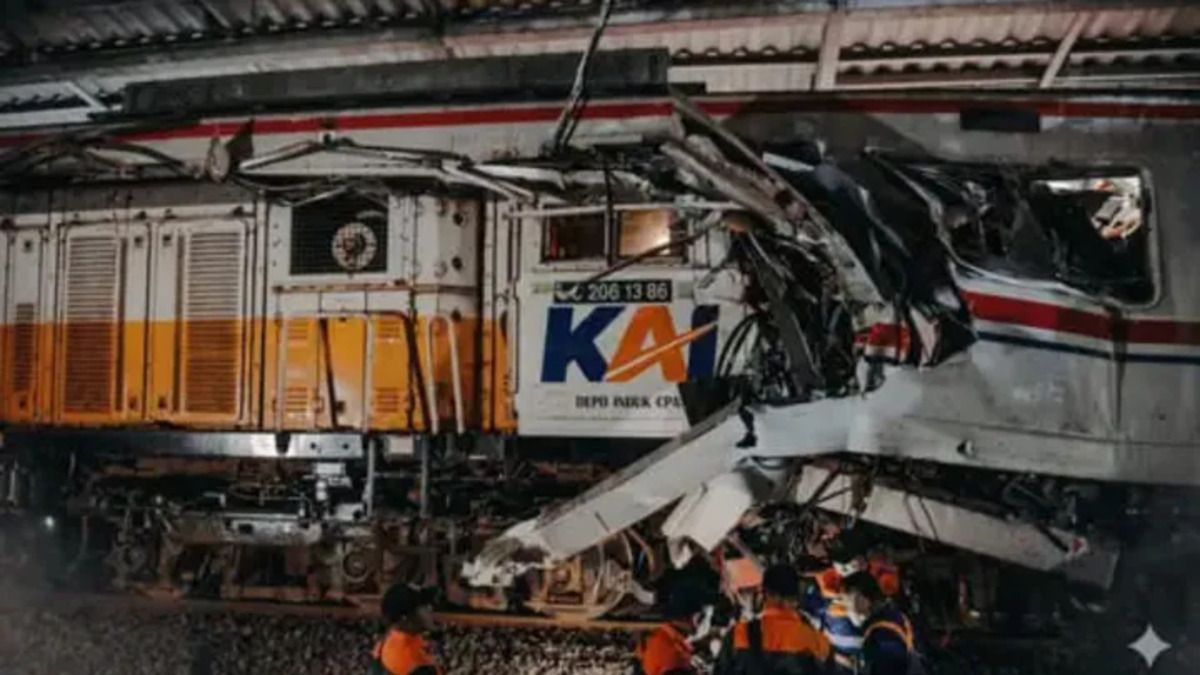
- KNKT found signalling and communication failures contributed to the 27 April collision near East Bekasi station.
- An earlier collision involving an electric taxi disrupted rail operations and preceded the fatal train crash.
- Police have separately sent the taxi driver’s completed case file to prosecutors over alleged negligence.

Signalling and communication failures contributed to the collision between a commuter train and a long-distance service in Bekasi, West Java, that killed 16 people in April, Indonesia’s National Transportation Safety Committee (KNKT) said in its final investigation.
The collision occurred on 27 April 2026 near East Bekasi station, about 20km east of central Jakarta, which also injured 91 others, according to figures from state railway operator PT Kereta Api Indonesia (KAI).
The KNKT investigation found that a sequence of events beginning with a vehicle collision at an unguarded level crossing led to the fatal crash.
Collision began at a level crossing
At about 8.48pm, an electric taxi stopped on an unmanned level crossing near East Bekasi station and was struck by Commuter Line train 5181B travelling towards Angke.
The collision disrupted rail operations in the area. Another commuter service, train 5568A, was subsequently held at East Bekasi station after its driver saw people on the track.
Shortly afterwards, the Argo Bromo Anggrek, an express service travelling from Jakarta to Surabaya, departed Bekasi station.
At about 8.52pm, the long-distance train collided with the stationary commuter train at East Bekasi.
The crash severely damaged the rear section of the commuter train, including its women-only carriage.
Taxi driver’s case sent to prosecutors
The driver of the electric taxi involved in the initial collision was subsequently named a suspect over alleged negligence. Police said the driver, identified by the initials RRP, had been unable to move the vehicle after it stopped on the railway crossing.
Police treated the taxi–commuter train collision as a separate case from the subsequent crash between the two trains. On 10 September, investigators submitted the completed case file to the Bekasi City District Prosecutor’s Office for further proceedings. The driver was not detained.
Signalling system did not provide advance warning
The KNKT identified a problem in the signalling arrangement between Bekasi and East Bekasi stations as a key factor in the sequence leading to the collision.
The Argo Bromo Anggrek received a green departure signal at Bekasi station. However, the signalling system did not provide the train with an additional warning that the next relevant signal was red because the track ahead was occupied.
According to the investigation, the train subsequently encountered a red signal before colliding with the stationary commuter service.
KNKT found that the hazard had not been identified during the design review and testing of the signalling system following changes to the track layout at Bekasi station in 2021.
A design document produced in 2022 did not adequately represent the relationship between the signalling system and the occupied track, the committee said.
Information about the earlier crash was delayed
Communication problems also affected the response to the initial level-crossing collision.
The driver of Commuter Line 5181B reported the incident to railway controllers, but the information took 3 minutes and 20 seconds to reach the relevant southern railway traffic controller.
KNKT said the controller had difficulty hearing the driver's transmission clearly and needed to verify and clarify the information.
At the same time, information that Commuter Line 5568A had been stopped at East Bekasi because people were on the track was not passed to the controller responsible for managing the movement of the Argo Bromo Anggrek.
The investigation found that the southern controller was occupied with handling the earlier collision at the level crossing.
KNKT identifies six contributing factors
KNKT identified six contributing factors in its final investigation, covering signalling, communication and operational aspects of the railway system.
The committee said the signalling hazard had not been identified during the design, testing and operational stages. It also found shortcomings in the transmission and handling of emergency information following the level-crossing collision.
The investigation team examined the accident site, railway infrastructure, signalling system, operational procedures and communications between railway personnel.
KNKT subsequently issued safety recommendations to the relevant authorities and railway operators covering the identified weaknesses.
The final investigation report is available through KNKT's railway accident investigation database.