US, Denmark and Greenland expect to sign Arctic security agreement next week
The US, Denmark and Greenland expect to sign a security agreement next week, after President Donald Trump said it gives Washington "permanent control over security" in Greenland. Danish and Greenlandic leaders stressed sovereignty and self-determination.
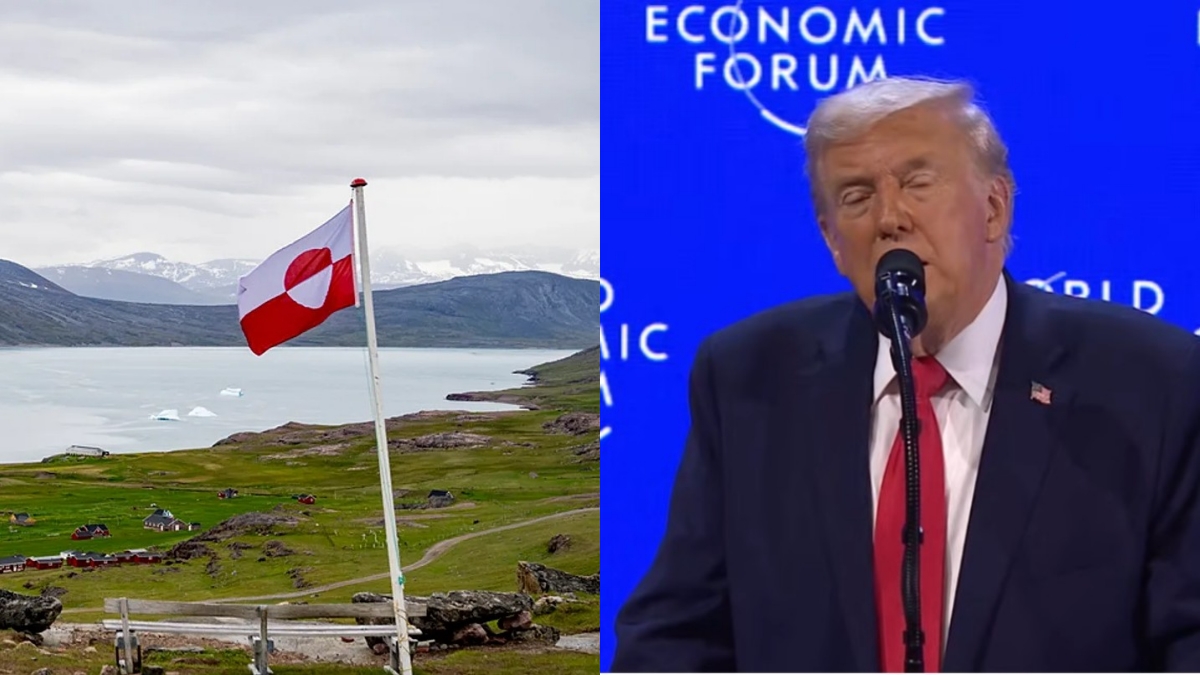
- Trump says the deal gives the US "permanent control over security" in Greenland.
- Denmark and Greenland say the agreement recognises Danish sovereignty and Greenlanders' self-determination.
- The three governments expect to sign next week; parliamentary procedures must follow.

President Donald Trump announced on Friday, 18 September 2026, a security agreement with Denmark and Greenland. The three governments expect to sign it next week, following months of Trump's threats to take the territory by force.
In a post on Truth Social, Trump said the agreement "gives the United States permanent control over security, and all other needs, in Greenland, completely addressing ALL of our many U.S. concerns".
Trump said the deal came at "no cost" to the US. He described it as an "Infinite Life" agreement with "no end".
He said the US would "FOREVER have the complete ability to do what is necessary in Greenland in order to secure and defend the security of Greenland, and the United States of America".
Trump said his administration would work with Greenland to begin developing a "large Military presence in the appropriate part of Greenland" immediately.
Trump also said no US adversary could maintain a base or military presence in Greenland, or "make sensitive investments" there, without the express written approval of the US.

Danish and Greenlandic response
The Government of Greenland (Naalakkersuisut) and the Danish Prime Minister's Office (Statsministeriet) issued a joint press release in Copenhagen on Friday, 18 September 2026. It was titled "Expected agreement on strengthened security in the Arctic and the North Atlantic area".
The statement said Greenland, Denmark and the US expect to sign an agreement in the coming week, in connection with the UN General Assembly. Once signed, it must go through the necessary parliamentary procedures to enter into force.
Danish Prime Minister Mette Frederiksen said she was pleased there was "a prospect of a good agreement for Greenland, the Kingdom of Denmark and the USA".
She described it as "an agreement that strengthens our common security in the Arctic and the North Atlantic area and is therefore also good for NATO and Europe". She added that it "at the same time recognises the Kingdom's sovereignty and territorial integrity and the Greenlandic people's right to self-determination".
Jens-Frederik Nielsen, chairman of the Greenland government, said it was "gratifying that we are about to enter into an agreement that ensures and strengthens the security" of Greenland, the Kingdom of Denmark, the US and the Western alliance.
Nielsen said the agreement "recognises Greenland's interests and our place in international co-operation". He added: "It is for the benefit of us all."
The joint statement did not address Trump's claims about permanent control or the specific provisions he described. It said no further comments were possible at present.

Details from the US State Department
No text of the agreement has been released. The BBC said it had contacted the Danish Embassy and the White House for comment.
An unnamed State Department official outlined the deal to media outlets, including NBC News and the Associated Press, without giving specifics. The official was not authorised to comment publicly.
According to the official, the agreement explicitly bans any non-NATO base or troop presence in Greenland. It also includes screening mechanisms intended to block investment from Russia, China and other adversaries in "sensitive sectors".
The official said the agreement would remain in effect "forever", including "if Greenland becomes a fully independent country" from Denmark.
The official added that the agreement guarantees the US "permanent access, basing, and overflight rights". It also allows the US military to increase the number of bases in Greenland as required.
The BBC reported that, according to the official, the US would have unilateral power to build additional military structures without approval from Greenland or Denmark.
The official said that, under the current arrangements, adversaries have been able to invest in Greenland's sensitive sectors without investment screening.
Secretary of State Marco Rubio called the agreement a "historic deal" and a "huge win for the United States and the American people".
Rubio said: "Greenland will forever be part of the strategic defense area of North America and exclude any adversary from it and the surrounding area. This deal permanently and completely addresses our national security concerns in Greenland."
How the deal differs from the 1951 treaty
Without the official text, it is unclear how the agreement differs from the 1951 Defense of Greenland Treaty, the BBC noted. Under that agreement, the US can already send as many troops as it wants to Greenland.
The US operates the Pituffik Space Base in north-western Greenland, built after the 1951 treaty was signed. It supports missile warning, missile defence and space surveillance operations for the US and NATO.
More than 100 US military personnel are permanently stationed at the base, according to the BBC.
The US held several bases and installations in Greenland during the Cold War before scaling back its presence, the Associated Press reported.
Months of threats
The deal follows months of pressure from Trump on the semi-autonomous Danish territory, which has about 56,000 residents. After returning to the White House last year, he called on Denmark to sell the island and would not rule out taking it by force.
In January, Trump threatened to take Greenland "one way or the other", according to NBC News. He later toned down the threat of military action.
The administration continued its efforts to gain influence there. Louisiana Governor Jeff Landry, the US special envoy to Greenland, visited in May.
Denmark and Greenland repeatedly said the island was not for sale. Russia and much of Europe also opposed the US push, and the threats prompted an outcry from Danes and other NATO countries.
Trump argued that Greenland was vulnerable to adversaries, including Russia and China. The Associated Press reported that he had repeatedly made false claims of Chinese and Russian military forces off the island's coast.
Danish officials had repeatedly said they were ready to work with the US to expand its military presence and strengthen its commercial interests in Greenland.
The Associated Press reported that officials from the three governments negotiated quietly for months. NBC News said polls consistently show Greenlanders overwhelmingly reject American annexation, though Greenland's government took part in the talks.
Strategic and economic interests
Trump has said Greenland is essential to his plan for a Golden Dome defence system. It is designed to protect the US against missile attacks from Russia and China, and he has said European allies could co-operate on it.
Greenland lies off north-eastern Canada, with more than two-thirds of its territory within the Arctic Circle. It has been central to North American defence since the Second World War.
The island also holds vast and largely untapped reserves of rare earth minerals. They are crucial to technologies including mobile phones and electric vehicles.
The Associated Press said the deal lets Trump promote a foreign policy achievement ahead of the midterm elections. It noted that the Greenland issue had been pushed aside by the military operation to oust former Venezuelan President Nicolás Maduro and the war against Iran, which began about six months ago.
Damage to transatlantic relations
Imran Bayoumi, an associate director at the Atlantic Council's Scowcroft Center for Strategy and Security, said the repeated threats rattled NATO and discomfited European allies.
"I think Americans really underestimate how damaging it was for the image of the United States in Europe," he said. "I think Greenlanders, Danes, Europeans saw this as a real attack on their sovereignty, and it's going to take a lot of work to repair."