Chinese nationals among passengers detained in Indonesian gold cases
Indonesian Customs says Chinese, Indian and other foreign nationals were detained after more than 29kg of gold and suspected gold worth Rp73.3 billion was intercepted at four airports.
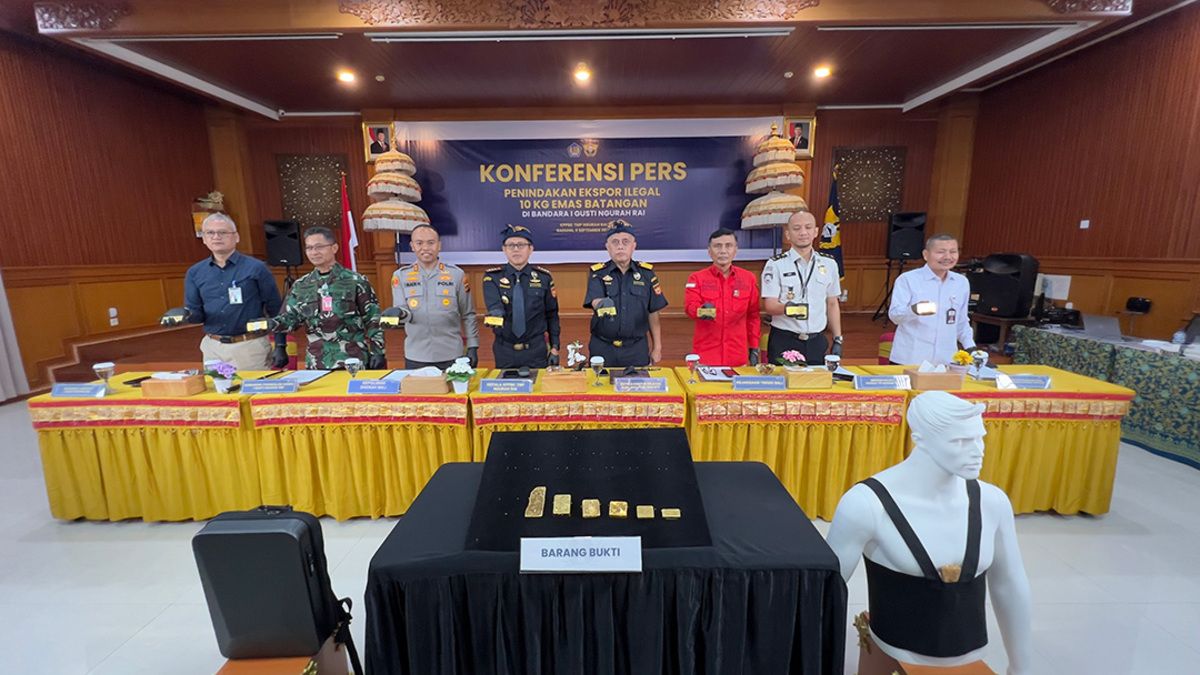
- Customs intercepted more than 29kg of gold and suspected gold at four Indonesian international airports.
- Chinese nationals were involved in cases involving more than 20kg of the seized material.
- Customs says about 330kg of gold was stopped from leaving Indonesia between January and 14 September.

Chinese nationals were among passengers detained by Indonesian authorities after customs officers intercepted more than 29kg of gold and suspected gold worth an estimated Rp73.3 billion (about US$4.1 million) at four international airports between 5 and 14 September 2026.
The Directorate General of Customs and Excise (DJBC) said the seizures were made at Soekarno-Hatta, I Gusti Ngurah Rai, Kualanamu and Sam Ratulangi airports. The cases involved Chinese, Indian and other foreign nationals travelling on international flights.
Director General of Customs and Excise Djaka Budhi Utama said on 15 September that the operations prevented an estimated Rp8.5 billion in potential state revenue losses.
The cases are being investigated in coordination with Indonesia’s Criminal Investigation Department and the Attorney General’s Office.
Chinese nationals carried more than 20kg
At Soekarno-Hatta International Airport near Jakarta, two Chinese nationals, identified by their initials MZ and SL, were intercepted on 10 September while preparing to travel to Hong Kong.
Customs officers found five cast bars weighing about 5,026.5 grams in SL’s backpack and another five cast bars of the same weight in MZ’s cabin luggage. The total was about 10.05kg, with an estimated value of Rp25.3 billion.
The gold bars had been concealed using duct tape. Customs said its officers had identified a recurring pattern involving foreign nationals travelling to Hong Kong with gold in cabin luggage and backpacks. Officers then coordinated with aviation security, immigration authorities and the airline.
A separate case occurred at Bali’s I Gusti Ngurah Rai International Airport on 6 September. A Chinese national identified as ZG was stopped while preparing to board a Cathay Pacific flight to Hong Kong.
Customs officers found 14 gold bars weighing 10,418.3 grams, or about 10.4kg, concealed on the passenger’s body using a method known as body strapping.
Bea Cukai Ngurah Rai said laboratory testing confirmed the material was gold with a purity of more than 99 per cent. The estimated value was Rp26 billion, while the potential state revenue loss was calculated at Rp3.9 billion.
Gold powder and jewellery found in Manado
At Sam Ratulangi International Airport in Manado, North Sulawesi, customs officers recorded two separate cases involving Chinese nationals on 5 September.
In the first case, three Chinese nationals — identified as JM, ZW and TC — were intercepted while travelling to Singapore. Officers found 19 packages containing powder suspected to be gold, weighing about 5,721 grams.
The material was valued at approximately Rp14.5 billion, with potential state revenue of about Rp1.45 billion.
In another case at the same airport, two Chinese nationals, identified as ZS and ZH, were stopped while travelling to Guangzhou, China.
Customs officers found jewellery weighing 1,352 grams, with an estimated value of Rp3.6 billion and potential state revenue of Rp360 million.
Indian passenger stopped at Kualanamu
The fourth airport involved in the September operations was Kualanamu International Airport in North Sumatra.
On 14 September, customs officers stopped an Indian national identified as NU, who was travelling on a commercial flight to Bangkok, Thailand.
An examination of the passenger’s luggage detected an abnormal image in electronic equipment. Officers subsequently found four pieces suspected to be gold weighing approximately 1,522 grams.
The material was valued at about Rp3.95 billion, while the potential state revenue involved was estimated at Rp383 million.
Indonesia introduced an export duty on gold
The seizures come after Indonesia introduced a specific export-duty framework for gold under Finance Ministry Regulation No. 80 of 2025.
The regulation establishes gold as an export commodity that can be subject to export duty and specifies categories including dore, unwrought gold and gold alloys in forms such as ingots and cast bars, as well as minted bars. It came into force in December 2025.
The Finance Ministry's legal database says the regulation was issued partly to ensure domestic supply, maintain domestic price stability and support downstream processing of gold in Indonesia.
Customs guidance also requires passengers and crew to comply with customs provisions governing goods carried across Indonesia's borders. The current passenger-goods framework is based on Finance Ministry Regulation No. 34 of 2025, which amended earlier rules on the export and import of goods carried by passengers and transport crews.
Customs investigation remains under way
Djaka said Customs would strengthen intelligence analysis, information use, risk-based inspections and coordination with other agencies following the latest cases.
The 29kg seized between 5 and 14 September represents part of a much larger series of gold seizures this year. Customs said that, cumulatively, it had prevented about 330kg of gold from being taken out of Indonesia between January and 14 September 2026.
The status and eventual disposal of seized gold will depend on the legal proceedings; Customs said goods that have passed through the legal process and received a final binding decision may subsequently be handled through auction or another mechanism permitted under Indonesian law.
As of 16 September, the September cases remain subject to investigation. Customs has advised passengers carrying gold out of Indonesia to complete the required customs declarations and obtain the necessary permits and documentation.