Four rail workers killed after being hit by express train in Japan
Four workers died after being struck by a Tobu Railway express train while clearing weeds from the tracks at Shin-Kanuma Station, Tochigi Prefecture, on Thursday, 20 August 2026.
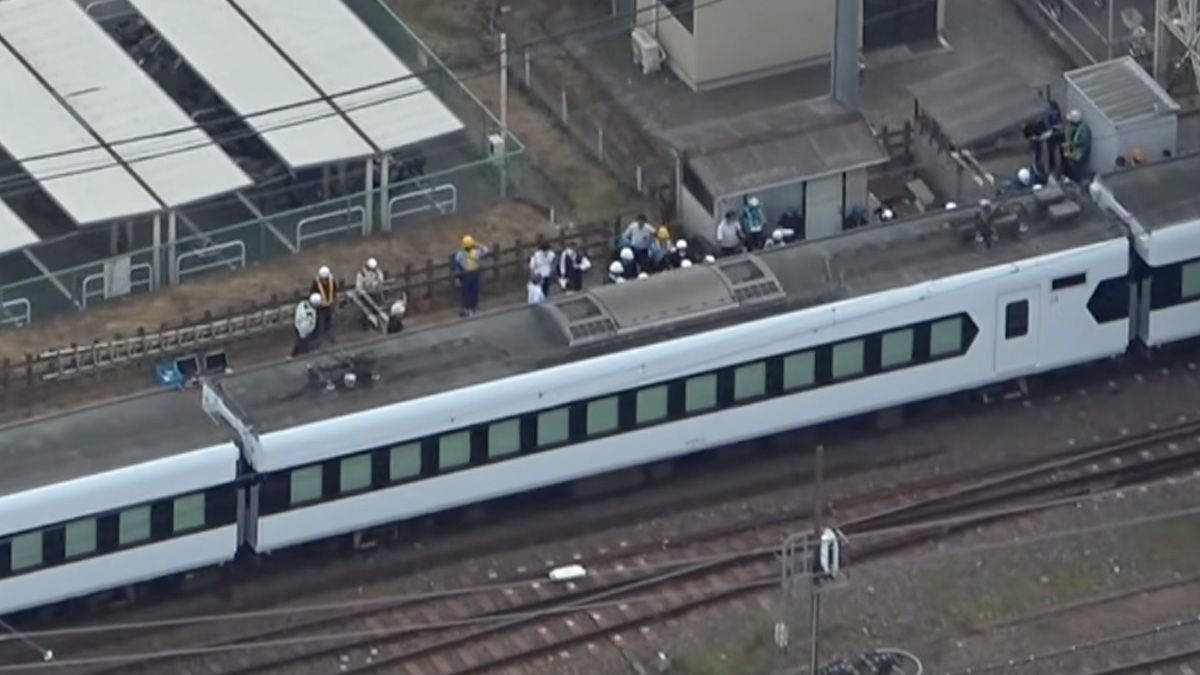
- Four track workers died after being hit by a Tobu Railway express train in Tochigi Prefecture.
- The men were clearing weeds from the line when the Spacia X service struck them.
- Japan's rail network has an exceptional safety record, with such fatal incidents extremely rare.

Four rail maintenance workers were killed in Japan on Thursday, 20 August 2026, after being struck by a limited express train at Shin-Kanuma Station in Tochigi Prefecture, north of Tokyo, authorities said.
The incident occurred at around 10.45am local time within the station premises on the Tobu Nikko Line, according to Tochigi prefectural police. The train involved was the Spacia X No. 2 service, travelling from Tobu-Nikko to Asakusa in central Tokyo.
A fire department official told AFP that all four men were confirmed dead. Emergency services were first alerted at 10.47am.
Police said the men were part of a seven-person team conducting weeding work on the tracks at the time. Three of the workers were trapped beneath the train, while a fourth was found on the platform. The remaining three team members were uninjured. Before being taken to hospital, all four victims were unconscious, a fire department official said.
Tobu Railway said the express train had been entering the station to make a scheduled stop when it struck the workers. Approximately 50 passengers were on board, along with crew, and none were reported injured.
Standard safety procedure for trackside weeding work requires one team member to act as a lookout, visually confirming an approaching train and signalling colleagues to evacuate the line in time. Once workers have cleared the track, the lookout is required to wave a flag to alert the driver, who then sounds the train's horn upon confirmation. Police are investigating why this procedure appeared not to have prevented the collision.
A passenger on board, a man in his 40s, described the moment of the incident to broadcaster NHK. He said passengers heard a loud rumbling noise before the train came to an abrupt emergency stop, with braking so sudden it was difficult to remain standing. He added that an announcement informed passengers the train would halt to identify the source of the noise, after which they were unable to disembark for some time.
Nippon TV reported that the workers had been engaged in routine vegetation clearance along the track at the time of the collision.
Operations on parts of the Tobu Nikko Line, which connects the greater Tokyo area with the popular tourist destination of Nikko, were suspended in both directions following the incident. A police cordon was placed around Shin-Kanuma Station, with investigators seen examining the track while officers briefed waiting passengers, some of whom were turned away after seeing notices about the disruption.
Japan's railways are widely regarded as among the safest and most punctual in the world. Fatal accidents involving collisions or derailments are extremely rare, a record attributed to rigorous maintenance standards, extensive staff training and advanced safety technology.
The country's deadliest rail accident of this century occurred in April 2005, when a rush-hour commuter train derailed and struck an apartment building in Amagasaki, in the Hyogo region of western Japan. That disaster killed 107 people and injured more than 500 others.
An earlier accident in 1963, involving a derailed cargo train that collided with two passenger services, killed 161 people.
Notably, no passenger has ever died as a result of a derailment or collision on Japan's shinkansen bullet train network since services began in 1964, a record that remains a global benchmark for high-speed rail safety.