Flanagan wins Minnesota Democratic Senate primary, will face Tafoya in November
Lieutenant Governor Peggy Flanagan has defeated Representative Angie Craig in Minnesota's Democratic Senate primary, setting up a November contest against Republican Michele Tafoya for the seat held by retiring Senator Tina Smith.
- Flanagan beat Craig 59.0% to 39.4% in Minnesota's Democratic Senate primary.
- Flanagan will face Republican Michele Tafoya in the 3 November general election.
- Immigration crackdown deaths and AIPAC donations shaped a costly, divisive primary race.

Minnesota Lieutenant Governor Peggy Flanagan has won the state's Democratic Senate primary, defeating centrist Representative Angie Craig in what is believed to be the most expensive primary in the state's history.
Flanagan took 59.0% of the vote against Craig's 39.4%, with 98% of precincts reporting, according to Anadolu Agency. The result extends a run of progressive wins over the Democratic establishment, coming a week after Dr Abdul El-Sayed's victory in Michigan's Senate primary.
Flanagan will face Republican Michele Tafoya, a former television sports broadcaster, in the 3 November general election for the seat held by retiring Senator Tina Smith. Tafoya won a crowded nine-candidate Republican field with 52% of the vote, defeating Adam Schwarze, a Navy SEAL veteran endorsed by the state party, and Royce White, a former professional basketball player.
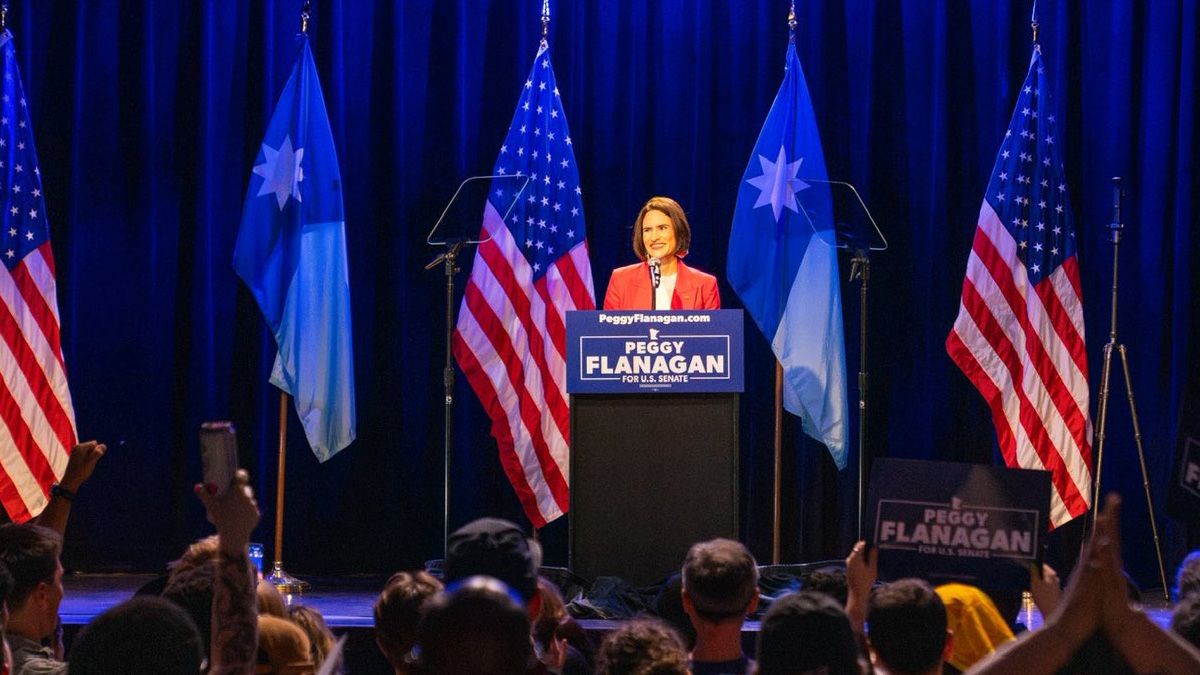
Celebrating in Minneapolis, Flanagan told supporters: "This didn't happen because of me. This happened because of you." She framed her campaign as a contest between grassroots support and moneyed interests.
Tafoya, addressing reporters after casting her ballot, argued Democrats had failed on public safety and fraud oversight, saying the contest was not about party but that "it's common sense versus crazy."
Immigration and funding shaped the race
The Democratic primary was heavily shaped by backlash to federal immigration enforcement in Minneapolis, an operation reported by the Guardian to have turned deadly. Immigration agents shot and killed Renee Good and Alex Pretti during the crackdown, according to the Associated Press, fuelling anger among Democratic primary voters.
Flanagan repeatedly criticised Craig's earlier vote for the Laken Riley Act, an immigration measure passed early in President Donald Trump's second term. Craig repudiated her own vote after the killings of Good and Pretti.
Campaign finance and the influence of pro-Israel donors also featured prominently. Craig's campaign raised US$12.7 million, with outside groups spending more than US$20 million on her behalf, while Flanagan's campaign raised roughly US$6.5 million with US$3 million in outside support.
According to the tracking website trackaipac.com, Craig received US$710,000 in donations linked to the American Israel Public Affairs Committee (AIPAC). Flanagan pledged to accept no corporate political action committee money and declined AIPAC-linked funding, a distinction her supporters credited for her win.
Bernie Sanders, writing on X, praised Flanagan's win over Craig's heavily funded campaign. He said Flanagan had been "outspent 7 to 1 by billionaire super PACs" and still prevailed. Sanders framed the result as evidence that voters were rejecting establishment politics in favour of substantive change.
Craig had drawn backing from Democratic establishment figures including House Speaker Hakeem Jeffries and former Speaker Nancy Pelosi. Flanagan was endorsed by Senators Bernie Sanders and Elizabeth Warren, as well as by Smith, the retiring incumbent.
Governor Tim Walz did not endorse either Democratic candidate, though his wife, Gwen Walz, backed Craig, a move widely read as a rebuke of her husband's two-term running mate.
If elected in November, Flanagan, a citizen of the White Earth Nation, would become the first Native American woman to serve in the US Senate. Minnesota has not elected a Republican to statewide office since 2006, though recent margins in presidential contests have narrowed.
Fraud scandal clouds broader landscape
Republicans are hoping a separate scandal involving fraud in state social service programmes will aid their chances in November. At least 65 people have been convicted in overlapping cases, with one former non-profit leader sentenced in May to 42 years in prison over a US$250 million scheme.
The scandal contributed to Walz's decision to abandon a bid for a third term as governor. In the parallel Republican gubernatorial primary, state House Speaker Lisa Demuth defeated Mike Lindell, the MyPillow founder and Trump ally, despite a Trump endorsement posted on Truth Social urging Lindell to a "BIG WIN." Demuth will face Senator Amy Klobuchar, who won the Democratic gubernatorial nomination, in November.
With control of the Senate potentially at stake, both parties are expected to pour further resources into Minnesota over the next three months.