Sarawak warns of local emergency as haze worsens across seven areas
Sarawak authorities have warned that a localised emergency could be declared if air pollution reaches an API reading of 500, as haze from Kalimantan pushes several areas into hazardous levels.

- Serian's API reached 476 as Sarawak monitored a possible localised emergency if pollution reaches 500.
- Smoke from Kalimantan is contributing to hazardous air quality across several areas of Sarawak.
- Sarawak plans cloud-seeding operations from 3 to 5 September, subject to suitable weather conditions.

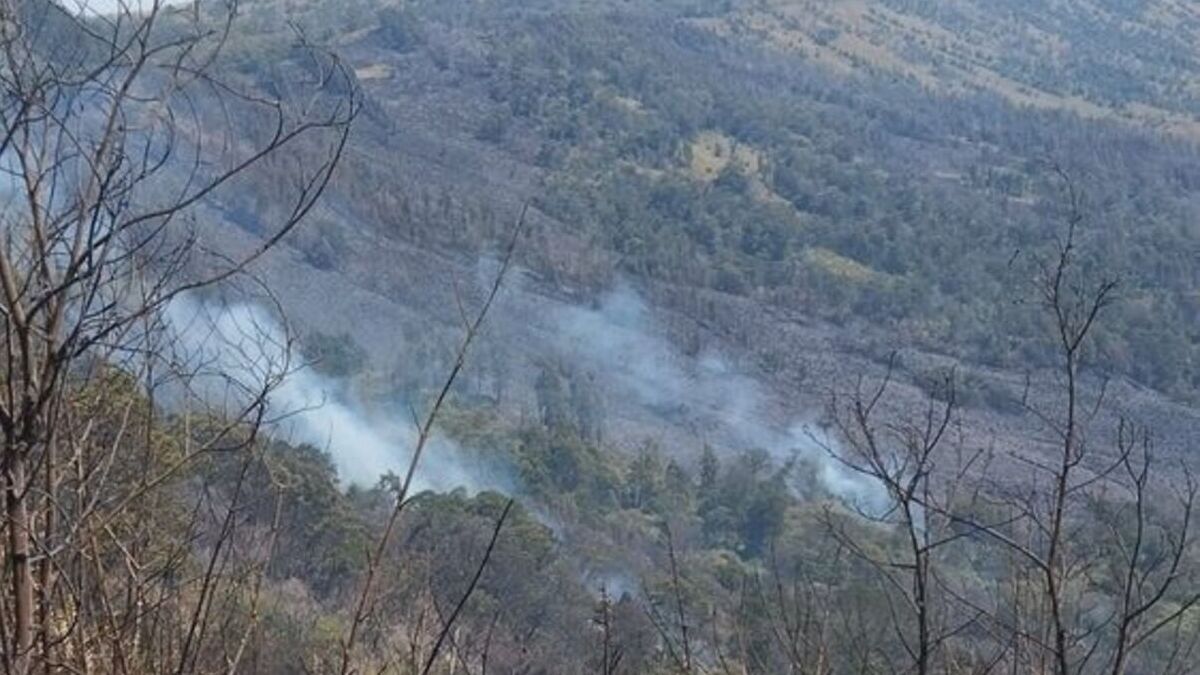
Haze from forest and peatland fires in Kalimantan has worsened air quality across parts of Malaysian Borneo, with several areas of Sarawak recording hazardous pollution levels and authorities warning that a localised emergency could be declared if the Air Pollutant Index (API) reaches 500.
Sarawak Deputy Premier Douglas Uggah Embas said on Monday (31 August) that an API reading of 500 would trigger a referral to Malaysia's National Disaster Management Agency (Nadma) for further action under disaster management procedures.
Any emergency declaration would apply only to the affected locality rather than the entire state. If declared, government and private-sector offices in the affected area would close, with only essential services allowed to operate.
The warning came as Serian's API approached the 500 threshold. The reading reached 476 at 8am before falling slightly to 451 by 2pm. Other locations, including Kuching, Samarahan, Lundu, Tebedu and Sri Aman, also remained in the hazardous category.
Serian approaches critical pollution level
Serian recorded an API of 475 at 10am on Monday, while Samarahan stood at 333 and Kuching at 331. Sri Aman had also entered the hazardous category with a reading of 331.
By 2pm, Kuching's API had risen to 354 and Samarahan's to 342. Lundu reached 395, while Tebedu recorded 400 and Sri Aman 332.
Three other areas — Sarikei, Sibu and Mukah — remained at very unhealthy levels, recording 275, 234 and 219 respectively.
Malaysia classifies API readings above 300 as hazardous, while readings between 201 and 300 are considered very unhealthy and those from 101 to 200 unhealthy.
The deterioration follows several days of worsening haze in Sarawak. On 29 August, only three locations had recorded readings above 200. By Monday morning, seven locations had reached the hazardous category.
Smoke from Kalimantan crosses into Sarawak
Malaysia's Environment Department said the worsening conditions were linked to transboundary haze from Indonesia.
The ASEAN Specialised Meteorological Centre (ASMC) detected widespread hotspots in Kalimantan, with smoke plumes from West Kalimantan moving northwards into western Sarawak.
On 29 August, satellite data identified 1,180 hotspots in Kalimantan, compared with 18 in Sumatra and 13 in Malaysia. Of the Malaysian hotspots, nine were in Sarawak and two in Sabah.
The Environment Department said moderate to thick transboundary haze was observed across West Kalimantan, western and central Sarawak, while haze was also present over much of Kalimantan and parts of Sumatra.
By 30 August, ASMC detected 324 hotspots in Kalimantan and 42 in Sumatra. The department said moderate transboundary smoke plumes from northern Kalimantan were also moving towards southern Sabah.
Sabah also records unhealthy air
Sabah, which lies closer to northern Kalimantan, has also begun experiencing deteriorating air quality.
Tawau recorded an API of 153 and Kota Kinabalu 122 at 11am on Monday, putting both locations in the unhealthy category. Sandakan and Keningau remained at moderate levels at the time.
Sabah Environment Department representative Nor Rashidah Mohd Ghazali said authorities were continuously monitoring the situation as the state was being affected by transboundary haze from forest and peatland fires in Kalimantan.
A separate fire in Kota Kinabalu also contributed to local deterioration. A blaze at Kampung Numbak on 30 August affected 202 stilt houses. Authorities said no other major fires had been reported around Kota Kinabalu, while bush fires previously detected in Tuaran and Kota Belud had been extinguished.
Sarawak prepares for possible emergency
Uggah said Sarawak authorities were closely monitoring the situation and would refer any locality reaching an API of 500 to the federal government.
He stressed that the threshold would not automatically result in an emergency declaration covering the whole state. Instead, the response would be limited to the affected locality.
The Sarawak Disaster Management Committee has also urged organisers to reconsider outdoor activities when API readings exceed 200, particularly activities involving children, older people and other vulnerable groups.
Sarawak's public health authorities have separately advised residents to reduce outdoor activities as pollution levels rise.
Cloud seeding planned as dry spell continues
Sarawak is also preparing cloud-seeding operations, partly because the prolonged dry weather has reduced water reserves.
Uggah said operations were expected to take place from 3 to 5 September, subject to suitable weather conditions. Four water treatment areas — Simunjan, Lingga, Spaoh and Lichok — have been identified as priorities.
The operation is intended not only to help reduce haze but also to replenish water supplies, with water levels at several dams and raw-water reservoirs reported to be critically low.
Authorities strengthen enforcement against open burning
Sabah authorities have also intensified patrols in areas considered vulnerable to open burning.
The Sabah Environment Department said 474 patrols had been conducted under the state's Open Burning Prevention Operation. Authorities are urging residents not to carry out open burning or allow their land or premises to be used for such activities.
Under Malaysia's Environmental Quality Act 1974, open-burning offences can result in substantial fines and imprisonment.
The public has been urged to report open burning and fires to the Fire and Rescue Department through 999 or the Environment Department's hotline.
With smoke continuing to move across Borneo and air quality fluctuating throughout the day, authorities in Sarawak and Sabah are maintaining close monitoring while coordinating with federal agencies over the transboundary haze.