Thai police uncover Chinese nominee network holding 33 luxury Bangkok houses
Thai economic crime police say a Chinese national used a bakery worker and her mother as nominee shareholders in 33 companies that bought 33 luxury Bangkok houses worth 1,275 million baht. Twenty-one people face investigation.
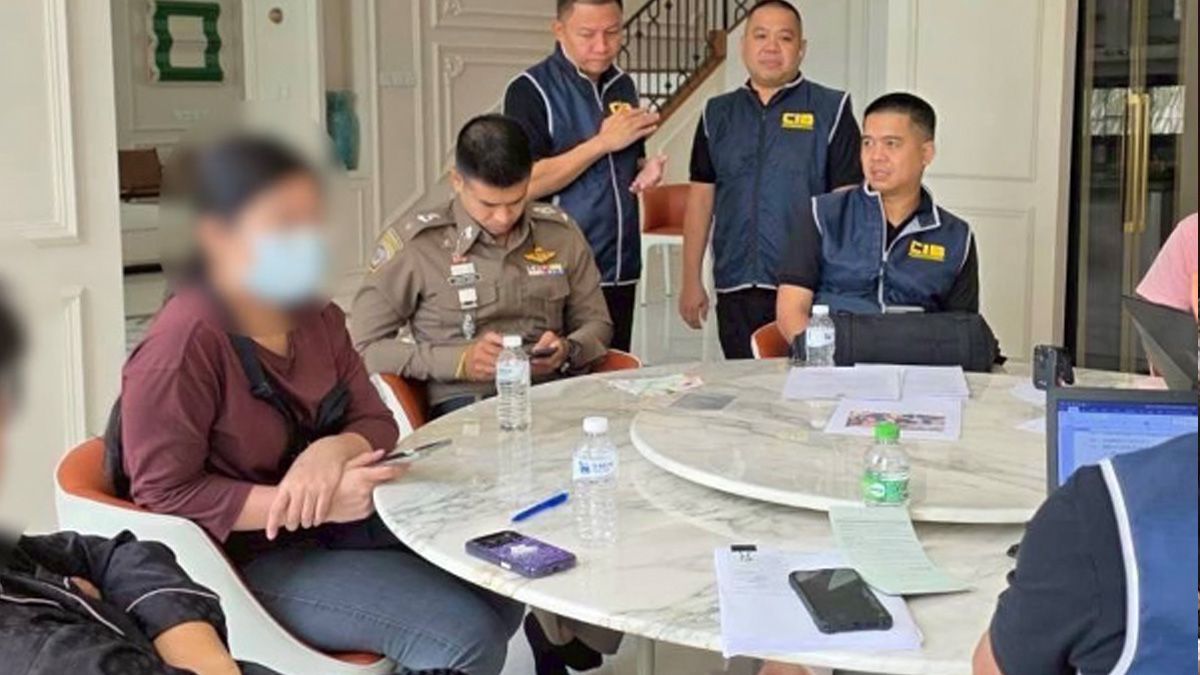
- Police allege 33 shell companies were used to buy 33 luxury houses in eastern Bangkok.
- Total value placed at 1,275 million baht; alleged financier Hao Deng remains at large.
- Twenty-one suspects face investigation under the Foreign Business Act and Land Code.

Thai police say they have broken up an alleged nominee network that used a Thai mother and daughter to hold 33 luxury houses in eastern Bangkok on behalf of a Chinese national, with the properties valued at more than 1,275 million baht, or about US$37.7 million.
According to local news report, the Economic Crime Suppression Division searched five luxury housing estates along Pattanakan and Krungthep Kreetha roads on Tuesday, 21 July 2026. Findings were announced the following day, Wednesday, 22 July 2026.
Pol Lt Gen Nathasak Chaonasai, head of the Central Investigation Bureau, said a Chinese man identified as Hao Deng used two women as shareholders and directors of 33 companies. The women were named as Piyanoot and her mother, Sakhon.
How the alleged structure worked
According to police, the companies were registered in a manner designed to disguise the true source of funds, then used to purchase houses that foreign nationals may not hold directly together with the land beneath them.
Pol Maj Gen Thatphum Jaruprat, commander of the Economic Crime Suppression Division, said the corporate vehicles were established specifically to circumvent restrictions on foreign ownership of landed property.
Investigators allege that a law office and an accountancy firm handled the process end to end, from registration with the registrar through to the eventual property purchases in the companies' names.
Both the registered capital of the companies and the purchase price of the houses are alleged by police to have originated with Hao Deng. Police say he is the partner of Piyanoot.
Police described Piyanoot as a bakery salesperson, while her mother, Sakhon, is said to operate a rubber smallholding in Loei province. Neither, investigators said, had income consistent with the value of the holdings.
When Chinese buyers approached, police allege, the shareholding structure of the relevant company was altered so that the buyer became a shareholder or director, transferring effective control of the house without a property transfer being recorded.
Other properties were allegedly passed to agency companies, themselves described by police as Chinese nominee vehicles, which then sought tenants or purchasers.
Complaints from neighbours
The investigation followed information that Chinese nationals were holding residential property and letting it within their own community, causing disturbance to nearby residents.
The Bangkok Post reported that police had earlier received complaints from Thai residents at an unnamed luxury estate, who said Chinese occupants behaved badly and caused annoyance to neighbours.
Items seized
Officers said they recovered three land title deeds and 30 sets of undated share transfer agreements already signed by the two Thai women. Police allege these were prepared in advance, awaiting instructions to change shareholders.
Also seized were 15 passports of several nationalities, 13 electronic devices, and objects resembling Thai and foreign banknotes with a nominal value of about 1.4 million baht.
Investigators additionally took 24 sets of documents comprising tenancy agreements, receipts, corporate records and financial statements, along with six company seals.
Charges and next steps
Police said they had traced financial flows and questioned witnesses, including the accountancy firm and two agency companies involved in letting the houses.
The investigation is being extended to 21 people in total, comprising four Thai nationals and 17 Chinese nationals. Police say the conduct falls within nominee offences under the Foreign Business Act and offences under the Land Code.
Hao Deng remains at large and is being sought, police said.
Investigators have reported the case to the Department of Lands so that steps may be taken to require disposal of the land and the structures built on it.
None of the allegations has been tested in court, and no findings of guilt have been made against any of the individuals or companies named by police.
Background
Thai law generally prohibits foreign nationals from owning land, though foreigners may own condominium units subject to quota limits. The use of Thai nominee shareholders to hold land through a company is a longstanding enforcement concern.
Successive Thai governments have said such arrangements distort residential property markets in Bangkok and in tourist provinces. Enforcement has historically been uneven, in part because nominee structures can be difficult to distinguish from genuine joint ventures.
The case is the latest in a series of investigations by Thai authorities into property and corporate arrangements associated with foreign residents in Bangkok's eastern suburbs.