Indonesian court convicts all 19 defendants in Singapore-linked baby trafficking case
An Indonesian court has convicted all 19 defendants in a baby trafficking case involving children allegedly sold to Singapore, sentencing the accused to prison terms of between three years and four months and seven years.
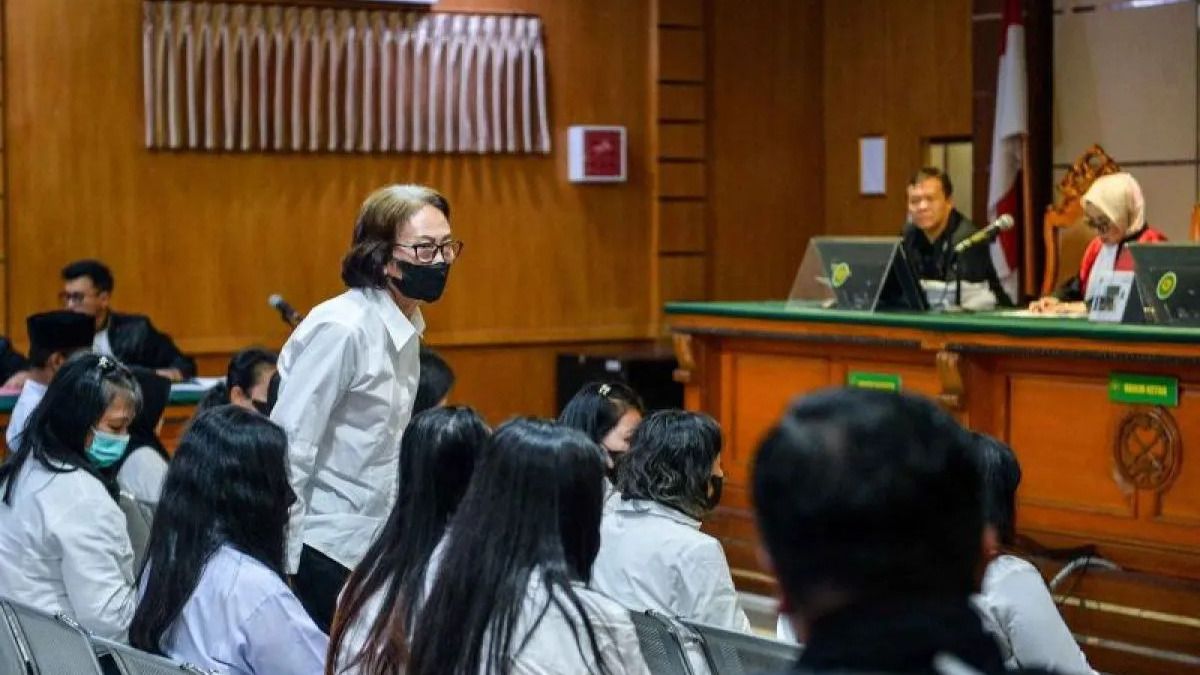
- An Indonesian court convicted all 19 defendants in the Singapore-linked baby trafficking case.
- Prosecutors alleged the syndicate trafficked at least 34 babies, some sold to Singapore for S$18,000 each.
- Authorities are continuing investigations into the wider network and the children's legal status.

A court in Indonesia has found all 19 defendants in a cross-border baby trafficking case guilty and imposed prison sentences ranging from three years and four months to seven years, concluding one of the country's most closely watched human trafficking trials involving babies allegedly sold to Singapore.
The verdicts were delivered on Tuesday at the Bandung Class IA Special District Court in West Java.
Lie Siu Luan, also known as Popo, who prosecutors described as the mastermind of the operation, received the heaviest sentence of seven years in prison. Astri Fitrinika, accused of recruiting 34 babies for the network, was sentenced to six years and seven months.
The sentences were lower than the 10-year prison terms sought by prosecutors for both defendants.
During the hearing, Astri was seen embracing other defendants in the courtroom and began crying after hearing the court's decision.
Court finds key defendants guilty
Presiding Judge Gatot Ardian Agustriono ruled that Popo had been legally proven to have committed human trafficking offences involving the recruitment, harbouring, transportation and transfer of individuals through abuse of power or exploitation of vulnerable circumstances.
The court found that she had violated provisions of Indonesia's Criminal Code and related legislation governing trafficking offences.
Astri was found guilty under the same legal provisions.
Another defendant, Lai Siu Ha, who was accused of providing false information and arranging documents for the babies, including birth certificates and Indonesian family registration documents, was sentenced to six years and seven months in prison.
Djaka Hamdani Hutabarat, the only male defendant among the 19 accused, was also sentenced to six years and seven months. Prosecutors said he acted as an intermediary in the trafficking operation. His wife, Elin Marlina, received the same sentence.
Twelve women who acted as carers for the babies or posed as their mothers each received prison sentences of three years and four months. Two other defendants, Mariani and Yenti, who allegedly served as brokers, received the same punishment.
Following the verdict, Lai Siu Ha filed an appeal, while another defendant, Tjen Se Ha, said she was still considering her legal options. Popo, Astri and the remaining defendants accepted the court's ruling.
Babies allegedly sold for S$18,000 each
Investigators have alleged that the trafficking network handled at least 34 babies, some of whom were sold to families in Singapore for S$18,000 (approximately US$14,000) per child.
Authorities believe at least 12 babies linked to the case remain in Singapore.
According to prosecutors, members of the syndicate collected babies from various locations across West Java before moving them to Depok, near Jakarta. The children were then allegedly transferred to a house in Pontianak, West Kalimantan, where they were cared for by individuals employed by the network.
Some of the babies were later transported to Singapore through Jakarta, which served as a transit point.
Singapore adoptive parent responds
A Singaporean adoptive parent identified only as David, whose adopted son is believed to be linked to the case, said his main concern remained the future of the child rather than the court's verdict.
"I do not want to focus on the court's decision itself. My primary concern from the beginning, and still today, is what will happen to our son," he told BBC News Indonesia.
David said he hoped authorities in both countries would act according to what they considered the child's best interests.
"Our only hope is to live a normal family life, like any other couple wishing to raise a child in a safe, stable and loving environment," he said.
He added that his family had spent nearly a year living with uncertainty while waiting for clarity about the child's future.
Questions remain over cross-border legal issues
Ni Made Martini Puteri, a criminologist and lecturer at the University of Indonesia, said cases involving multiple jurisdictions often present legal challenges.
She noted that questions could arise regarding whether Indonesian or Singaporean law should take precedence and whether bilateral agreements existed to address crimes of this nature.
Ni Made also highlighted concerns about determining responsibility within a trafficking network and identifying who ultimately benefited financially from the transactions.
She said biological mothers involved in such cases could themselves be victims of exploitation if they received only a small portion of the money generated by the sale of a child.
Child protection agency calls for wider investigation
Indonesia's Child Protection Commission (KPAI) said the convictions should not mark the end of efforts to dismantle the trafficking network.
KPAI commissioner Ai Maryati said investigators should continue pursuing those who organised and profited from the operation.
"We have urged authorities to dismantle the trafficking network not only on the surface but all the way to its roots, its masterminds and those who benefited from it," she told BBC News Indonesia.
Ai said many questions remained unanswered regarding how the network operated, including allegations that adoption procedures were used to move children overseas.
She also called for greater cooperation between Indonesian and Singaporean authorities to investigate possible links between individuals in Indonesia and organisations or agencies in Singapore.
"If the main suspect's testimony mentions an agency in Singapore, then it should be traceable through electronic transactions or financial records," she said.
Future of the children remains uncertain
According to public prosecutor Teti Saraswati, eight babies currently housed at the Muhammadiyah Healthy Baby Orphanage in Bandung will remain under state supervision through the institution, which operates under the West Java provincial social affairs authorities.
The status of babies currently in Singapore remains unresolved because investigations are ongoing.
Ni Made said decisions regarding the children should prioritise their welfare and best interests.
She said children who had grown up in Singapore with adoptive families should not automatically be removed from those environments, although they should retain the right to know their biological parents if their identities are established in the future.
KPAI, however, said authorities must first determine the children's legal status.
"If these children are trafficking victims, they should be returned. If they are said to have become adopted children, what is the legal basis for that? That remains unclear," Ai said.
The commission said it had identified 18 children in Singapore who were being traced and considered for possible repatriation. In Indonesia, seven children linked to the case have been identified, including three under institutional care and four under police protection.
During a visit to West Kalimantan, KPAI also encountered information regarding a child reported to have died, although the child's identity and whereabouts could not be verified.
Syndicate allegedly operated from 2023 to 2025
According to court documents, prosecutors alleged that the trafficking network operated between 2023 and 2025 through an organised structure in which members carried out different roles.
The indictment states that in 2023, Popo was contacted by a Singaporean citizen identified as Petter, who allegedly sought babies for adoption and requested complete supporting documentation, including birth certificates, identity cards, family registration documents and passports.
Court documents indicate that adoption paperwork linked to Singapore's Adoption of Children Act was later used in the process.
Prosecutors alleged that at least 10 adoption files were prepared using forged birth certificates and family registration documents.
The babies allegedly entered Singapore between 2023 and 2025 accompanied by members of the syndicate posing as biological parents or guardians.
According to the indictment, Popo subsequently instructed other members of the network to find babies that could be supplied through adoption arrangements.
Recruitment through social media
Court documents concerning Astri Fitrinika state that recruiters targeted mothers or families who were unwilling or unable to raise their children.
Police said during the investigation that syndicate members monitored social media platforms and joined online adoption groups. Some babies were allegedly reserved before birth.
Prosecutors said Astri recruited 34 babies, all from Bandung Regency in West Java.
According to chief prosecutor Sukanda, babies who were not accepted by prospective adopters in Singapore were sold elsewhere within Indonesia, including Jakarta, Tangerang and Surabaya.
Investigation began with baby abduction report
Authorities traced the trafficking network following a baby abduction report filed by Dani Hidayat in April 2025.
According to court documents, Dani had joined a Facebook group for prospective adoptive parents while his wife was pregnant, citing financial difficulties and substantial debt.
The case subsequently expanded into a wider investigation that uncovered the alleged trafficking operation.
Part of a broader pattern
The Singapore-linked case is one of several baby trafficking investigations uncovered in Indonesia in recent years.
Police reported dismantling a nationwide trafficking network in February 2026, arresting 12 suspects and rescuing seven babies.
Other cases have been uncovered in Medan, Pekanbaru, Ngawi, Bali and Yogyakarta, many involving alleged illegal adoption schemes and the use of forged documents.
Authorities have also reported that social media platforms such as Facebook and TikTok were used in some cases to connect sellers and buyers.
According to Indonesia's Ministry of Women's Empowerment and Child Protection, authorities recorded 91 child abduction cases linked to trafficking between 2022 and October 2025, involving 180 child victims.