Nicaragua's Ortega says country will hold no further elections
President Daniel Ortega has announced Nicaragua will not hold further elections, effectively cancelling the 2027 vote and deepening the Ortega-Murillo family's grip on power.
- Ortega says Nicaragua will hold no further elections, cancelling the planned November 2027 vote.
- Analysts call the move an escalation, citing fear of political dissent.
- Announcement follows years of crackdowns, mass imprisonments and citizenship revocations.

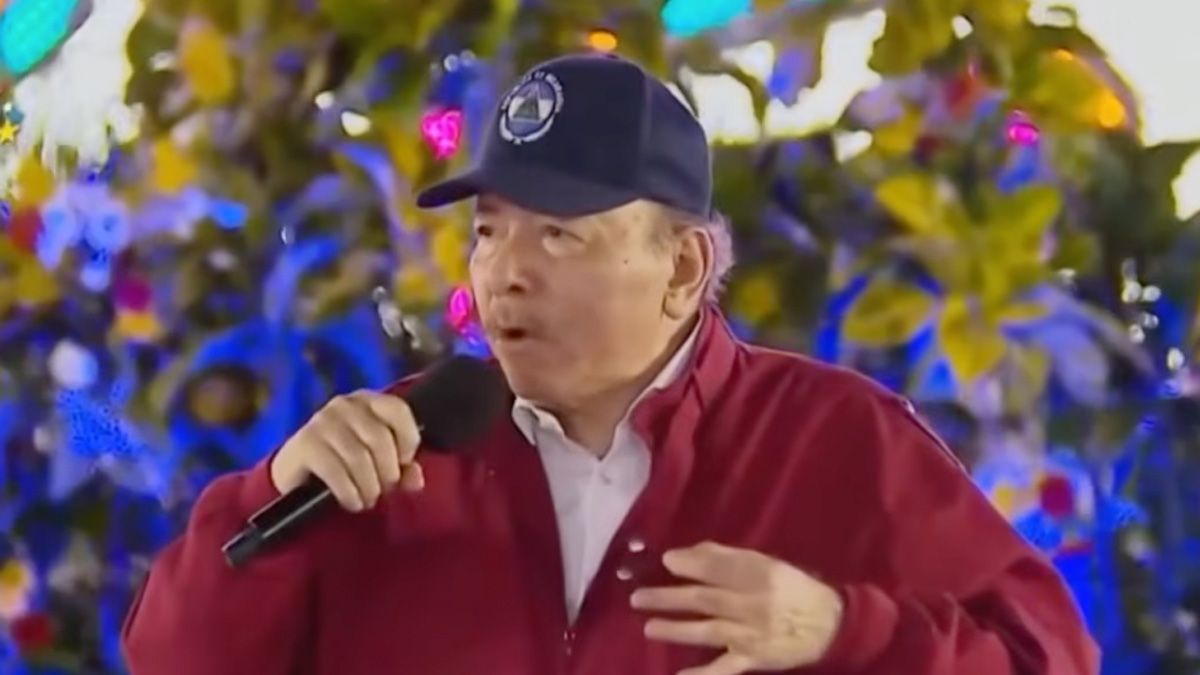
President Daniel Ortega has said Nicaragua will not hold any further elections, a declaration that effectively cancels the vote previously scheduled for November 2027 and marks a further consolidation of his nearly two-decade rule.
Ortega, 80, made the announcement on Sunday, 19 July 2026, during the official ceremony marking the 47th anniversary of the 1979 Sandinista Revolution, which toppled the dictatorship of Anastasio Somoza and first brought him to power.
"There won't be any more elections," Ortega said, addressing thousands of state employees who, according to local media reports, had been compelled to attend. He added: "Never, never, never."
The Nicaraguan leader said he would work with the National Assembly, which his government controls, to pass legislation he described as building "a wall, a barrier" against what he called "coup plotters and traitors".
Ortega did not clarify whether elections would be formally abolished or whether opposition parties would simply continue to be barred from participating, a practice already in place since the 2021 election.
Background: decades of tightening control
Ortega returned to the presidency in 2007 and has since rewritten the constitution, dismantled political opposition and extended his control over nearly all branches of government, alongside his wife and co-President, Rosario Murillo.
The government-controlled Congress voted in January 2025 to extend the presidential term from five to six years, delaying the next scheduled election from 2026 to November 2027.
Ortega declared himself the winner of the 2021 election after jailing all candidates capable of challenging him, a vote widely regarded internationally as illegitimate. The United States does not recognise his presidency and refers to the administration as the "Murillo-Ortega dictatorship".
Mass protests in 2018 prompted a government crackdown that, according to the United Nations and other organisations, killed more than 350 people, wounded hundreds more, jailed thousands and forced close to a million Nicaraguans into exile.
Reaction from analysts and rights groups
Tiziano Breda, senior Latin America analyst at the Armed Conflict Location and Event Data Project (ACLED), said the announcement showed Ortega and Murillo "have sealed the country's transition to a full-fledged family dictatorship."
Breda said the couple appeared afraid that any political opening could allow dissent to threaten their hold on power, suggesting their domestic support may be weakening. He added that, rather than staging a rigged vote, they had chosen to eliminate electoral competition entirely.
Juan Sebastián Chamorro, a 2021 presidential candidate who was jailed before being released to the United States in 2023 alongside more than 200 other political prisoners, said the move confirmed a long-standing plan to consolidate power within the Sandinista party, comparing it to one-party systems in China and Cuba.
Danny Ramírez Ayérdiz, a Nicaraguan lawyer and founder of the Interamerican Center for Legal Assistance in Human Rights, which investigates abuses by the Ortega-Murillo government from Argentina, said the announcement exposed "the face of a dictatorship" entrenching itself without shame. He warned it could signal harsher repression against those demanding elections or the government's removal.
Political prisoners and civil society restrictions
At least 46 people remain imprisoned in Nicaragua for political reasons, according to the Mechanism for Recognition of Political Prisoners, though Human Rights Watch has put the figure at around 50. The Nicaraguan government denies holding political prisoners.
Following the United States military operation that captured then-Venezuelan President Nicolás Maduro in January 2026, Nicaragua's government said it would release additional prisoners, a move widely seen as an attempt to ease external pressure. Little transparency has followed, and at least one imprisoned activist has since died.
During his Sunday speech, Ortega criticised the operation against Maduro, describing the killing of his security detail, many reportedly Cuban nationals, as "monstrous".
The United Nations, the United States, human rights organisations and more than 30 former Ibero-American presidents have blamed Ortega and Murillo for the death of Indigenous leader and four-term congressman Brooklyn Rivera, 73, who spent nearly three years imprisoned, according to the US State Department.
Since 2018, Nicaragua has shut down more than 5,600 non-governmental organisations, 29 universities and 58 media outlets, according to Human Rights Watch. Earlier in July, the government stripped licences from large numbers of lawyers, a move UN experts described as a "purge of the legal profession".
The government has also stripped 546 people of their Nicaraguan citizenship, according to Human Rights Watch, with many activists, religious leaders and politicians expelled to the United States and Guatemala. Several of those released described being held in isolation and subjected to physical and psychological torture.