Belgium approves occupied territories import ban and labour reforms before summer recess
Belgium's federal government has approved an import ban on goods from occupied Palestinian territories alongside labour reforms, aviation tax changes and other measures before Parliament's summer recess, while major budget challenges remain unresolved.
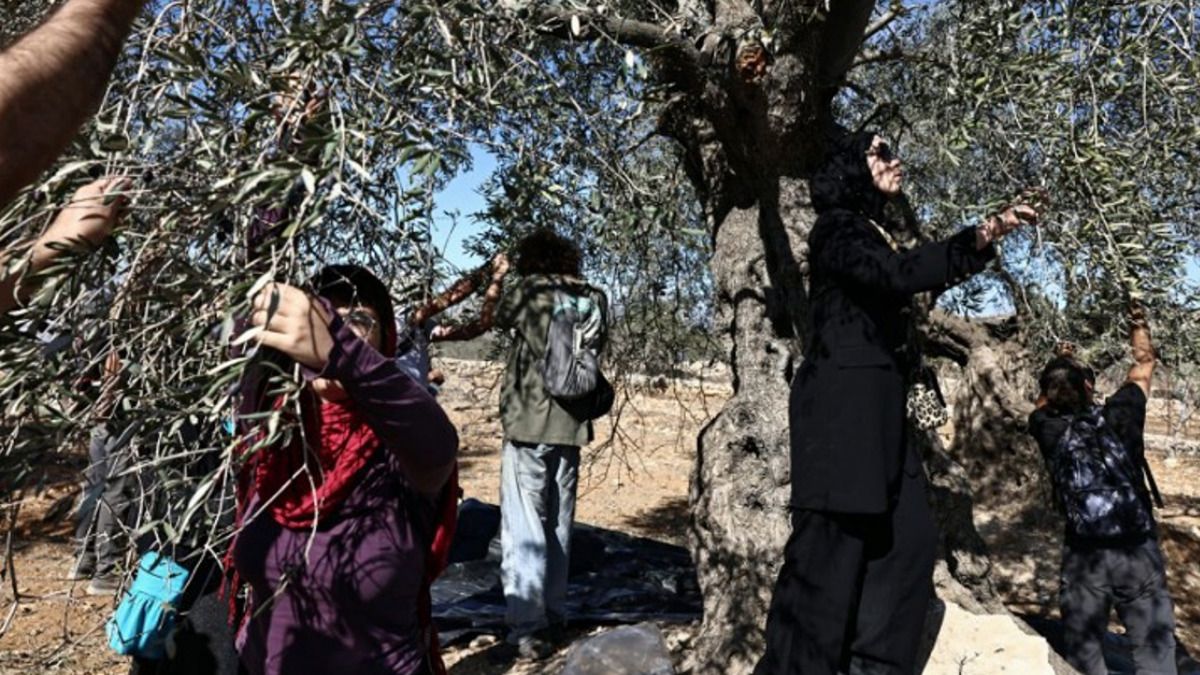
- Belgium approved an import ban on goods from occupied Palestinian territories before the summer recess.
- • Ministers also endorsed labour reforms, aviation tax changes and several domestic policy initiatives.
- • The government still needs €10 billion in budget measures by 2029 despite resolving dozens of policy files.

The Belgian federal government has approved a package of measures before the start of its summer recess, including an import ban on goods originating from occupied Palestinian territories, labour reforms, changes to aviation taxes, and other policy initiatives.
The decisions were adopted during the government's final meeting before the holiday period, concluding discussions on dozens of outstanding policy files.
Import ban linked to occupied Palestinian territories
Among the most significant measures was the approval of an import ban targeting goods from illegally occupied Palestinian territories.
According to the Belgian government, the measure was first proposed at the end of last summer in response to the conflict in Gaza, where Israel's military campaign has resulted in extensive destruction and a high civilian death toll.
Although the government has now formally approved the measure, the details of its implementation remain unclear. Belgian media reports indicate that questions remain over which products and sectors will be covered by the ban and whether it will include a so-called "sunset clause" that could limit its duration.
The decision comes amid wider discussions within the European Union over possible measures targeting Israeli settlements in occupied territories.
The European Commission recently circulated a document to EU member states outlining several possible options, including an import licensing system for settlement goods, tariffs, and a complete import ban.
According to Euractiv, Belgium joined France, Ireland, the Netherlands and Spain in supporting a total ban on such imports, while Germany and Italy opposed the proposal.
Any EU-wide measure could require unanimous support from member states if it is classified as a foreign policy decision.
Earlier in the week, Belgian Foreign Minister Maxime Prévot criticised what he described as a lack of urgency in European discussions on the issue.
"The Commission has now finally put some options on the table, spanning two pages. This gives the impression that it is more of a token gesture than a genuine intention to make progress," Prévot told reporters on Monday.
Working hours reform approved
The government also approved a reform of working-time calculations aimed at providing employers with greater flexibility.
Under the new system, working hours will be calculated on an annual basis rather than a weekly basis. The reform is intended to help companies manage seasonal fluctuations in labour demand without relying as heavily on temporary unemployment schemes.
Sectors expected to be particularly affected include tourism, leisure, horticulture, events and offshore industries, where workloads often vary significantly throughout the year.
The measure forms part of a broader package of labour market reforms pursued by the federal government.
Flight tax increase scaled back
The coalition also reached an agreement on the country's departure tax, commonly referred to as the flight tax.
The government had considered increasing the levy to €10 (approximately US$11.70) for flights longer than 500 kilometres. However, ministers ultimately agreed to raise the tax to €7 (approximately US$8.20) instead.
No further details were immediately released regarding the timing of the change or its expected impact on government revenues.
Other measures approved
In addition to the import ban and labour reforms, the government approved a number of other initiatives.
These include:
- A social agreement for Belgium's Defence sector.
- Minimum service level arrangements in prisons.
- The introduction of a family credit system.
- Measures to tighten Belgium's football law.
- Agreements relating to the country's energy norm.
The approvals formed part of a wider package covering approximately 88 government files that were finalised before the parliamentary summer break.
Belfius privatisation plans discussed
Ministers also discussed plans for the partial privatisation of Belfius, one of Belgium's largest banking groups.
The Belgian state currently owns 100 per cent of Belfius and intends to sell a 20 per cent stake.
The liberal Francophone party MR has proposed linking the partial privatisation to a merger between Belfius and the insurer Ethias. Finance Minister Jan Jambon of the New Flemish Alliance (N-VA) is expected to consult Belgium's regional authorities to determine whether they would support selling their shares.
No final decision on the proposed transaction was announced.
Budget challenge awaits after the summer
While the agreements allow ministers to begin their summer break with several major policy files resolved, significant fiscal challenges remain.
According to the government, Belgium must still identify €10 billion (approximately US$11.7 billion) in savings or additional revenues by 2029 in order to balance the federal budget.
The issue is expected to dominate discussions when ministers return from the summer recess, alongside the implementation of the measures approved before the holiday period.