Thailand's BOI approves US$688 million Nestlé coffee investment for Samut Prakan
Thailand's Board of Investment has approved a US$688 million (23 billion baht) Nestlé investment in an AI-driven smart factory in Samut Prakan, positioning the country as the firm's Nescafé production and logistics hub for Southeast Asia.
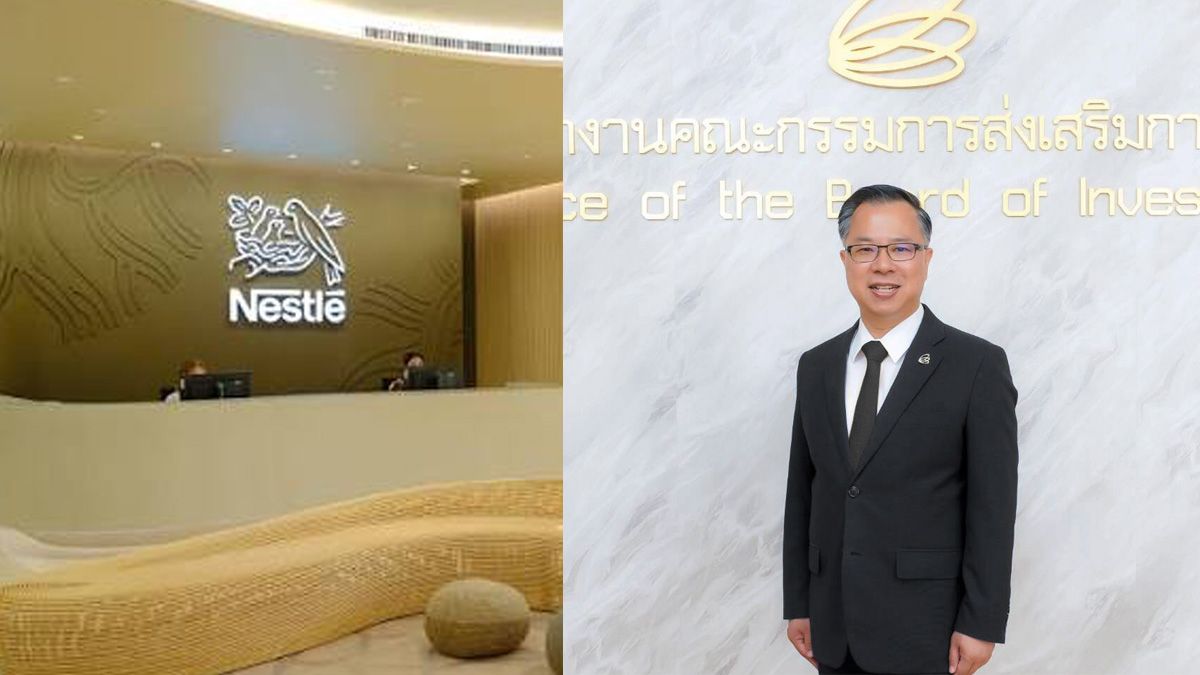

Thailand's Board of Investment (BOI) approved a US$688 million (23 billion baht) investment by Nestlé (Thai) Co., Ltd. on 8 July 2026 to build a smart factory and distribution centre, according to a statement from the BOI.
The greenfield project will deploy artificial intelligence and advanced automation, positioning Thailand as Nestlé's strategic production and logistics hub for Southeast Asia.
The facility will be located at the Araya Industrial Estate in Samut Prakan province and is scheduled to begin operations in the fourth quarter of 2028, with an annual capacity of 170,000 metric tons of Nescafé soluble coffee, coffee mixes and ready-to-drink beverages.
According to Nestlé, the plant will produce a broad range of core Nescafé products and include an on-site distribution centre. The project is expected to create more than 520 jobs for Thai engineers and technical specialists, including mid-level and highly skilled employees.
"This greenfield investment will support growing domestic and regional market demand while linking directly with our domestic supply chain," said Narit Therdsteerasukdi, Secretary-General of the BOI. He added that using local raw materials and sharing knowledge would boost the Thai coffee industry and strengthen the country's position as a regional food and beverage hub.
Nikhil Chand, Chairman and Chief Executive Officer of Nestlé Indochina, said Thailand has been an important market for Nestlé for more than 130 years. He described the investment as reflecting the company's confidence in the country and its commitment to Thai society, the economy, local communities and the environment.
The facility will use locally sourced ingredients including coffee beans, sugar and fresh milk produced by Thai farmers, Chand said, noting this would further support local agriculture and economic development.
Nestlé estimates the annual value of local ingredients and raw materials used at the new plant at US$130 million (4.3 billion baht). The BOI said the project's deep integration into the domestic economy was a key factor in its approval.
Alongside the manufacturing expansion, Nestlé plans to drive upstream agricultural development, including research into climate-resilient coffee varieties, distribution of high-quality saplings and training for local farmers in sustainable, high-yield cultivation practices.
Narit said the investment strengthens the entire coffee value chain, from farming and processing to logistics and export, and builds a stronger, more resource-efficient foundation for Thailand's food and beverage industry.
By integrating AI-driven systems and robotic automation, the facility aims to maximise operational efficiency and minimise its environmental footprint, in support of Thailand's Bio-Circular-Green (BCG) economic agenda.
Nestlé's Nescafé brand has led the Thai coffee market for more than 50 years, holding over half of the market share, according to the company.
Between 2018 and 2025, Nestlé invested more than 27.8 billion baht in Thailand to expand manufacturing capabilities across product categories, including ready-to-drink beverages and pet food.
The new investment follows Nestlé's legal disputes with the Mahagitsiri family over Nescafé operations in Thailand and related agreements, though the company's statement did not directly link the litigation to the new facility.