Hamas dissolves Gaza government in bid to shift ceasefire pressure onto Israel
Hamas has dissolved its Gaza government, a symbolic move analysts say is designed to portray the group as compliant with the ceasefire plan while shifting blame for its collapse onto Israel, which has yet to let a technocratic committee take power.
- Hamas dissolved its government but kept security control and made no mention of disarming.
- Analysts say the move is meant to shift ceasefire blame onto Israel, not Hamas.
- Israeli forces have expanded control of Gaza rather than withdrawing, stalling the plan.

Hamas announced on Monday, 6 July 2026, that it would dissolve its government in Gaza, a step experts say is intended to pressure Israel as the US-brokered ceasefire plan has stalled.
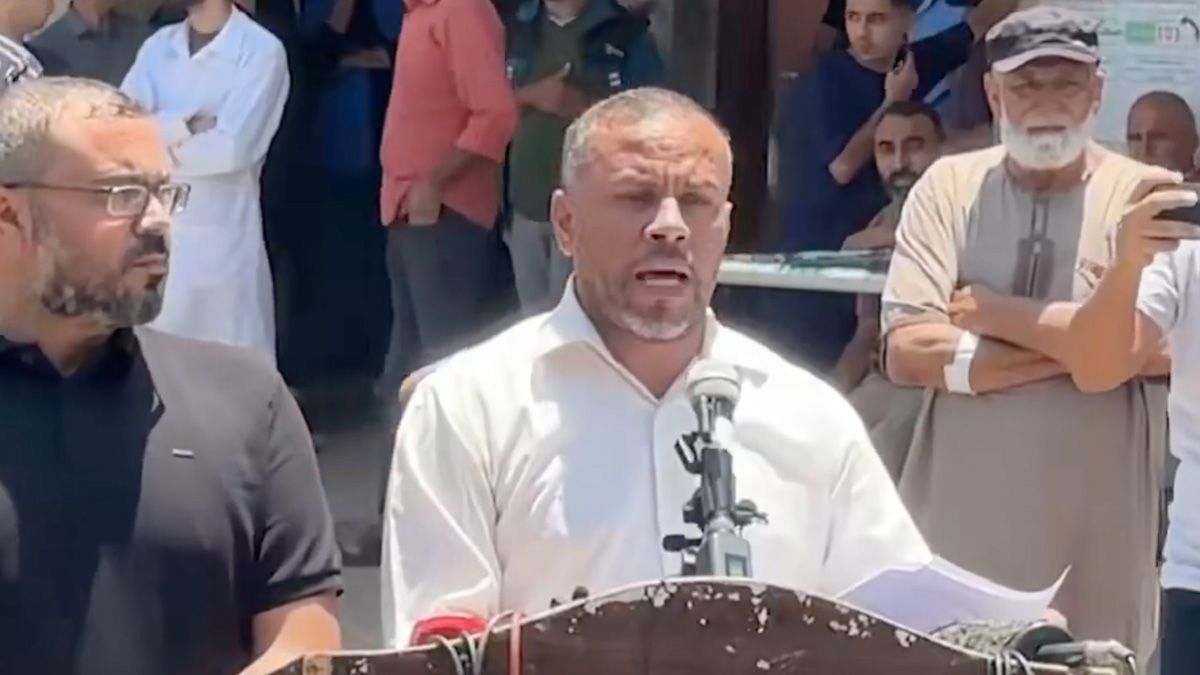
Ismail al-Thawabta, head of Hamas's Government Media Office, said the group was ready to hand governance to the National Committee for the Administration of Gaza (NCAG), the Palestinian technocratic body meant to lead the enclave under the agreement. Hamas's statement made no mention of disarmament, a key requirement of the ceasefire's second phase that the group has so far refused.
The announcement changes little in practice. Hamas and its security forces still firmly control the portion of Gaza not occupied by the Israeli military. But the symbolic move returns the spotlight to Israel, as Trump has pressed Prime Minister Benjamin Netanyahu to advance elements of the plan, including "pilot areas" where Palestinians would live under the NCAG's administration.
Hamas appealed directly to mediators and the international community to press Israel to let the committee begin work. "We call on all concerned and relevant parties to immediately accelerate the steps for the National Committee for the Administration of Gaza to enter quickly and assume its national and administrative duties and responsibilities," al-Thawabta said in a statement at Al-Aqsa Martyrs' Hospital in Gaza City.
The Board of Peace, created to advance the ceasefire agreement, said it had "taken note" of the announcement but would wait for "actions, not promises." It reiterated its position on X: "The core principle remains one authority, one law and one weapon," calling on Hamas to disarm.
Muhammad Shehada, a Gaza expert at the European Council on Foreign Relations, described the statement as an attempt by Hamas to "talk over Netanyahu's head" and appeal directly to Trump. "What they tried to emphasize in this statement is that they're willing to give up everything vis-a-vis governance from A to Z," Shehada said.
Shehada said Hamas views the NCAG as the only path to a Palestinian government the international community would recognise without reservation, calling the move "savvy" but likely too late. "Even if that bet pays off... Israel still has ultimate control over everything in Gaza," he said. "Israel would still foil NCAG."
The NCAG was envisioned in October as part of the ceasefire plan to govern Gaza after Hamas, but it has remained based in Cairo, unable to enter the territory or exercise any authority there.
Al-Thawabta said Hamas had made "full" administrative and legal preparations for the handover, and that the roughly 60,000 employees within Gaza's government would continue working as state employees under the NCAG. The timeline for any such transition remains unclear.
The Board of Peace said last week it held two days of "highly productive" meetings in Cyprus and is preparing for the NCAG to take over Gaza "once the right conditions are met," without specifying those conditions.
Michael Milshtein, head of the Palestinian Studies Forum at Tel Aviv University, said Hamas's announcement was not a surprise but an effort by the group and mediators to change the terms of the deadlock. "Hamas has clearly said that the move was intended to pave the way for a breakthrough," he said, adding that mediators Qatar, Turkey and Egypt are seeking to present a unified front to Trump so that US pressure builds on Israel to implement further stages of the agreement.
The ceasefire plan, which took effect in October, has stalled, with key provisions unrealised. Its first phase called for a complete end to fighting, but Israel has continued near-daily strikes; more than 1,000 people have been killed in Gaza since the ceasefire began, according to the Palestinian Ministry of Health, part of the broader Israel-Hamas war that has killed 73,098 Palestinians overall by the ministry's count.
Under the second phase, rather than withdrawing, Israel's military has expanded its footprint in Gaza, with a stated goal of occupying roughly 70 per cent of the territory, squeezing the enclave's two million Palestinians into an ever-shrinking area. An international force meant to secure parts of Gaza and enable the NCAG to begin governing has yet to materialise.
Hamas has meanwhile reasserted its authority in the areas of Gaza it still controls, including recently executing a Palestinian accused of collaborating with Israel.