Dead 15 years, still fighting for his innocence: inside Japan's Hino Town case
Dead 15 years, still legally guilty — until now. A man convicted of murder in Japan died in prison in 2011. Prosecutors have just conceded he probably wasn't the killer. His lawyers are now fighting to force disclosure of the victim's fingernail samples, withheld for decades, that could finally name the real killer.
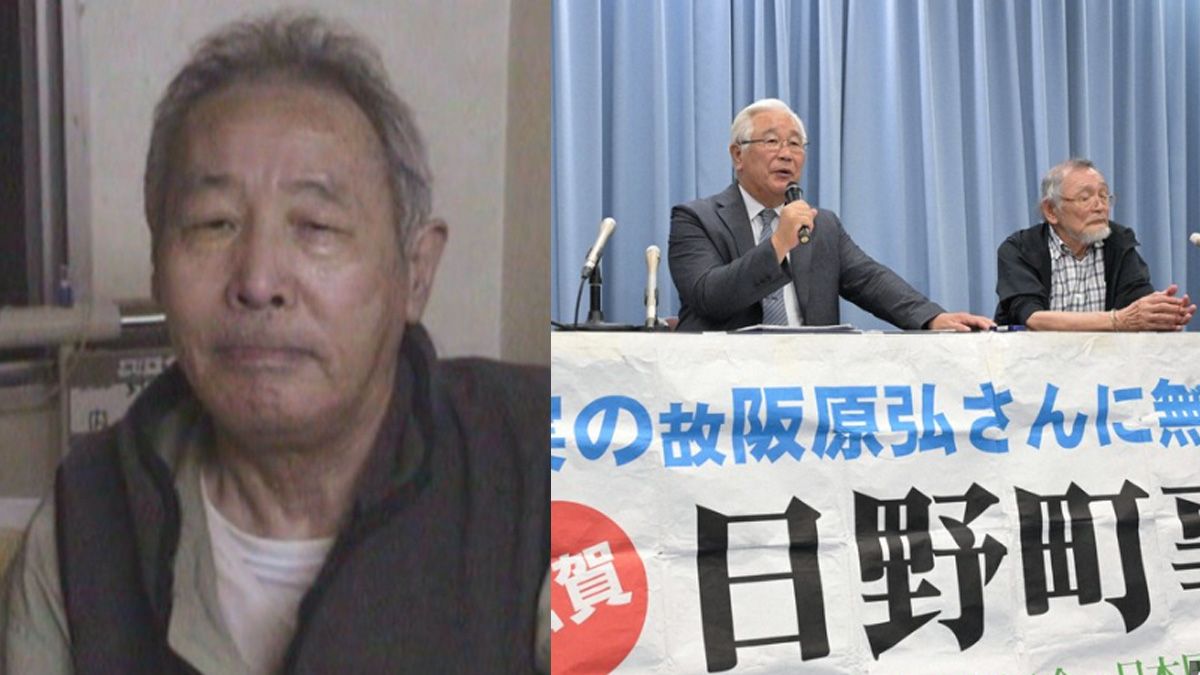

A man convicted of murder in Japan died in prison in 2011, still legally guilty. Fifteen years later, prosecutors are the ones conceding he probably wasn't the killer — and his lawyers are now in a pitched fight to force the state to hand over evidence they believe it has been sitting on for four decades.
The case, known in Japan as the Hino Town incident (日野町事件), is only the first instance in recent Japanese legal history of a posthumous retrial being confirmed for someone who died serving a life sentence or heavier. It is also, on the evidence now public, a remarkably thorough case study in how a wrongful conviction gets built — and how long it takes to come apart.
The latest move: a fight over the victim's fingernails
On June 30, 2026, defence lawyers for the late Hiromu Sakahara formally demanded that prosecutors disclose eight categories of evidence ahead of his retrial.
The most striking item: fingernail and skin samples taken from the victim's body during the original autopsy. The defence argues these could still carry biological traces of the real killer — precisely the kind of evidence that thirty years ago wasn't tested the way it would be today, but that modern forensic techniques could now examine.
Prosecutors, during earlier retrial-petition proceedings, told the defence this material's location was "unknown." The lawyers aren't accepting that answer going into a retrial where the prosecution is no longer even contesting guilt.
The rest of the disclosure request covers ground just as consequential: statements from witnesses connected to Sakahara's alibi, skin fragments recovered from the vinyl cord used to bind the victim, and investigators' original handwritten notes from the 1980s inquiry — records that are typically far more candid, and far more revealing of investigative process, than the polished official reports built from them.
This request follows a June 19 three-way conference between the Otsu District Court, prosecutors and the defence, at which prosecutors announced they would not present new evidence to argue for Sakahara's guilt at the retrial — a functional concession of the case.
The next three-way conference is scheduled for August 14. If prosecutors have not complied with the disclosure request by then, the defence says it will ask the Otsu District Court to issue a formal evidence disclosure order — a step that would put a judge, not the prosecutor's office, in charge of deciding what the defence gets to see.
The crime and the confession
The killing dates to December 1984. A 69-year-old woman who ran a small liquor shop in the town of Hino, Shiga Prefecture, went missing.
Her body was found about a month later, in January 1985. Her portable cash safe was recovered separately, already forced open, roughly four months after she disappeared. There was no physical evidence at the scene directly tying anyone to the crime — no weapon linked to a suspect, no forensic trace. The case sat unsolved for three years.
Sakahara was a regular at the shop, known to drink there. Police first brought him in for questioning in September 1985 after a fingerprint match, but he denied involvement and was released. He wasn't approached again until March 1988, when police summoned him a second time and, over a sustained and — by his family's later account — coercive interrogation, extracted a confession.
He was arrested on March 12, 1988, more than three years after the murder. He recanted almost immediately and maintained his innocence for the rest of his life, but the confession was already the spine of the prosecution's case.
The Otsu District Court convicted him on June 30, 1995, sentencing him to life imprisonment. The Osaka High Court upheld the conviction in May 1997. The Supreme Court dismissed his final appeal in September 2000, closing off ordinary avenues of appeal.
With no direct physical evidence in the case, conviction rested almost entirely on the confession itself and a set of circumstantial "indirect facts" (間接事実) — chief among them Sakahara's supposed ability to independently guide police to the spot where the stolen safe had been dumped, presented at trial as proof only the true killer could have possessed.
Sakahara filed his first retrial petition in November 2001. It went nowhere for a decade. He died in prison in March 2011, aged 75, still officially convicted, before the petition was ever ruled on.
The 2018 ruling: a case dismantled point by point
His family filed a second retrial petition in March 2012. On July 11, 2018, the Otsu District Court — after six years of review — granted it, in a decision (obtained and reviewed for this piece) running to roughly 200 pages.
Rather than resting on a single new fact, the court worked systematically through nearly every evidentiary pillar the original conviction depended on, and found each one considerably weaker than it had appeared at trial.
The confession's reliability. The court found the confession's account of the killing, the safe theft and the body's disposal was, in multiple respects, inconsistent with the objective physical evidence — not minor discrepancies, but contradictions serious enough that the court concluded the confession could not be treated as a reliable foundation for fact-finding. It also found reasonable doubt as to whether the confession was given voluntarily at all, given the family's long-standing allegations of assault and intimidation during the 1988 interrogation.
The safe: a wrench that couldn't have made the dent. Sakahara's confession described forcing open the safe with a wheel wrench (a tire-iron-type tool; he initially called it something closer to a "clip remover"), wedging it into gaps around the dial and lid and prying with leverage.
New forensic testing commissioned for the retrial petition — using a wrench of the same make and specification — examined the actual dent on the safe's lid: about 15mm across its flat base, roughly 2.5mm deep, meeting the lid surface at an angle of about 44 degrees. The expert testimony found that a wrench applied the way the confession described would strike the lid at an angle of 68 to 71.6 degrees — geometrically incapable of producing a flat, 44-degree dent.
The testimony went further: producing that specific dent shape with the wrench's cylindrical shaft would have required repeatedly repositioning the point of contact while applying force precisely — and the safe's handle would have broken under that process long before the dent could form. The court's conclusion was blunt: the damage was more consistent with something flat being struck against the lid, or the lid being dropped onto a flat surface, than with the tool and technique described in the confession.
The safe-site "reenactment": photos taken in the wrong order. The single strongest piece of "only the killer would know this" evidence was a police-supervised reenactment in which Sakahara supposedly walked investigators, on his own initiative, to the exact spot where the safe had been discarded — treated at trial as proof of guilty knowledge no innocent bystander could fake.
Newly disclosed photo negatives, examined for the retrial petition, showed that a large share of the photographs used in the official reenactment report — presented as documenting Sakahara pointing the way on the outbound walk — were in fact taken on the return leg, after the site had already been reached.
The court found this record-keeping "inappropriate" and the responsible officer's handling of it "careless" (粗雑), and concluded it could not rule out that Sakahara's apparent, independent knowledge of the site actually emerged through fragmentary cues from investigators and an unconscious back-and-forth between him and his questioners — a documented risk in reenactment procedures generally — rather than genuine, unprompted memory.
It's worth being precise about what the court did and didn't find here: it did not conclude that officers deliberately forged evidence. Its finding was that careless, unsupervised procedure created a real risk of unconsciously "coaching" a suspect toward the correct answer without anyone necessarily acting in bad faith — arguably a more unsettling problem than deliberate fabrication, because it requires no villain to produce a false conviction.
The fingerprint on the mirror. Investigators lifted Sakahara's fingerprints from a small hand mirror found in a desk drawer in the shop owner's private living quarters — evidence originally used to place him inside the home itself, not just the public shop area, since the owners said the mirror wasn't something they normally handled or offered to customers.
Sakahara's own account of touching a mirror on an earlier, innocent occasion (borrowing one to shave) described a different, rectangular mirror, not the round one in question — a discrepancy the original trial treated as further proof he had no innocent reason to have touched it. Materials reviewed at the retrial-petition stage reopened questions about the mirror's condition and provenance that the original trial had not fully addressed, weakening the inference that the only occasion he could have touched it was during the crime itself.
The wrist-binding method. Sakahara's confession described binding the victim's wrists with the same cord used to strangle her, using a technique he said he knew from earlier work at a butcher shop — wrapping meat in bamboo bark. The original courts treated this as a specialised skill only he would plausibly have.
Examination of the actual surviving cord and the contemporaneous 1985 crime-scene report found the real binding method differed in some respects from Sakahara's demonstrated re-creation (a different number of wraps, for instance), and — separately — noted the general meat-wrapping technique he described is common enough among people with any butchery or market work experience that it isn't the distinctive marker of guilt the original trial treated it as. Physical evidence also raised doubt about whether the same cord used for strangulation was really reused to bind the wrists at all, as the confession claimed.
Motive. The original theory held that Sakahara killed for roughly ¥50,000 in cash from the safe, leaving behind old coins and postal savings passbooks worth considerably more — explained at trial as an opportunistic grab for drinking money. Postal savings records obtained for the retrial petition showed Sakahara's own household held more than ¥20 million in savings at the time of the murder, undercutting the idea that he was desperate enough for a small amount of drinking money to commit murder.
Cause and manner of death. The autopsy found the victim died of asphyxiation from manual strangulation, with separate, disputed evidence about the ligature marks on her neck. Competing medical opinions submitted at the retrial-petition stage disputed whether the wound pattern — including a distinct comma-shaped mark near the victim's right ear — was consistent with the position and grip described in the confession, or better explained by a different attacker position and method entirely.
The alibi, and witness c3. Sakahara's alibi placed him, on the night of the murder, drinking and later sleeping at the home of an acquaintance's wife — a woman referred to in the proceedings as witness "c3," who shared Sakahara's religious faith. At the original trial, c3 and her husband denied he had been there, and that denial was one of the most important pieces of evidence used to brand his alibi false.
New evidence obtained for the retrial petition — recorded interviews spanning 2005 to 2016 — showed c3 telling defence lawyers at one point that Sakahara genuinely had been drinking and sleeping at her house that night, then months later telling a prosecutor the opposite was true, then years later telling other people versions consistent with the alibi again.
The court concluded her account shifted depending on who was asking her and what they seemed to want to hear, and that her original trial testimony — which, read closely, was actually a string of "I don't remember" answers rather than a clear denial — could no longer be relied upon as the anchor for ruling Sakahara's alibi false.
Taken individually, several of these findings might not have moved a court. Taken together — a confession contradicted by tool-mark forensics, a "guilty knowledge" reenactment built on mishandled photographs, a fingerprint whose innocent explanation was never properly excluded, a signature knot technique that didn't quite match, a motive undercut by the defendant's own bank records, medical evidence in genuine dispute, and a key alibi witness whose story visibly moved with her audience — the Otsu District Court concluded the standard for retrial under Japan's Code of Criminal Procedure had been met: evidence clear enough that it should have led to an acquittal.
The appeals prosecutors kept losing
Prosecutors did not accept the 2018 ruling. The Osaka High Court reviewed it and, in February 2023, upheld the retrial order, again finding room to question whether the investigation had been conducted properly and whether the confession was truly voluntary.
Prosecutors pushed further, filing a special appeal to the Supreme Court — the narrowest and most difficult route left to them, reserved for constitutional questions and precedent conflicts rather than ordinary factual disputes.
On February 24, 2026, the Supreme Court's Second Petty Bench dismissed that appeal, finalising the retrial order. It was, by multiple accounts, the first time in recent Japanese legal history that a posthumous retrial has been confirmed for a defendant who died serving a life sentence or a heavier penalty — a marker of just how exceptional this case is even within Japan's own, generally very cautious, retrial system.
What's actually left to fight about
With prosecutors now declining to argue for guilt at all, an acquittal at the retrial itself looks close to certain — it would simply arrive roughly 15 years after Sakahara's death and 42 years after the crime.
What's genuinely still contested is the evidence fight: whether prosecutors will hand over the fingernail and skin samples, the alibi witness statements, and the investigators' notes that the defence says could finally identify who really committed the murder.
None of it can change the outcome for Sakahara. It could, in principle, do what the original 1980s investigation arguably never did — point toward an actual suspect, while the trail is still not completely cold.
Why it should matter beyond Japan
The Hino Town case is worth attention well outside Japan, not as a story of a single injustice but as one of the more detailed judicial records anywhere of exactly how a confession-and-circumstantial-evidence conviction can be built, hold for decades, and then come apart once someone finally tests it properly.
The most exportable lesson is the "unconscious guidance" finding around the safe-site reenactment: a suspect's apparent "special knowledge" of a crime scene, produced under police supervision, is not reliable proof of guilt unless the process guarding against inadvertent coaching is genuinely airtight — a caution directly relevant to any justice system, including several in this region, that still relies on confessions and suspect-guided crime-scene walkthroughs as courtroom evidence.
It's also a sober data point on timeline: even once courts start finding serious problems with a case, correcting it can still take decades — long enough, here, that the person it happened to never lived to see the outcome.