Indonesia police uncover alleged China-imported cyanide trafficking network
Indonesian police have seized 18.1 tonnes of sodium cyanide allegedly imported from China and South Korea and distributed to unlicensed gold miners, naming two suspects as investigators continue examining the supply chain.
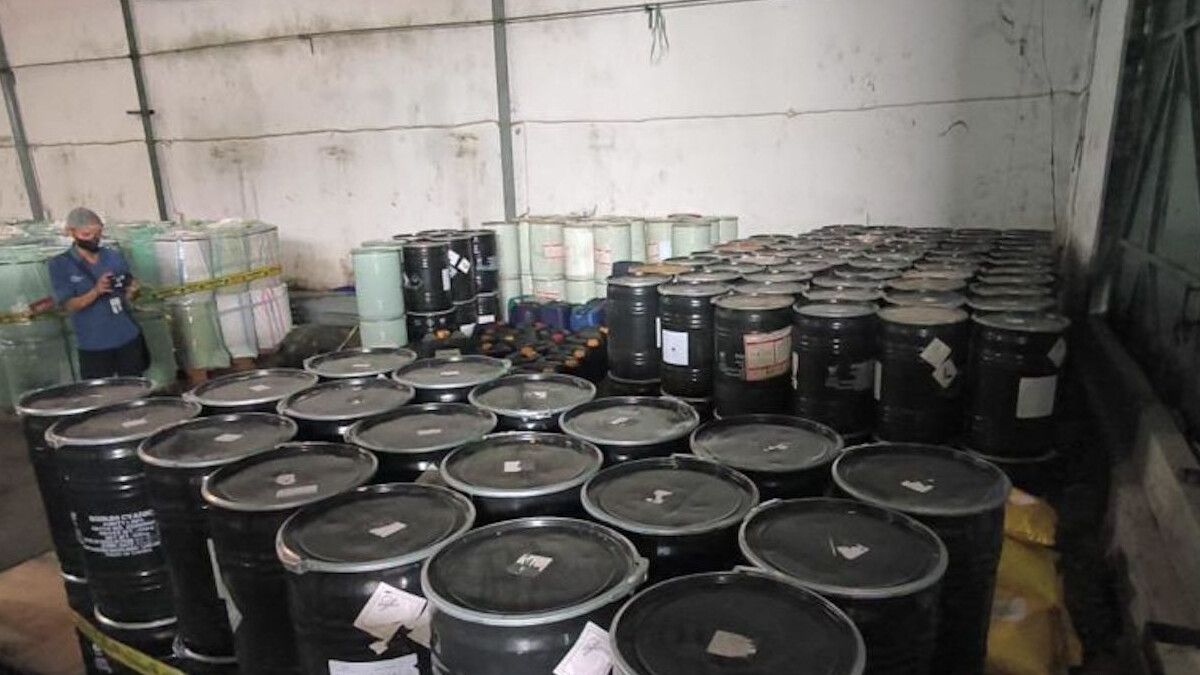
- Police seized 18.1 tonnes of sodium cyanide from three locations in Bekasi and West Jakarta.
- Investigators allege the hazardous chemical was imported without entering authorised distribution channels.
- Two suspects face charges carrying penalties of up to five years' imprisonment and substantial fines.

Indonesia’s National Police have uncovered an alleged illegal sodium cyanide trading operation involving hazardous chemicals imported from China and distributed to unlicensed gold miners across several regions of the country, authorities said on Tuesday.
Investigators from the Economic and Special Crimes Directorate (Dittipideksus) of the National Police Criminal Investigation Agency (Bareskrim Polri) seized 18.1 tonnes of sodium cyanide and named two suspects, identified only as S, also known as U, and DW.
Brigadier General Ade Safri Simanjuntak, Director of Economic and Special Crimes at Bareskrim Polri, said the investigation began after police received information about the alleged sale of sodium cyanide to unlicensed gold mining operators.
According to investigators, the hazardous chemical was suspected to have been imported from China and South Korea before being distributed outside Indonesia’s official monitoring and licensing system.
“There were indications of illegal cyanide trading involving unlicensed gold miners in several parts of Indonesia, with the substance suspected to have been imported from China,” Ade Safri said.
The case has drawn attention to the alleged importation of large quantities of sodium cyanide from China, a chemical commonly used in gold extraction processes. Police said the substance entered illegal distribution channels and was sold without the permits required under Indonesian regulations.
Investigators found indications that the operators involved were trading sodium cyanide without obtaining the licences mandated by law.
“The investigation found indications that the business operators were trading sodium cyanide without possessing the licences required under the applicable regulations,” Ade Safri said.
Police said the chemical was subsequently distributed to mining operators without passing through government supervision and control mechanisms.
As part of the investigation, officers searched three locations in Bekasi and Jakarta believed to be used as storage and distribution facilities for the imported cyanide.
At a site in Pondok Gede, Bekasi, investigators seized 54 drums of sodium cyanide. Authorities estimated the value of each drum at approximately 38.542 million rupiah (about US$2,360).
Further searches led officers to a warehouse in the Kebon 200 area of Kamal, Kalideres, West Jakarta, where they confiscated 160 drums. Another 148 drums were seized from a freight warehouse on Jalan Raya Perjuangan in Kebon Jeruk, West Jakarta. The contents at both locations were estimated to be worth around 40.5 million rupiah (about US$2,480) per drum.
In total, police seized 362 drums containing approximately 18.1 tonnes of sodium cyanide.
“The total evidence secured amounts to 362 drums, or 18.1 tonnes of sodium cyanide, with an estimated value of 14.56 billion rupiah,” Ade Safri said.
The seized material, valued at around US$892,000, is believed to form part of an illegal distribution network supplying hazardous chemicals to unlicensed mining activities.
Authorities said the investigation identified the two suspects as key figures in the alleged operation. Police have not disclosed further details about their specific roles.
The suspects have been charged under Article 106 in conjunction with Article 24 Paragraph (1) of Law No. 7 of 2024, as amended by Article 46 of Law No. 6 of 2023 concerning the enactment of Law No. 2 of 2022 on Job Creation. Conviction under the provision carries a maximum sentence of four years in prison or a fine of 10 billion rupiah (about US$612,000).
They also face charges under Article 62 in conjunction with Article 8 Paragraph (1) of Law No. 8 of 1999 on Consumer Protection, which carries a maximum penalty of five years’ imprisonment or a fine of 2 billion rupiah (about US$122,000).
Police said the investigation remains ongoing as authorities continue to examine the supply chain and distribution network linked to the seized sodium cyanide.
Sodium cyanide is classified as a hazardous chemical and is widely used in industrial applications, including gold processing. Its handling, storage and distribution are subject to strict regulatory controls in Indonesia.
Authorities said the case highlights efforts by Bareskrim Polri to tackle the illegal trade of hazardous substances and to prevent chemicals imported from abroad, particularly from China, from entering unregulated distribution channels within Indonesia.