Why Isn't the woman who lied facing charges alongside WUSG's admin in recent defamation case?
Ariffin Sha of Wake Up Singapore was charged with criminal defamation over a false miscarriage story at KKH published in 2022, while the woman who fabricated the tale has not been charged. Why the discrepancy in accountability?

I find myself perplexed and troubled by a recent case involving Ariffin Sha, the administrator of Wake Up Singapore (WUSG).
On 24 April, Ariffin was charged with criminal defamation for publishing an article about a purported miscarriage at KK Women’s and Children’s Hospital (KKH) in 2022.
The charge stems from a post dated 23 March 2022, in which WUSG carried a harrowing account titled "The baby is probably dead – Woman shares a harrowing account of her miscarriage at KKH A&E."
This article suggested that a woman suffered a miscarriage after a lengthy wait at the hospital's Accident & Emergency Department, due to alleged mismanagement of healthcare services.
Two days after the article's publication, on 25 March 2022, KKH refuted the allegations as false and filed a police report.
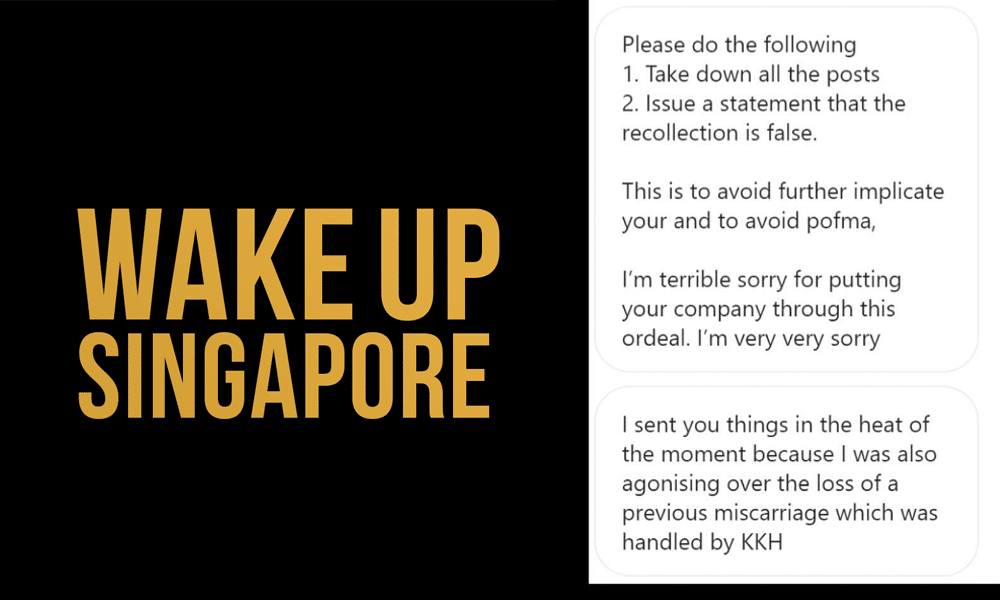
The situation took an even more dramatic turn when the source of the article, the woman involved, admitted to fabricating the entire story after KKH went public with its findings.
Following that, WUSG immediately issued an apology, stating that her evidence might have been doctored, including call logs and invoices.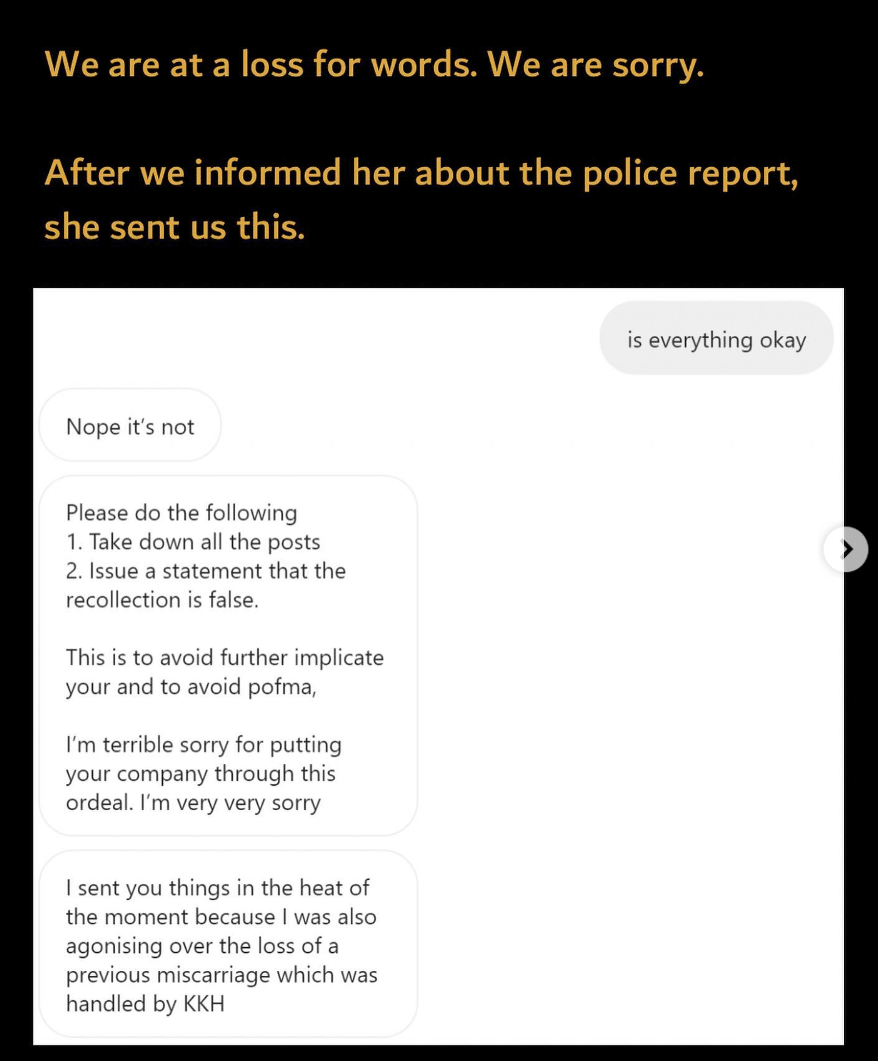
Despite her admission to WUSG of lying about her circumstances and the significant impact of her actions on KKH's reputation, she has not been charged by the police after their lengthy two-year investigation into the case.
This raises a critical question: Why is the woman, whose fabricated story led to the defamation charge against Ariffin, not facing any legal consequences? Is she going to be even issued with a stern warning?
This query of prosecution discretion becomes more pressing when considering past instances of criminal defamation, such as my own case in 2018 involving Daniel de Costa, where both the publisher and the writer of the defamatory content were held accountable.
In our case, both parties were subjected to a raid at our residences in 2018 following a police report filed by an officer and subsequently faced charges under Section 499, accused of defaming the cabinet by alleging corruption—before the case involving S Iswaran came to light in 2023.
If a similar logic of criminal culpability were applied, shouldn’t the woman also be held accountable, especially given her admission of falsehood?
Note that section 499 reads, "Whoever, by words either spoken or intended to be read, or by signs, or by visible representations, makes or publishes any imputation concerning any person, intending to harm, or knowing or having reason to believe that such imputation will harm, the reputation of such person, is said, except in the cases hereinafter excepted, to defame that person."
Given that the woman knew what she was telling WUSG was untrue, she surely would have understood that her actions could harm the reputation of KKH.
On the contrary, WUSG immediately retracted the post once it was informed that the information provided was false and obediently complied with the directions under the POFMA correction directive issued.
Yet, ultimately, they decided to charge only the publisher and not the person who lied.
This somehow suggests to me a potentially unsettling trend where individuals or entities that publish based on provided information without knowing it to be false, face harsher repercussions than those who originate the lies.
This situation mirrors the broader social and political implications observed in other high-profile cases, such as the controversy surrounding former Workers' Party MP Raeesah Khan.
It seems that those who are deceived into spreading misinformation may end up shouldering more severe consequences than the deceivers themselves.