Gaza faces imminent mass death due to severe food shortages, warns monitor
Extreme food shortages in Gaza, surpassing famine levels, says global hunger monitor. 70% in northern Gaza face severe scarcity. Immediate ceasefire and food surge crucial.
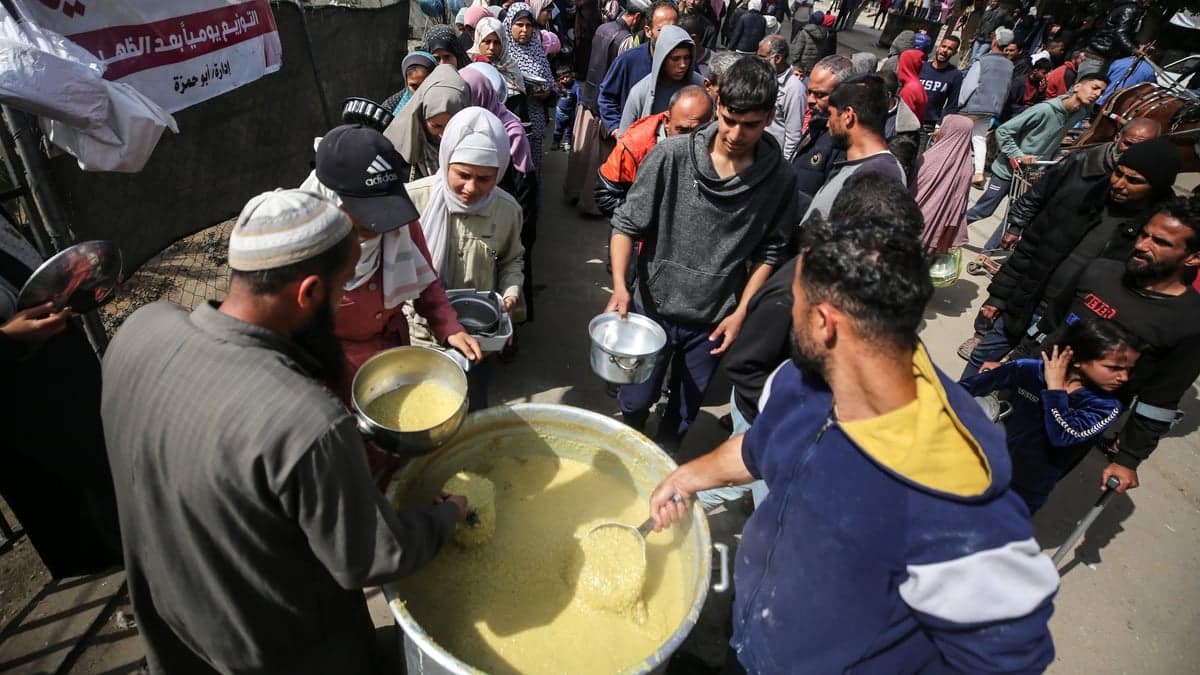

JERUSALEM: The Gaza Strip is confronting an alarming crisis as extreme food shortages, surpassing famine levels, threaten mass casualties unless urgent action is taken, according to the global hunger monitor on Monday (18 Mar).
The Integrated Food-Security Phase Classification (IPC), a trusted source for UN agencies, revealed that 70% of individuals in certain areas of northern Gaza are experiencing the most severe form of food scarcity, well over the 20% benchmark for famine designation.
While precise data on mortality rates is lacking, the IPC estimated that residents could soon face famine-like conditions, defined as the death of two individuals per 10,000 daily due to starvation or related health issues.
Gaza's health ministry reported that 27 children and three adults have already succumbed to malnutrition.
To avert a humanitarian catastrophe, the ministry emphasized the critical need for an immediate ceasefire and a substantial influx of food supplies to regions isolated by conflict.
"The actions needed to prevent famine require an immediate political decision for a ceasefire together with a significant and immediate increase in humanitarian and commercial access to the entire population of Gaza," it said.
https://twitter.com/UNRWA/status/1769732242148917668
Half of population on the brink of famine
Approximately 1.1 million Gazans, nearly half the population, are grappling with "catastrophic" food shortages, with roughly 300,000 individuals in areas on the brink of famine-like conditions.
The looming specter of a manmade famine in Gaza has elicited robust condemnation of Israel from Western allies, marking the strongest rebuke since the conflict with Hamas militants erupted after a deadly attack on Israeli territory on 7 October.
EU foreign policy chief Josep Borrell underscored the gravity of the situation, asserting that Gaza is no longer teetering on the brink of famine but is, in fact, in a state of famine.
Borrell condemned the use of starvation as a weapon of war, attributing the crisis to Israeli actions.
In response, Israeli Foreign Minister Israel Katz on X, defended Israel's actions, urging Borrell to acknowledge Israel's right to self-defense against Hamas' actions.
Katz highlighted Israel's efforts to facilitate extensive humanitarian aid delivery to Gaza through various channels, including land, air, and sea routes, despite disruptions by Hamas militants.
UN Secretary-General Antonio Guterres condemned the dire situation in Gaza and called on Israel to grant unrestricted access to all parts of the territory.
Meanwhile, aid agencies continue to face challenges in delivering and distributing supplies safely, particularly in the northern regions of Gaza.
Hospital assault
In a separate development, Israeli forces launched a major assault on Al Shifa hospital in Gaza City, claiming to have targeted Hamas fighters within the compound.
The hospital, once Gaza's largest medical facility, now stands as one of the few remaining operational centers in the north of the territory.
Israeli military spokesperson Rear Admiral Daniel Hagari reported that the operation led to the apprehension of over 200 suspected terrorists. However, one Israeli soldier lost his life in the operation.
As tensions persist, residents in Gaza brace for intensified conflict amid mounting humanitarian concerns.
The war began when Hamas fighters stormed into Israel, killing 1,200 people and capturing 253 hostages according to Israeli tallies.
Since then, Israel's assault has killed more than 31,000 Gazans, according to Palestinian health officials.