Rubio says Starlink access in Ukraine is Musk’s decision, not the White House’s
US Secretary of State Marco Rubio says SpaceX and Elon Musk, not the White House, decide Ukraine’s access to Starlink. His remarks follow reports that Musk ordered a slowdown of Starshield, the military-grade service Ukraine relies on.
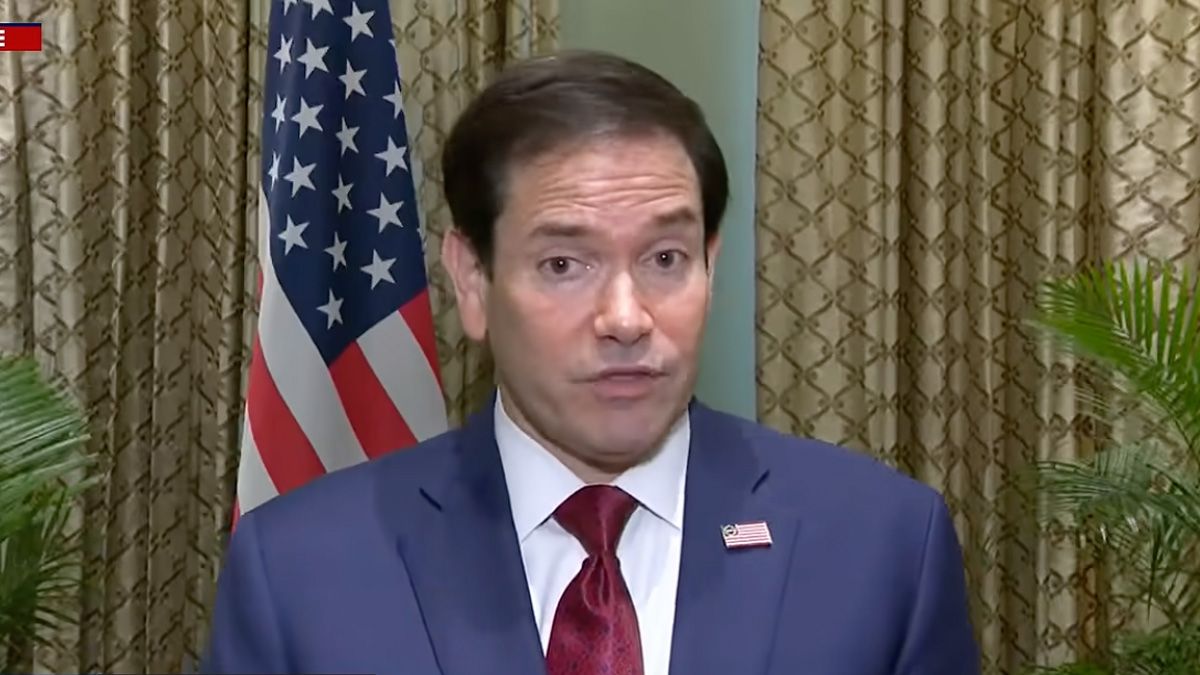

US Secretary of State Marco Rubio said on Wednesday (21 October 2026) that decisions on Ukraine’s access to Starlink rest with SpaceX and its chief executive, Elon Musk, not the White House.
His remarks, made to reporters during a visit to India, suggested that Musk may have restricted Kyiv’s access to the satellite service, which Ukraine depends on for battlefield communications and drone operations.
The comments followed a report by The Wall Street Journal on Tuesday (20 October 2026) that Musk had ordered last week’s slowdown of Starshield, the military-grade version of Starlink that Ukraine uses to defend itself against Russian attacks.
“I’m not aware that we knew about this decision beforehand. But that’s irrelevant,” Rubio told reporters.
“The bottom line is that that is governed by a private commercial contract as to how their stuff can be used and what speeds they’ll allow it to be used at,” he added.
Reuters reported that the comments are likely to intensify concerns in Washington over Musk’s ability to influence US foreign policy. They also represent an apparent shift in the administration’s position.
Conflicting accounts of who ordered the slowdown
According to The Wall Street Journal, one person said Musk, President Donald Trump and White House officials discussed the matter before the slowdown. Two people said Musk and the president discussed it in the days afterwards.
The newspaper reported that the two men spoke in a call soon after the slowdown became public, while Trump was campaigning last week.
CBS News separately reported, citing people familiar with the matter, that a decision by Musk led to the restrictions. Its sources said Musk held multiple conversations with administration officials beforehand, seeking clarity on the president’s thinking.
According to the same sources, Musk has expressed distaste at SpaceX being seen as profiting from the continuing war between Russia and Ukraine. CBS News said it remained unclear how the order to curtail service was carried out.
That account differs from an earlier exclusive report by Reuters on 15 October 2026. Citing two US officials and a Western official briefed on the matter, Reuters said the order to limit the system came from inside the White House.
Ukrainian President Volodymyr Zelensky has also asserted that the decision came from the White House. The administration has denied this.
Musk himself has pointed to Washington. Last week, he wrote on X: “Any limits on speed or usage are decided by the US military and ultimately POTUS.”
Musk and SpaceX did not respond to requests for comment from Reuters or CBS News.
Shifting positions within the administration
Asked on Wednesday whether Musk had ordered the slowdown, Trump told reporters: “I don’t know who did it, but I was not involved.”
Last Friday, Trump had said: “I don’t know if it was anybody, because it wasn’t me. And I don’t think it was Elon.” He added that “it’s the same as it’s always been”.
On Monday (19 October 2026), he said he was seeking details on who was responsible. “I don’t know who it was, but I’d like to find out,” he said, according to CBS News.
Rubio’s latest comments also mark a shift from his own earlier position. Before departing for Uzbekistan and India on Saturday (17 October 2026), he said no one had ordered the slowdown, drawing criticism from lawmakers in both parties.
“I’m not sure Zelensky knows what he’s talking about, but it wasn’t deliberate,” Rubio said at the time. “Nobody ordered that Starlink speed to be slowed down. It sort of happened.”
He also suggested then that Ukraine had never had access to Starshield in the first place. Zelensky has said both Starlink and Starshield services in Ukraine were disrupted.
In remarks broadcast by PBS NewsHour, Rubio said the president “has nothing to do with the decisions that are made by Starlink and Starshield”, adding that SpaceX was a private company the president could not direct.
Defence Secretary Pete Hegseth on Tuesday also framed the issue as a commercial matter. “We haven’t pulled anything back,” he told reporters.
“There are terms of service that ultimately need to be complied to. And that’s where Starlink has the option to make those decisions,” Hegseth said, adding that the Pentagon had not issued “any directives or anything like that”.
Reuters noted that no US official has publicly said they have pressed SpaceX to reverse any cutoffs.
How the throttling affects Ukraine’s drones
Starshield is a military-grade satellite network built by SpaceX for the US government and its partners. According to CBS News, the US government pays for the service and controls access to it. It is not available in Russia.
According to retired US Air Force Colonel Charles Galbreath, now at the Air Force Association’s Mitchell Institute, Starlink is contractor-owned and contractor-operated, while Starshield is meant to be government-owned but contractor-operated.
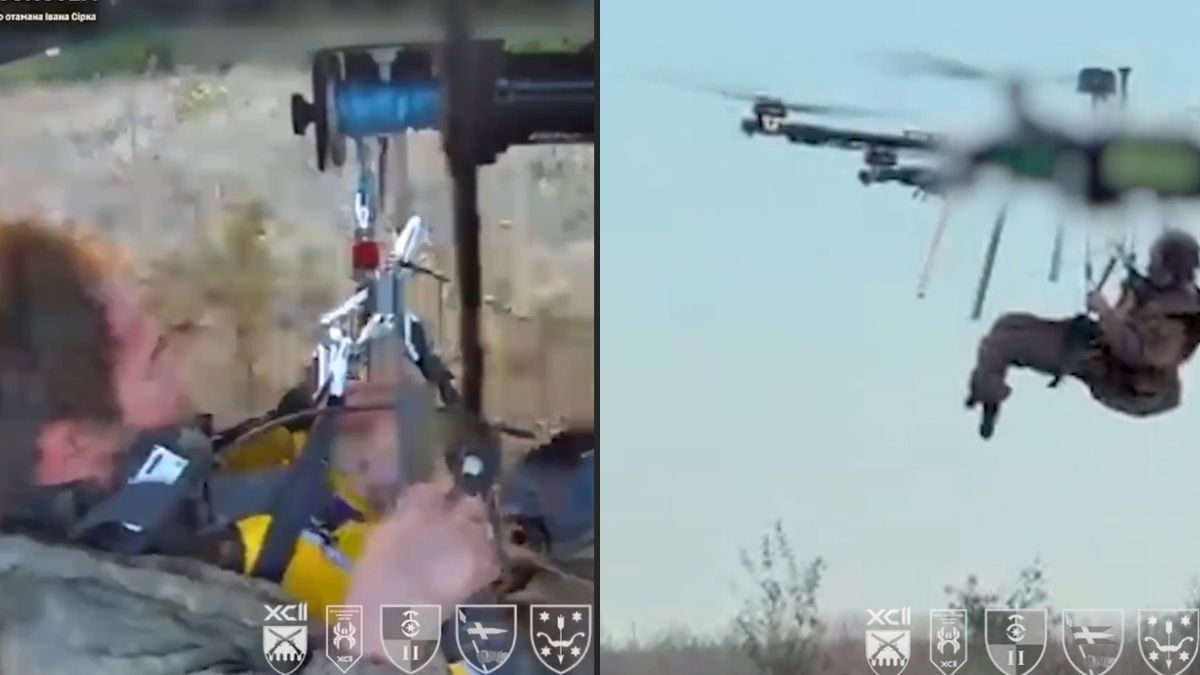
PBS NewsHour reported that higher-end Ukrainian units attach Starshield receivers directly to drones. The receivers are faster and more heavily encrypted than Starlink, making them much harder for Russia to jam.
Regular Starlink terminals have a speed cap of 70 km/h, above which the connection degrades, CBS News reported. Starshield has no artificial cap and is known to work at speeds of at least 160 km/h.
Ukrainian officials and soldiers told CBS News that their military suddenly began experiencing a throttling effect last week, making missions with fast-moving drones more difficult. Sources in Ukraine’s Ministry of Defence said SpaceX had imposed the restrictions unilaterally.
Ukrainian units reported link drops at speeds as low as 90 km/h. This rendered inoperable the strike drones that cruise at 160 km/h or more and form the backbone of Ukraine’s mid-range strikes.
PBS NewsHour reported that SpaceX limited receiver speeds on the drones to about 100 mph (161 km/h). Zelensky told NBC News that the maximum speed was 161 km/h.
According to an analysis by Dimko Zhluktenko, a drone pilot and analyst in the Armed Forces of Ukraine, the degradation has cost Ukraine an estimated tens of millions of US dollars in losses.
Zelensky said on Saturday that the limits had prevented Ukraine from using Starshield to shoot down Shahed attack drones. He earlier wrote on X that Russia was trying to exploit the problems, as Ukrainian interceptor drones depend on the connection.
Ukrainian officials told PBS NewsHour that their ability to intercept Russia’s jet-powered drones remained hampered. The programme reported that a drone strike on apartments in Kyiv had killed two people.
The officials said they did not mind who had limited the speed; they simply wanted it fixed.
Zelensky’s office told CBS News on Wednesday that Ukraine’s use of the system was still throttled. On Tuesday, in Oslo, Zelensky said he had discussed “the situation with Starlink/Starshield, which needs to be restored” with Rubio.
Risks to US congressional delegation
A Senate Democratic aide said the slowdown, which coincided with a bipartisan US congressional delegation’s visit to Kyiv from 13 to 16 October 2026, put lawmakers and staff at risk, along with 230 US personnel on the ground.
The aide said Russia was now using jet-powered Shahed drones capable of 280 mph (450 km/h) or more, which require faster defensive drones to counter.
“It’s a basic math problem. If you have a 280-mph object coming toward you, you are not going to be able to counter it with something that goes 100 mph,” the aide said.
The aide added that Kyiv had lost many air assets on the first night of the slowdown, and that drones were jeopardising the ability of delegation members and staff to reach official shelters.
A bipartisan group of senators asked the Pentagon’s internal watchdog last week to investigate. Republican Representative Mike Turner of Ohio told CBS’s Face the Nation that “lives are at risk and lives are lost over these things”.
Expert questions authority over the system
Galbreath told PBS NewsHour that Musk, as a private citizen, “should not be able to” throttle Starshield, since the system should be under government control.
He said decisions affecting military operations should involve the commanders of US Space Command and US European Command (EUCOM) and the Chairman of the Joint Chiefs of Staff, in consultation with the president.
“If Elon Musk unilaterally made that decision, those three should be standing up and saying, you don’t have that authority, put it back the way it belongs,” Galbreath said.
He noted that the US military and intelligence community also depend heavily on SpaceX’s Falcon rockets for launches. He called for an investigation and for checks ensuring national security decisions go through national security channels.
Strained ties between Washington and Kyiv
The dispute comes as relations between Zelensky and Washington have sunk to new lows. According to Reuters, Trump announced a deal to buy Russian diesel, waived new sanctions on Moscow and told Kyiv to stop attacking Russian refineries.
Reuters also reported that Trump has urged Ukrainians to replace Zelensky.
Zelensky has said Russia struck Ukraine without warning from the US and that deliveries of key interceptor missiles have slowed, CBS News reported. A senior Pentagon official said there had been no change in policy on intelligence sharing.
In a Newsmax interview, Trump called Zelensky “not a good guy for us to deal with” and described Ukrainian strikes on Russian refineries as a “disgrace”. He added: “I’m not a big fan of Zelensky.”