Tony Fernandes rejects Reuters report that Malaysian govt may ask rival airlines to take over AirAsia’s domestic routes
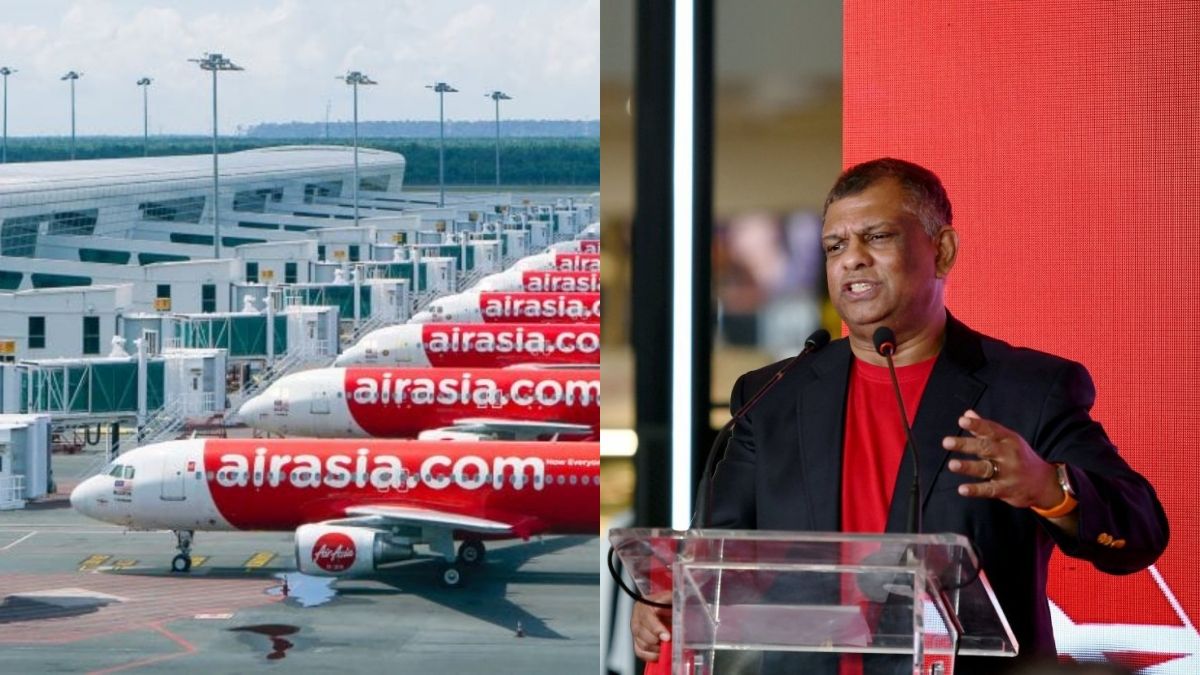
AirAsia founder Tony Fernandes has rejected a Reuters report that the Malaysian government was considering rival airlines taking over the carrier’s domestic market share, calling the report irresponsible and inaccurate.
- Tony Fernandes denied that the Malaysian government had asked rival airlines to replace AirAsia’s domestic operations.
- He said AirAsia’s second-quarter difficulties were driven mainly by higher jet fuel prices and foreign-exchange losses.
- AirAsia expects stronger liquidity and passenger growth as it adjusts fares and its cost structure.

KUALA LUMPUR, MALAYSIA: AirAsia founder and advisor Tan Sri Tony Fernandes has rejected a Reuters report that the Malaysian government was considering whether rival airlines could absorb the budget carrier’s domestic market share.
Speaking at a media briefing on 18 September 2026, Fernandes, who is also Capital A CEO, described the report as “irresponsible” and said it contained inaccuracies that did not factually reflect AirAsia’s financial position.
Fernandes said the government had not made such a request and called reports based on unnamed sources “ludicrous”.
“How do you replace 100 airplanes in Malaysia? You can’t,” he said, pointing to AirAsia’s cost structure, brands, markets, networks and interlining arrangements.
He said he was surprised that the report had generated a headline suggesting AirAsia required government assistance to survive.
Fernandes said the funding AirAsia was seeking was intended to reduce its cost structure rather than indicate that the group was facing collapse or a liquidity crisis.
Reuters had reported that the government asked Malaysia Airlines and Batik Air whether they could absorb AirAsia’s domestic routes and passengers as part of scenario planning while authorities monitored the carrier’s financial position.
The report also said the discussions had not resulted in any decision to take over AirAsia’s operations.
AirAsia’s financial position
Fernandes acknowledged that the group experienced a difficult second quarter, partly because of the US-Iran conflict in the Middle East pushed jet fuel prices above US$200 a barrel.
He said AirAsia had sold tickets based on an assumed fuel price of US$85 a barrel, creating additional pressure on its finances.
AirAsia’s current liabilities stood at RM18.4 billion (approximately US$4.51 billion) as of 30 June, compared with cash and bank balances of RM954 million.
The airline reported a net loss of RM831 million for the second quarter ended 30 June, including RM331 million in foreign-exchange losses.
Fernandes said investors should examine the group’s third-quarter numbers, which he expected would demonstrate the amount of cash available and show that AirAsia was not facing a liquidity crunch.
“We just have to adjust our cost structure and fares and by the end of the third quarter, the liquidity is catching up,” he said.
“This is an adjustment. If oil prices stay at this level, all airlines will have to adjust.”
Passenger targets
Fernandes said AirAsia remained on track to carry 60 million passengers in 2026 and was targeting 80 million passengers in 2027.
The group had carried 43 million passengers by the end of the second quarter.
Its load factor stood at 80% in the third quarter, while Fernandes said bookings for the fourth quarter remained strong.
He also expressed optimism about operations in Indonesia, the Philippines and Thailand.
Fernandes said AirAsia’s current difficulties were “far, far” less severe than those experienced during the Covid-19 pandemic.
He defended the carrier’s “strong liquidity” and its ability to manage cash, saying the current difficulties were largely linked to geopolitical tensions and higher fuel prices while travel demand remained strong.
Market reaction
AirAsia controls about 60% of Malaysia’s domestic market, making its financial position significant for the country’s aviation sector.
The airline has been affected by sharply higher jet fuel costs. Average prices rose 66% in the second quarter from the previous quarter to US$183 a barrel.
AirAsia shares closed 21% lower on 17 September following the Reuters report. Malaysian financial markets had been closed on 16 September for a public holiday.
The shares were trading about 2% lower on 18 September after falling as much as 5% earlier in the session.
The stock has lost more than 70% of its value so far in 2026.
Fernandes said AirAsia’s 100 aircraft could not be replaced in Malaysia overnight.
“No one can replace” AirAsia, he said, citing the scale of its operations and established network.
The Reuters report said the government’s discussions with Malaysia Airlines and Batik Air formed part of scenario planning as authorities monitored AirAsia’s financial health.
Fernandes, however, maintained that the group was adjusting to higher fuel costs through changes to fares and its cost structure while continuing to expand passenger volumes.