Chinese state firm supplied Russia with drone materials, investigation finds
A Chinese state-owned company supplied Russia with 46 metric tons of PAN precursor used in carbon-fibre production, enough for components for about 1,300 Geran-type attack drones, according to an investigation based on Russian customs and transport records.
- Jilin Chemical Fiber Group supplied 46 metric tons of PAN precursor to a Russian carbon-fibre producer.
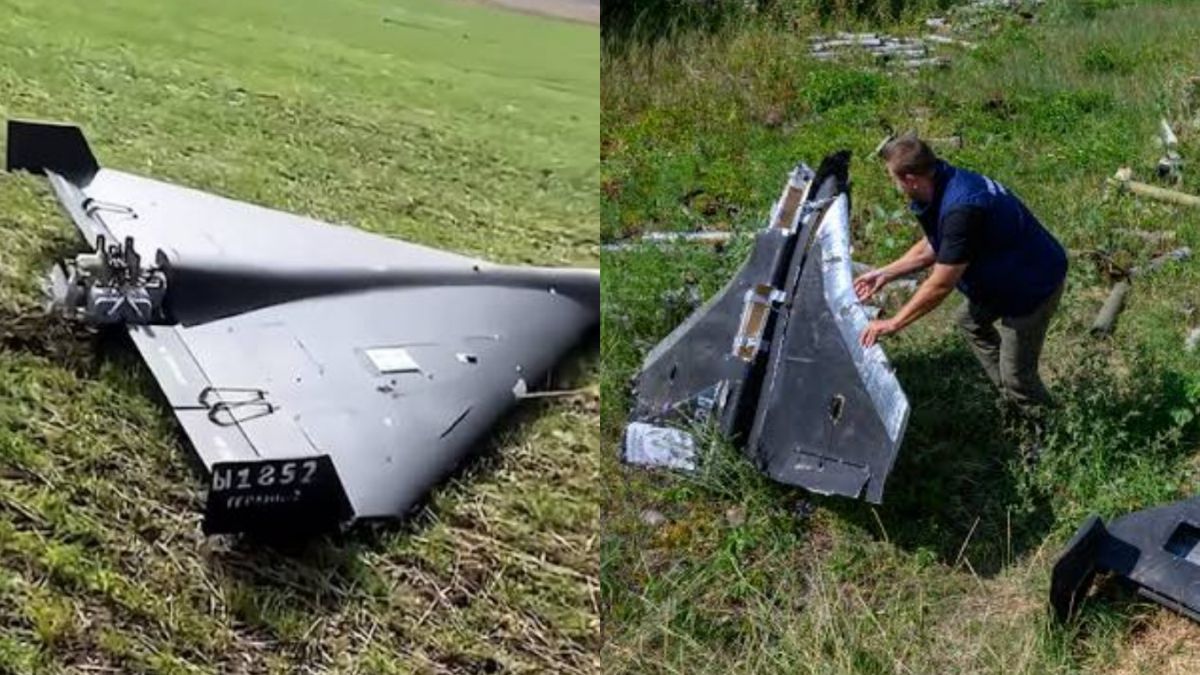
- The material could support carbon-fibre components for approximately 1,300 Geran-type attack drones.
- China and Rosatom rejected allegations of sanctions violations and concealment.

A Chinese state-owned company supplied Russia with 46 metric tons of raw material used to produce carbon fibre for Geran-type attack drones, according to a joint investigation by Politico and The Telegraph.
The investigation was based on internal Russian transport and customs documents.
The material, polyacrylonitrile tow, or PAN precursor, could produce enough carbon fibre for components used in roughly 1,300 drones, according to David Albright.
Albright, founder of the Washington-based Institute for Science and International Security, described the material as indispensable to constructing the drone airframe.
“You can’t build the airframe without it,” Albright said.
The shipment reportedly went from Jilin Chemical Fiber Group (吉林化纤) to Alabuga-Volokno, a subsidiary of UMATEX, which belongs to Rosatom’s advanced materials and composites division.
Alabuga-Volokno operates a plant in the Alabuga special economic zone in Tatarstan.
The facility supplies high-strength carbon fibre for the mass production of Russia’s long-range Geran drones.
The Geran drones are built on the basis of Iran’s Shahed design and have become an important part of Russia’s long-range strike capability.
Material used in drone structures
PAN precursor is a key input in the production of lightweight, high-strength carbon fibre. Carbon fibre produced from the material is used to reinforce structures requiring high strength while keeping weight relatively low.
According to the investigation, the material is used in parts of the Geran drone including its wings and internal structures.
These structures include the fuel tank and engine components, making carbon fibre an important material in the construction of the aircraft.
Albright said the 46-tonne shipment was sufficient to produce carbon fibre for approximately 1,300 Russian-made suicide drones.
The documents also reportedly indicate that the shipment may have been declared using a customs classification normally associated with civilian synthetic fibres such as nylon and polyester.
Albright said the PAN precursor should instead have been processed as a dual-use good under the appropriate classification.
Kerri Bitsoff, a former US Treasury official who worked on sanctions targeting Russian arms procurement networks, said the use of a different customs code could indicate an effort to conceal the sensitive nature of the shipment.
Documents reviewed by US and Ukrainian authorities
The paperwork was obtained by Ukraine’s Center for Security and Cooperation (USCC), which said it received the documents from Russian sources.
USCC shared the material with the US and UK governments. The US House Select Committee on China subsequently reviewed the documents and found them to be authentic, according to an American official.
The Ukrainian government also confirmed the authenticity of the documents.
USCC said it had identified at least eight tenders since 2022 involving container shipments of PAN precursor from Jilin Chemical Fiber Group to Alabuga-Volokno.
The findings place the shipments against a broader pattern of Chinese commercial links with Russian companies involved in defence production.
According to the supplied material, Chinese companies directly supplied at least £47 million (US$59.7 million in 2024) in parts and materials to Russian companies sanctioned for producing drones between 2023 and 2024.
Of that amount, £10.7 million (US$13.6 million in 2024) involved shipments to sanctioned Russian companies linked to Shahed-type drone production in the Alabuga special economic zone, as of September 2025.
Sanctions and official denials
Alabuga-Volokno and UMATEX have been under Western sanctions since 2023.
Jilin Chemical Fiber Group is not currently under Western sanctions.
Rosatom said its parent company and enterprises operate “in full compliance with applicable laws and regulations” and described claims to the contrary as false.
China’s embassy in Washington also rejected the allegations.
The embassy said the accusations “smear China and turn it into a scapegoat”. It also said Beijing “has never supplied lethal weapons to either side of the conflict” and maintains strict controls on exports of dual-use goods.
Dennis Wilder, a former deputy assistant CIA director for East Asia and the Pacific, disputed the suggestion that supplies of this scale could occur without Chinese government knowledge.
The Kiel Institute has estimated that China supplies more than 60 per cent of the components Russia needs to sustain its defence industry.
Kurt Campbell, a former US deputy secretary of state, has previously said that dozens of Chinese companies supply dual-use goods to Russia’s defence industry.
Broader military supply links
The supplied material also describes other Chinese trade involving Russia and Iran, including allegations that Beijing-linked companies have used mechanisms resembling barter arrangements to facilitate sanctioned trade.
Further reporting cited in the material said Iran received air-defence equipment, vehicles, communications equipment and medicines in exchange for Iranian oil.
One shipment reportedly involved millions of dollars in air-defence equipment. The United States has sanctioned several Chinese and Hong Kong-based entities involved in importing sanctioned Iranian crude oil.
The US has not sanctioned major Chinese financial institutions suspected of facilitating Iran’s oil trade, according to the supplied material.
China and Iran have also reportedly developed trade mechanisms involving import credits and a special purpose vehicle, allowing Chinese domestic companies to be paid directly for goods shipped to Iran.
The mechanism is described as a way of avoiding international banking channels and direct manufacturer transactions affected by sanctions.
The supplied material estimates that the special purpose vehicle facilitated between US$2 billion and US$2.5 billion in trade after becoming more important in 2026.
Carbon fibre dependence
The investigation also highlights Russia’s reported dependence on Chinese supplies of specialised PAN acrylic fibre, the main ingredient in high-performance carbon-fibre production.
The material is particularly important for the airframe, fuel tank and engine structures of Shahed-derived drones produced in Russia.
The reported shipments therefore concern an industrial input rather than a finished weapon.
The findings also come amid wider debate over China’s role in supplying Russia with dual-use goods and industrial components that can support military production.
At the same time, the Chinese government maintains that it does not provide lethal weapons to either side of the war and that dual-use exports are subject to controls.