Four bodies found on South Korea’s Jeju Island as police face scrutiny over mishandled missing-person cases
Four bodies were found on South Korea’s Jeju Island within three days as an officer faced allegations of mishandling missing-person cases, prompting wider scrutiny of police procedures and gaps in the system for missing adults.
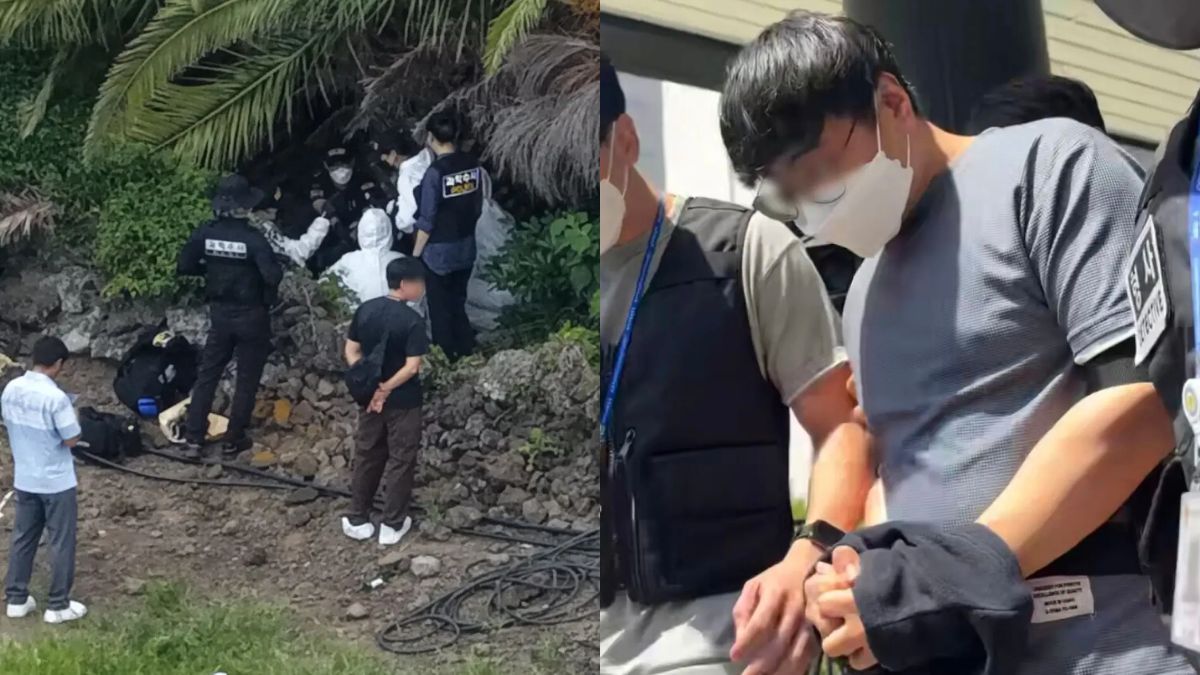
- Four missing people were found dead on Jeju within three days, including 37-year-old Jang Mi-ran, who had been missing for 104 days.
- A police officer allegedly falsified and prematurely closed cases, including Jang’s, and is now being investigated alongside senior officers over the handling of the cases.
- The case exposed wider gaps in South Korea’s missing-adult system, with 99.7% of adult missing-person cases in 2025 reportedly closed without a formal investigation or search.

SOUTH KOREA: Four people reported missing were found dead on South Korea’s Jeju Island within several days, prompting mounting scrutiny of police procedures after an officer was accused of improperly closing two missing-person cases.
The controversy centres on the case of 37-year-old Jang Mi-ran, who disappeared in May and was found dead 104 days later.
Investigators subsequently discovered that the officer who handled her case had allegedly used a similar method to close another missing-person report involving a man in his 60s, who was later also found dead.
The revelations have since expanded into a wider examination of police oversight and South Korea’s system for handling missing adults.
Four bodies discovered as searches intensify
According to Korea JoongAng Daily, the body of a man in his 60s who had been reported missing on 2 July was found in Songdang-ri, Jeju City, on Saturday, 22 August.
His family had filed another missing-person report after discovering that the original case had allegedly been closed by the same officer handling Jang’s disappearance.
Police subsequently resumed the search and found the man dead.
Authorities have not found indications so far that his death involved a crime.
On Sunday, a man believed to be in his 70s was found dead in waters near Sinheung-ri in Jocheon-eup after a person fishing in the area alerted emergency services.
The Jeju Coast Guard confirmed that he had been reported missing the previous day.
Two more bodies were discovered on Monday. One missing person was found dead near a valley in Aewol-eup, while the body of a woman believed to be Jang was found at about 10.46am in Hallim-eup.
Korea JoongAng Daily reported that the discoveries brought the number of missing people found dead on Jeju to four within three days, although the cases were not all linked.
Jang’s case exposes alleged police misconduct
Jang was reported missing on 15 May after she was last seen leaving her accommodation in Hallim-eup on the night of 12 May.
The police officer assigned to her case, identified by his surname Bu, allegedly told her family and boyfriend that he had contacted Jang and confirmed that she was safe, but that she did not want her whereabouts disclosed.
Investigators later found no record of a call between Bu and Jang.
According to The Korea Herald, Bu allegedly removed Jang’s case from the police missing-person profiling system and closed it without properly verifying her whereabouts or safety.
The officer is also accused of handling the July disappearance of the man in his 60s in a similar manner, allegedly telling his family that he had contacted the man and that he did not want contact with relatives.
The cases came under renewed scrutiny after the man was found dead and Jang’s family filed another missing-person report, prompting police to resume their search for her.
Jang found close to where she had stayed
Jang’s body was found in bushes near a road in Hallim-eup, about 500 metres from the accommodation where she had been staying.
Korea JoongAng Daily reported that her mobile phone and electronic cigarette were found near the body, while she was still wearing a bracelet and ring.
An autopsy conducted on Tuesday confirmed her identity through a forensic dental examination. DNA analysis is also being carried out.
Police said the condition of the body made it impossible to determine whether there were external injuries, and a further examination by the National Forensic Service is expected to establish the exact time and cause of death.
Police had previously said there were no apparent signs of foul play.
The discovery also raised questions over the timing of the search.
Police only began reviewing surveillance footage from the Hallim-eup area 98 days after Jang was reported missing, according to The Korea Herald.
By then, much of the footage had already been deleted because of limited storage periods.
When the search was eventually intensified, around 140 personnel a day, including police and Coast Guard officers, were deployed around Hallim Port, Jang’s accommodation, the coastline and nearby vegetation.
Officer had handled 298 missing-person cases
The investigation has since widened considerably.
According to The Korea Herald, Bu handled 298 missing-person cases during approximately one year and five months on the missing-persons team.
Police are now reviewing all of those cases to determine whether any others were improperly closed.
The revelations have raised questions over how a single officer was able to close cases without adequate verification or supervisory checks.
The National Police Agency has since moved to require senior-level verification before missing-person cases can be closed.
Previous misconduct allegations raise further questions
Further scrutiny emerged after The Korea Herald reported that Bu had previously been the subject of other police investigations.
In 2023, police received a report alleging domestic violence involving Bu.
An internal disciplinary review followed, but he ultimately received a warning without further disciplinary action.
He was also investigated after allegedly entering a women's restroom at a police station where he worked on 22 July.
He was removed from duty on 11 August, about a week before the allegations concerning Jang's case became public.
The earlier incidents have prompted questions over why Bu was assigned to handle missing-person cases despite the previous allegations.
Police command faces accountability questions
The investigation has also moved beyond Bu himself.
The Korea Times reported on 25 August that four officers had been suspended from duty in connection with the premature closure of Jang’s case.
They included the head and former chief of the Jeju Seobu Police Station, as well as two senior investigators.
The National Police Agency said an internal investigation would examine how the case was handled.
Acting National Police Agency Commissioner Yoo Jae-seong also apologised over the handling of Jang’s disappearance.
President Lee Jae Myung ordered a broader investigation into the police response, including how missing-person cases are closed and how officers are supervised.
He also called for police to develop institutional reforms.
A wider gap in South Korea’s missing-person system
The Jeju case has also brought renewed attention to a longstanding gap in South Korea’s treatment of missing adults.
Korea JoongAng Daily reported on 26 August that 70,814 adults were reported missing in South Korea in 2025, but 99.7 per cent of those cases were closed without a formal investigation or search.
Under current law, the legal definition of a missing person is largely limited to children under 18, people with certain disabilities, people on the autism spectrum and those with dementia.
Other missing adults are administratively classified as “runaways” under police regulations.
While police can still receive reports, such cases do not automatically receive the same investigative powers available to legally defined missing-person cases, including certain forms of location tracking, DNA comparison and access to CCTV footage without a warrant.
The report noted that 931 adults reported missing in 2025 were later found dead, although they were not involved in accidents or violent crimes.
Lawmakers have introduced more than 10 bills over the past decade seeking to strengthen protections for missing adults.
Proposed measures have included expanding the legal definition of missing persons and allowing police to conduct searches and investigations when an adult’s life or physical safety may be at risk.
However, successive proposals have failed to pass.