DR Congo prepares 70,000 Ebola vaccine doses as outbreak worsens
The Democratic Republic of the Congo is preparing 70,000 Ervebo vaccine doses as its deadliest Ebola outbreak expands, despite uncertainty over whether the vaccine protects against the Bundibugyo virus.
- DR Congo will receive 70,000 Ervebo doses, including 20,000 for a clinical trial.
- The outbreak has exceeded 5,000 cases and 2,300 deaths across five provinces.
- Ervebo is not licensed specifically for Bundibugyo virus, the cause of the current outbreak.

The Democratic Republic of the Congo is preparing to deploy 70,000 doses of an Ebola vaccine as it confronts its largest and deadliest Ebola outbreak on record, with more than 5,000 cases reported and the death toll exceeding 2,300.
The vaccine allocation was approved by the International Coordinating Group on Vaccine Provision (ICG) after the Congolese government requested doses from the global Ebola vaccine stockpile. It includes 20,000 doses for a Phase 3 clinical trial and 50,000 doses for frontline and health workers.
The vaccine, Ervebo, is licensed and recommended for Ebola virus disease caused by Zaire ebolavirus. The current outbreak, however, is caused by Bundibugyo virus, a different Ebola virus species, and it is not yet known whether Ervebo protects people against it.
The World Health Organization (WHO) said laboratory and animal data suggest Ervebo may provide some protection. The clinical trial is expected to provide evidence on whether it can be used against Bundibugyo virus in humans.
The outbreak began in north-eastern DR Congo
The outbreak was first detected in Mongbwalu Health Zone in Ituri Province, a high-traffic mining area in north-eastern DR Congo.
WHO received an alert on 5 May about an illness associated with unusually high mortality. Four health workers reportedly died within four days.
The first known suspected case was a health worker who developed fever, vomiting, severe weakness and haemorrhagic symptoms in late April. The person later died in a medical centre in Bunia.
Laboratory testing at the Institut National de Recherche Biomédicale in Kinshasa confirmed Bundibugyo virus in eight samples on 15 May. The Congolese Ministry of Public Health declared the country’s 17th Ebola outbreak since 1976 on the same day.
Cases were subsequently detected in Rwampara and Bunia health zones as the outbreak expanded.
Uganda recorded cross-border transmission
The location of Ituri has complicated efforts to contain the outbreak. The province borders Uganda and South Sudan and has significant population movement.
Uganda confirmed an imported Bundibugyo virus case on 15 May after a Congolese man who had travelled from the DRC became severely ill in Kampala and died. A second imported case was confirmed the following day.
Further transmission occurred among contacts and healthcare workers in Uganda. WHO said the Ugandan outbreak remained epidemiologically linked to transmission originating in the DRC.
WHO declared the outbreak a Public Health Emergency of International Concern on 17 May, while Africa CDC declared a public health emergency of continental security the following day.
Cases spread across five provinces
The outbreak has expanded significantly since it was first detected.
By 30 July, WHO reported 3,605 confirmed cases and 1,587 deaths in the DRC. Cases had been reported in five provinces — Ituri, North Kivu, South Kivu, Haut-Uélé and Tshopo — covering 49 health zones.
The United Nations later reported that the number of cases had risen to 5,021, while the death toll reached 2,325, making it the deadliest Ebola outbreak recorded in the DRC.
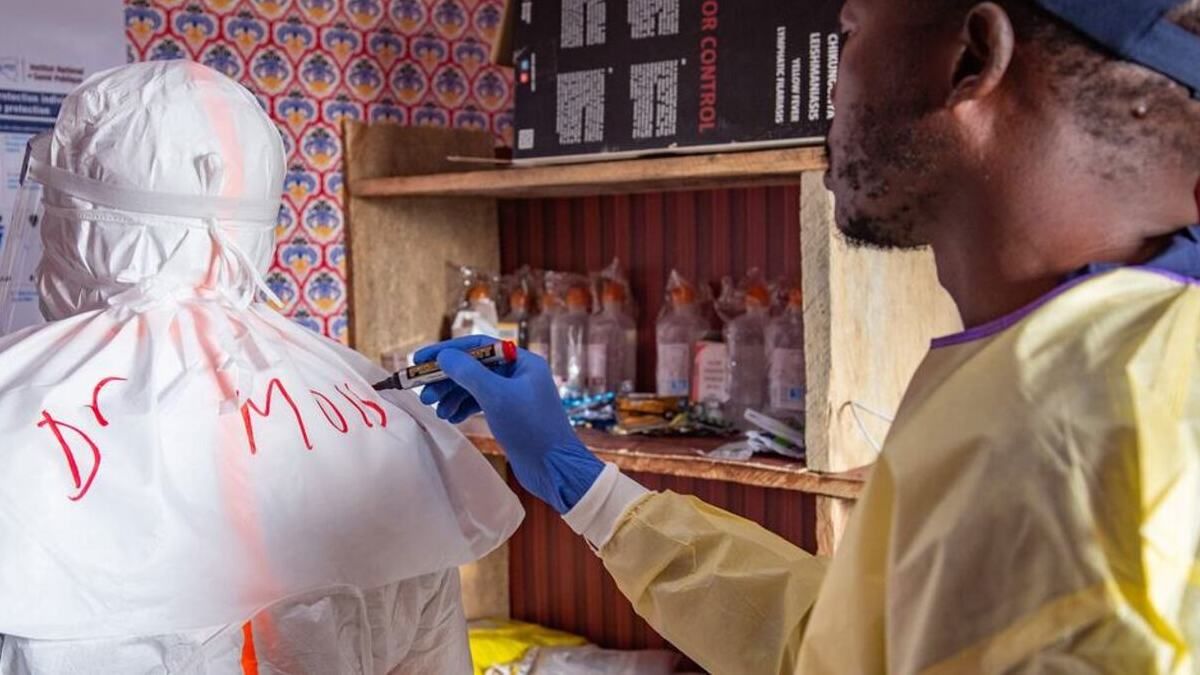
More than 160 healthcare workers have contracted Ebola and 40 have died, according to UN Senior Ebola Coordinator Julien Harneis.
Bundibugyo virus has no specific licensed vaccine
The current outbreak presents a particular challenge because it is caused by Bundibugyo virus rather than Zaire ebolavirus, which has been responsible for several major Ebola outbreaks.
Bundibugyo virus was first identified during an outbreak in western Uganda in 2007. The DRC last recorded an outbreak caused by the virus in 2012, when 59 cases were reported, including 38 confirmed and 21 probable cases, with 34 deaths.
WHO said the case-fatality rates in the two previous Bundibugyo outbreaks in Uganda and the DRC ranged from about 30 to 50 per cent.
There is currently no licensed vaccine specifically approved for Bundibugyo virus and no specific treatment designed for the virus. WHO says early supportive care can improve survival.
Ervebo has previously been used extensively against Zaire ebolavirus, including during Ebola outbreaks in the DRC.
The ICG has managed an emergency Ebola vaccine stockpile since 2021. Until July 2026, more than 56,000 Ervebo doses had been allocated to Ebola outbreaks in the DRC, while a further 167,000 doses had been used in preventive campaigns for health and frontline workers in several African countries.
Conflict makes containment more difficult
The outbreak is unfolding amid continuing armed conflict and a humanitarian crisis in eastern DR Congo.
Fighting involving the Congolese government, the Rwanda-backed M23 armed group and other armed groups has restricted access for medical and surveillance teams. WHO has identified insecurity, population displacement and difficulties reaching affected communities as major obstacles to contact tracing and outbreak control.
Health facilities have also been affected by insecurity, while some communities have resisted outbreak-response activities.
These conditions have made isolation, safe burials, contact tracing and infection-prevention measures more difficult, particularly in areas where health services are already under pressure.
Health workers among those affected
Healthcare workers have been heavily exposed to the virus.
Four health workers died during the early stage of the outbreak in Mongbwalu, highlighting concerns over infection prevention and control in medical facilities.
WHO has also warned that diagnosing Bundibugyo virus can be difficult because its early symptoms can resemble other illnesses common in the region, including malaria. Laboratory testing is therefore important for confirming cases.
Vaccine allocation provides new response tool
The ICG allocation is the latest addition to the international response.
The group was established in 1997 to coordinate emergency vaccine supplies and antibiotics during major outbreaks. Its partners include WHO, UNICEF, the International Federation of Red Cross and Red Crescent Societies and Médecins Sans Frontières, with Gavi, the Vaccine Alliance, funding the Ebola vaccine stockpile.
The 20,000-dose trial will assess whether Ervebo can protect against Bundibugyo virus, while the remaining 50,000 doses will be provided to frontline and health workers.
WHO and Africa CDC have supported the DRC's focus on protecting affected communities and involving local populations in the response while generating evidence to strengthen preparedness for future outbreaks.